
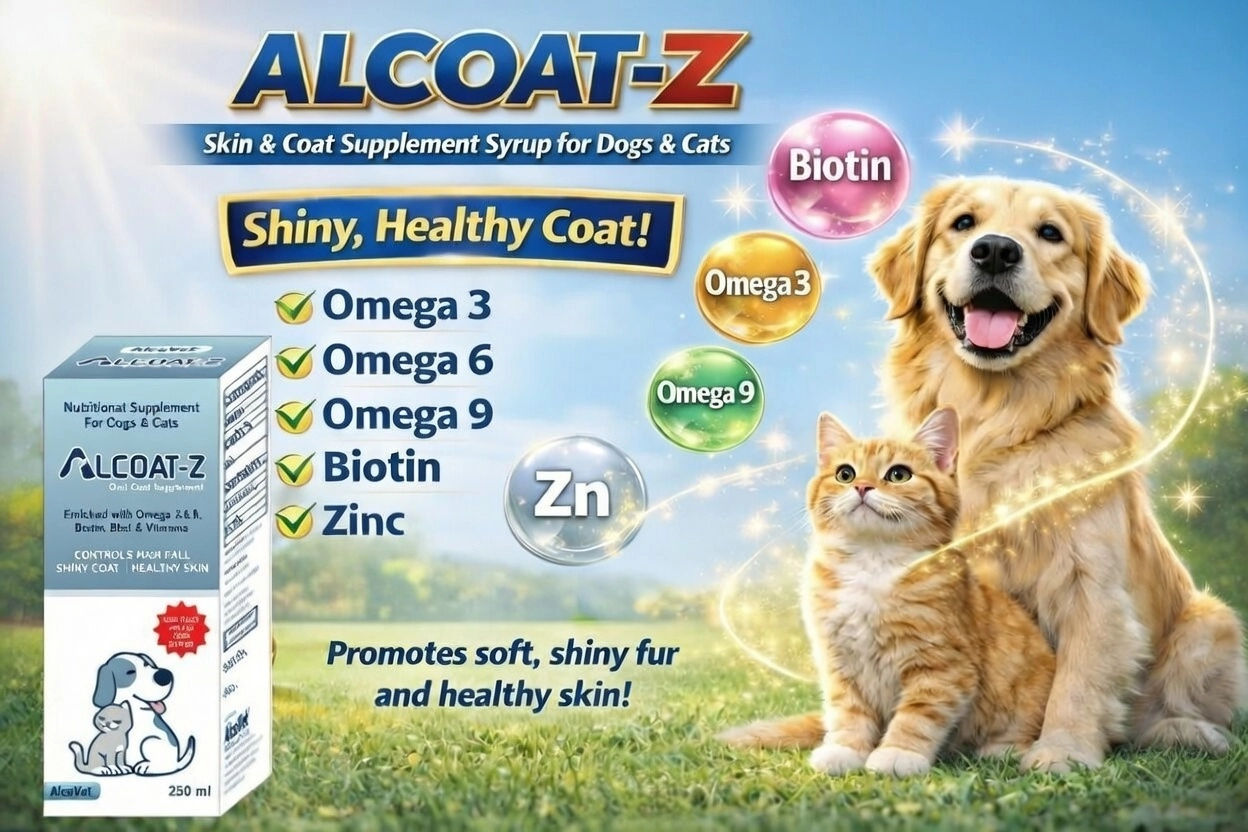
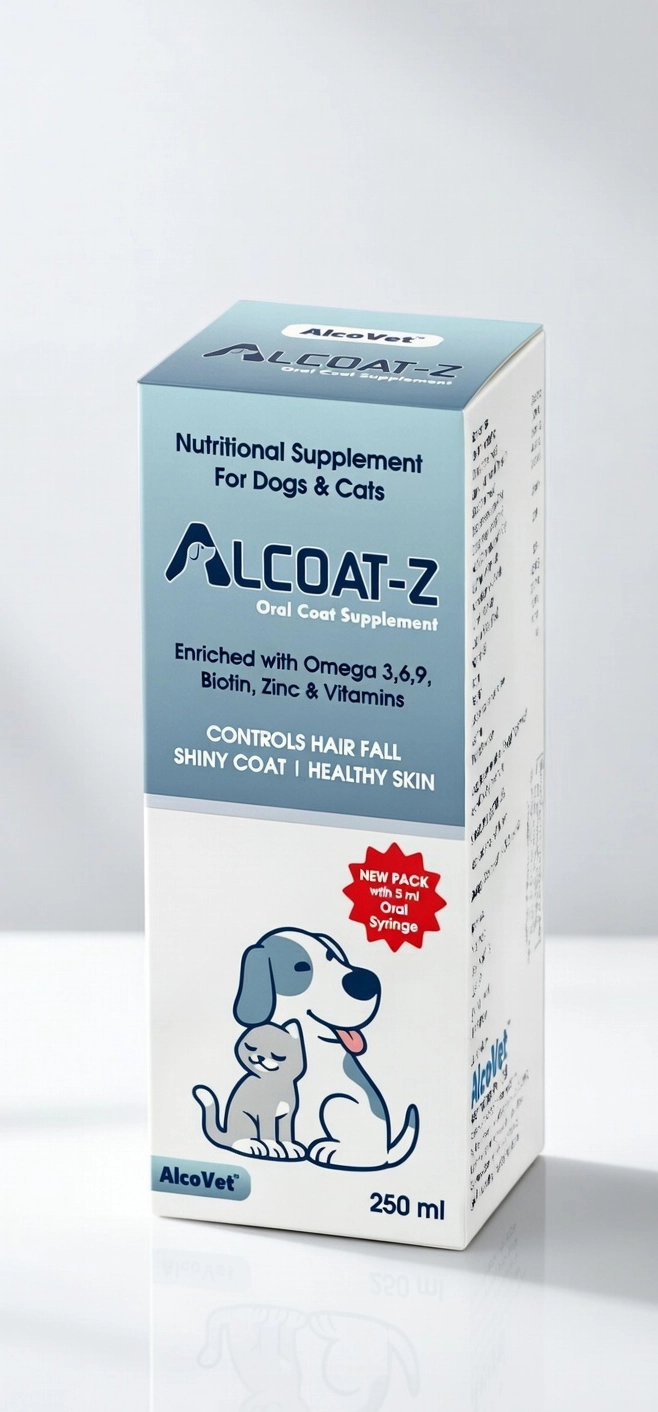
Alcoat-Z
Omega 3-6-9, Biotin & Zinc Skin & Coat Supplement for Dogs & Cats
Overview & Clinical Rationale
Skin is the largest and most metabolically active organ in dogs and cats. Compromised barrier function — commonly seen in allergic, inflammatory or nutritional dermatoses — leads to transepidermal water loss, altered epidermal lipid composition and impaired keratinocyte turnover. These changes manifest as dull or brittle coat, excessive shedding, flaking, pruritus and recurrent secondary infections.
Alcoat-Z provides a targeted nutritional platform to restore epidermal lipids, reinforce keratin structures and promote healthy sebum production — supporting sustained skin barrier integrity and coat quality across both short-term intensive protocols and long-term maintenance in dermatologically compromised companion animals.
The Three-Pillar Dermatological Approach
Omega 3-6-9 fatty acids address inflammatory modulation and epidermal lipid restoration. Biotin supports keratin biosynthesis and fatty acid metabolism at the cellular level. Zinc completes the triad by regulating epidermal proliferation, wound repair and cutaneous immune responses — three interdependent processes that cannot be optimised in isolation.
Omega 3-6-9
Anti-inflammatory; epidermal lipid & ceramide restoration
Biotin (B7)
Keratin biosynthesis; fatty acid & amino acid metabolism
Zinc (Chelated)
Keratinocyte proliferation; wound repair; immune regulation
Key Ingredients & Mechanisms
Omega-3 (EPA & DHA)
Modulate eicosanoid synthesis to reduce pro-inflammatory cytokine production. Restore ceramide balance in the stratum corneum. Clinically shown to reduce pruritus severity in atopic dermatitis and support barrier function in allergic skin disease.
Omega-6 (GLA & LA)
Gamma-linolenic acid (GLA) supports prostaglandin E1 synthesis — anti-inflammatory and immunomodulatory. Linoleic acid is an essential structural component of skin ceramides and is required for epidermal barrier maintenance.
Omega-9 (Oleic Acid)
Enhances skin hydration and barrier stability. Provides emollient properties and supports lipid fluidity in the epidermal barrier without pro-inflammatory effects — complementing the anti-inflammatory action of Omega-3 and -6.
Biotin (Vitamin B7)
Essential cofactor for carboxylase enzymes involved in fatty acid synthesis and amino acid metabolism. Supports keratin protein synthesis — directly influencing coat strength, elasticity and sheen. Biotin deficiency is a well-recognised cause of brittle coat and scaling in companion animals.
Zinc (Chelated)
Critical for DNA synthesis and cell division in proliferating keratinocytes. Regulates metalloproteinase activity in wound healing. The chelated form ensures superior GI absorption compared to inorganic zinc salts — important for reliable clinical effect.
Combined Nutritional Synergy
The combination targets skin health at three levels simultaneously — membrane lipid structure (Omega 3-6-9), protein scaffolding (Biotin) and cellular regulation (Zinc) — providing more comprehensive dermatological nutritional support than single-ingredient supplements.
Primary Indications
Alcoat-Z is indicated as nutritional support under veterinary direction in the following clinical scenarios:
- Canine and feline atopic dermatitis — adjunct nutritional therapy during maintenance phase to support skin barrier and reduce pruritus
- Chronic pruritus with a nutritional or inflammatory component
- Post-demodicosis or ringworm recovery — coat restoration support following treatment
- Dull, dry or brittle coat in dogs and cats — including nutritional aetiology
- High-shedding breeds — preventive skin barrier and coat maintenance (e.g. Labrador, Husky, Golden Retriever, Persian)
- Post-treatment skin recovery following topical or systemic dermatological therapy
- Zinc-responsive dermatoses — particularly in Nordic breeds prone to zinc malabsorption
- Nutritional skin support in rescue or post-illness animals with compromised nutritional status
Timeline for Results
Visible coat and skin improvements typically develop over 4–8 weeks of consistent administration, reflecting the biological timescale of keratinocyte renewal and coat protein synthesis. Continued use through full coat cycling is recommended for optimal outcome.
Contraindications & Precautions
Use With Caution or Seek Veterinary Assessment
- Known hypersensitivity to any component of the formulation — discontinue and seek veterinary advice
- Anticoagulant therapy — high-dose Omega-3 supplementation may potentiate effects of anticoagulants; veterinary monitoring required
- Pancreatitis-prone patients — high-fat supplements should be used cautiously; veterinary assessment recommended
- Acute or diagnostic skin conditions — nutritional support does not replace investigation; use alongside, not instead of, diagnostic work-up
- Zinc toxicity — do not exceed recommended dose; excess zinc supplementation is toxic in dogs and cats
Usage & Administration
- Oral syrup — administer directly or mix into food
- Dosage and duration individualised by species, body weight and clinical presentation per product labelling
- Suitable for short-term intensive support and long-term maintenance protocols
- Palatable formulation — high acceptance in both dogs and cats
- Shake well before use; store below 25°C away from direct sunlight
- To be used under the direction of a registered veterinary practitioner
Full Monograph & Dosing
Full weight-based dosing tables, complete ingredient and excipient list, and stability data are available on request. Download here
Composition & Pack Information
| Active Ingredients | Omega-3 (EPA, DHA); Omega-6 (GLA, Linoleic acid); Omega-9 (Oleic acid); Biotin (Vitamin B7); Zinc (chelated) |
|---|---|
| Formulation | Palatable oral syrup |
| Route | Oral — direct or mixed with food |
| Pack Size | 250 mL bottle |
| Target Species | Dogs & Cats |
| Storage | Store below 25°C, away from direct sunlight. Shake well before use. |
| Availability | Veterinary channel only — to be sold on prescription of a Registered Veterinary Practitioner |
| Key Indications | Atopic dermatitis; chronic pruritus; dull/brittle coat; post-demodicosis recovery; zinc-responsive dermatoses; high-shedding breed maintenance |
| Full Monograph | Weight-based dosing, excipient list and stability data available on request. Download here |
Frequently Asked Questions
What is Alcoat-Z used for?
Can Alcoat-Z be used for cats with hair loss?
How long does Alcoat-Z take to show results?
Can Alcoat-Z be used long term?
Does Alcoat-Z require a prescription?
Selected References
References support the scientific basis of this formulation. Clinical decisions must be individualised by the treating veterinarian.
- 1 Bauer JE. Therapeutic use of fish oils in companion animals. J Am Vet Med Assoc. 2011;239(11):1441–1451. doi:10.2460/javma.239.11.1441
- 2 Marsh KA, Ruedisueli FL, Coe SL, Watson TDG. Effects of zinc and linoleic acid supplementation on the skin and coat quality of dogs receiving a complete and balanced diet. Vet Dermatol. 2000;11(4):277–284. doi:10.1046/j.1365-3164.2000.00205.x
- 3 Hensel P, Santoro D, Favrot C, Hill P, Griffin C. Canine atopic dermatitis: detailed guidelines for diagnosis and allergen identification. BMC Vet Res. 2015;11:196. doi:10.1186/s12917-015-0515-5
- 4 Scott DW, Miller WH, Griffin CE. Muller & Kirk's Small Animal Dermatology. 6th ed. Philadelphia: WB Saunders; 2001. Standard veterinary dermatology reference — nutritional dermatoses, fatty acid deficiency and zinc-responsive disorders.
- 5 Mueller RS, Olivry T, Prélaud P. Critically appraised topic on adverse food reactions of companion animals: common food allergen sources in dogs and cats. BMC Vet Res. 2016;12:9. doi:10.1186/s12917-016-0633-8
- 6 Olivry T, DeBoer DJ, Favrot C, et al. Treatment of canine atopic dermatitis: 2010 clinical practice guidelines from the International Task Force on Canine Atopic Dermatitis. Vet Dermatol. 2010;21(3):233–248. doi:10.1111/j.1365-3164.2010.00889.x
- 7 Popa I, Pin D, Remoue N, et al. Analysis of epidermal lipids in normal and atopic dogs, before and after administration of an oral omega-6/omega-3 fatty acid feed supplement. Vet Res Commun. 2011;35(8):501-509. Demonstrates the structural restoration of epidermal ceramides following targeted fatty acid supplementation.
- 8 Frigg M, MacEwen EG, et al. Clinical study on the effect of biotin on skin conditions in dogs. Schweiz Arch Tierheilkd. 1989;131(10):621-625. Classical study demonstrating the clinical efficacy of biotin supplementation in resolving dull coat, scaling, and brittle hair in canines.
Alcoat-Z is the flagship product of AlcoVet's Skin Care portfolio — designed to integrate into allergy work-up, flare management and preventive skin health protocols.
Full Skin Care Portfolio