
In the minutes between an accident and reaching a veterinarian, the actions you take — or don't take — can determine whether your pet survives. This is not hyperbole. A dog going into heatstroke can die in under 30 minutes without cooling. A cat with arterial bleeding can lose a fatal volume of blood in less than 10 minutes. Knowing what to do gives you a window to act.
India presents some specific first aid challenges: snake bites are more common than in most countries, heatstroke is a year-round risk in most states rather than a seasonal one, and emergency veterinary clinics may require longer travel times in smaller cities and rural areas. This guide is designed with the Indian context in mind — practical, immediate, and prioritising the actions that matter most when every minute counts.
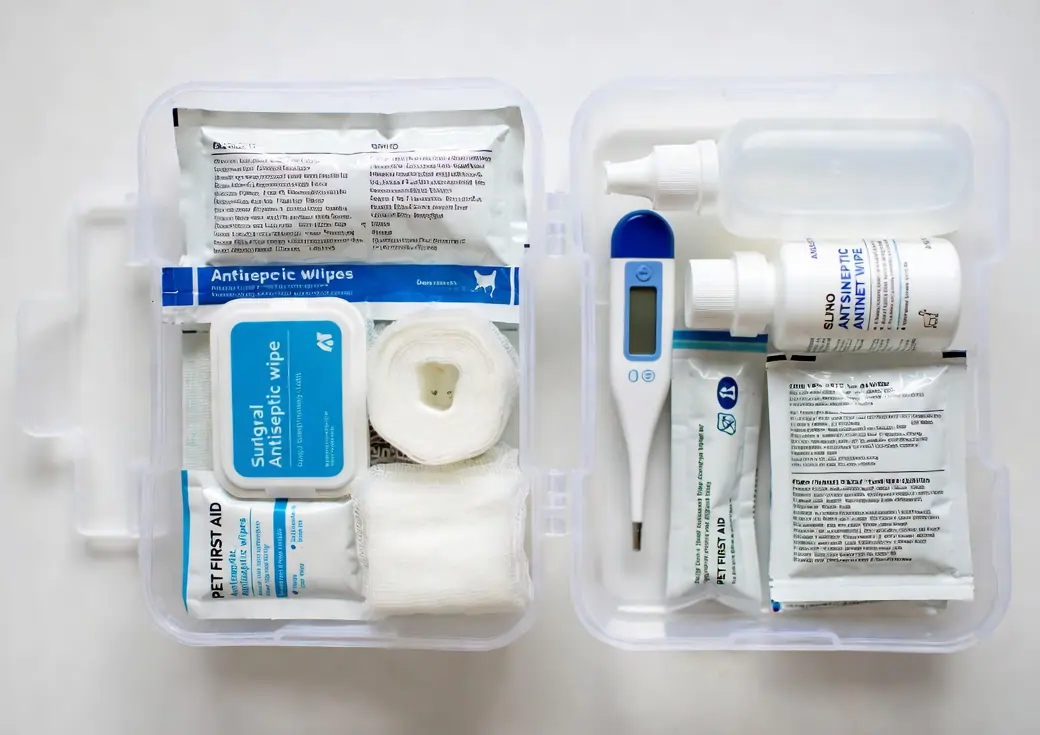
Build Your Pet First Aid Kit — Keep It Ready
A first aid kit stored in a known location — and known to everyone in the household — is not a luxury. It is the difference between acting in the first 60 seconds and spending those 60 seconds searching for scissors. Assemble it now, before you need it.
| Item | Use | Notes |
|---|---|---|
| Digital rectal thermometer | Temperature assessment | Normal: Dog 38–39.2°C / Cat 38–39.5°C |
| Sterile gauze pads (5cm & 10cm) | Wound coverage, pressure dressings | Use at least 3–4 layers for pressure |
| Self-adherent elastic bandage (Vetrap) | Bandaging wounds, splints | Does not stick to fur; remove within 24 hrs |
| Micropore / medical adhesive tape | Securing dressings | Do not apply directly to fur |
| Blunt-nosed scissors | Cutting bandages, fur around wounds | Blunt tip reduces injury risk |
| Tweezers (fine-tipped) | Splinter / tick removal, foreign bodies | Sterilise with betadine before use |
| Diluted betadine (10% → 1% with water) | Wound cleaning | Dilute to pale tea colour; never use undiluted |
| Sterile saline solution (200 ml bottle) | Eye flushing, wound irrigation | Replace annually or when opened |
| Disposable gloves (2 pairs) | Protect handler from blood, secretions | Essential for bite wounds and bleeding |
| Muzzle (size-appropriate) | Prevent biting from pain/fear | Never muzzle a vomiting or breathing-distressed animal |
| Torch / small flashlight | Examine mouth, throat, dark wounds | Phone torch works; a headtorch is hands-free |
| Vet number + nearest 24hr emergency clinic | Call immediately | Write on a card inside the kit — don't rely on memory under stress |
Know Your Pet's Normal Vital Signs
The most useful thing you can tell a veterinarian when calling ahead is your pet's current vital signs. Assess quickly before, during, and after first aid.
Cat: 38–39.5°C
Cat: 140–220 bpm
Cat: 20–30/min
Pale, blue, or white = emergency
>2 sec = circulation concern
Abnormal: dull, unresponsive, collapse
Emergency First Aid Protocols
Bleeding — Wounds, Lacerations, Nail Quick
- Put on gloves. Apply firm, direct pressure with sterile gauze or clean cloth — do not lift to check for at least 5 minutes. Lifting disrupts clot formation.
- If blood soaks through, add more gauze on top — do not remove the first layer.
- Elevate the affected limb above heart level if possible while maintaining pressure.
- Once bleeding slows, apply a light pressure bandage using self-adherent wrap. Do not apply so tightly that it cuts circulation — you should be able to slip one finger underneath.
- Tourniquets are appropriate only for life-threatening arterial spurting when pressure alone fails. Apply above the wound, note the time, and inform the vet immediately — tourniquet time must be minimised.
Heatstroke — India's Most Deadly Preventable Emergency
- Move immediately to shade and maximum available ventilation — turn on AC if indoors, open car windows if in transit.
- Wet the entire body with room-temperature water — not cold, not ice. Focus on the groin, armpits, neck, and paw pads where blood vessels are close to the surface.
- Use a fan to accelerate evaporative cooling. Do not wrap in a wet towel — it traps heat.
- If conscious and not vomiting, offer small amounts of cool (not cold) water to drink.
- Measure rectal temperature every 3–4 minutes. Stop active cooling at 39.5°C to avoid overcooling (hypothermia is also dangerous).
- Transport to vet immediately even if the pet seems to recover — organ damage (kidney failure, DIC) from heatstroke manifests hours later.
Choking — Foreign Object in Throat
- Stay calm and restrain the pet gently. Do not blindly sweep your fingers into the throat — you risk pushing the object deeper and being bitten.
- Open the mouth and look. If an object is clearly visible and reachable at the back of the mouth (not in the throat), use tweezers or two fingers to carefully remove it.
- For small dogs and cats: Hold the animal with head down, support the neck, and apply 3–5 firm but gentle downward shakes to use gravity.
- For medium-large dogs: Stand behind, wrap arms around the abdomen just below the ribcage, and apply 3–5 firm inward-upward thrusts — the canine Heimlich manoeuvre.
- If the pet loses consciousness, lay flat and attempt to see and remove the object before beginning rescue breathing.
Poisoning / Toxin Ingestion
Common Indian toxins: chocolate, grapes/raisins, onion/garlic, rat poison (brodifacoum), organophosphate insecticides, human NSAIDs (ibuprofen, paracetamol), lilies (cats), bhang/cannabis, toad contact.
- Call your vet immediately. Provide: what was ingested, estimated quantity, time of ingestion, and your pet's weight.
- Bring the product packaging, plant, or container with you to the clinic — do not throw it away.
- Do not induce vomiting unless your vet specifically instructs you to. Caustics, petroleum products, and some insecticides cause severe additional injury on the way back up.
- If skin or coat contact (insecticide, caustic liquid): Flush affected area with large amounts of water for 10–15 minutes before transport.
- If eye contact: Flush immediately with sterile saline for 5 full minutes, then transport.
Seizures
- Do not put hands near the mouth — dogs and cats do not swallow their tongue during seizures. You will be bitten.
- Move nearby objects away to prevent injury. Do not restrain the limbs.
- Dim lights and reduce noise — sensory stimulation can prolong the seizure.
- Note the start time. Most seizures end within 1–2 minutes. Note any pre-seizure warning signs and what the movements looked like.
- After the seizure (post-ictal phase): Keep the pet in a quiet, dark room. Offer water when alert. The animal may be confused, temporarily blind, or disoriented — this is normal and passes within minutes to an hour.
- Do not offer food or any medication without vet instruction during the post-ictal phase.
Road Traffic Accident / Blunt Trauma
- Approach slowly and calmly — an injured animal in pain will bite even a known owner. Muzzle before handling if possible (not if breathing distress).
- Minimise all movement of the spine. Slide the pet onto a flat, rigid surface — a wooden board, tray, or cardboard — and use it as a stretcher. Support the entire body.
- Control visible bleeding with direct pressure gauze. Do not attempt to splint or manipulate suspected fractures.
- Cover with a blanket to maintain body temperature — shock causes rapid heat loss.
- Do not give food, water, or any medication.
Snake Bite — India-Specific Emergency
India's medically significant species for pets: Russell's viper (haemotoxic), Indian cobra (neurotoxic), Common krait (neurotoxic, often nocturnal — bite may not be felt), saw-scaled viper (haemotoxic). Most dog bites occur on the face and legs during outdoor activity.
- Keep the pet as still as possible — movement accelerates venom distribution through the lymphatic system.
- Keep the bite site at or below heart level.
- Do not: cut the wound, suck out venom, apply tourniquet, apply ice, or apply any herbal/home remedy. All of these worsen outcome.
- If safe to do so, note the snake's appearance (colour, pattern, head shape) or photograph it from a safe distance — do not handle the snake. Species identification determines antivenom choice.
- Transport immediately. Antivenin is the only effective treatment — first aid delays that treatment.
Burns — Thermal, Chemical, or Electrical
- Thermal burns: Cool immediately with room-temperature running water for 10–20 minutes. Do not use ice, butter, toothpaste, or any home remedy — these worsen tissue damage.
- Chemical burns: Flush extensively with large volumes of water for 15–20 minutes. Wear gloves — the chemical is still active and will burn you too.
- Electrical burns (from chewing cable): Do not touch the animal until the power source is disconnected. Electrical burns cause internal damage that is far more extensive than the surface suggests — urgent cardiac monitoring is needed.
- Cover the burn loosely with clean, damp gauze. Do not apply bandages tightly.
Universal First Aid Rules
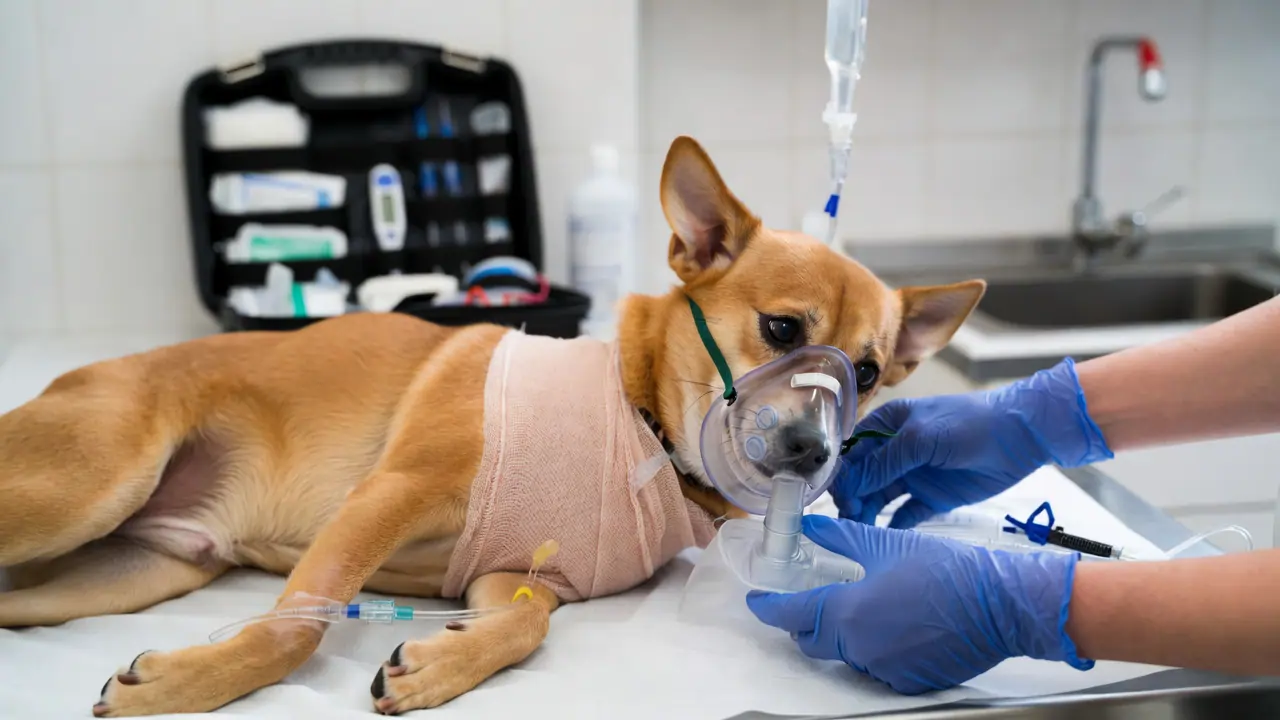
- Stay calm. Pets read your emotional state. Panic makes restraint harder, decisions worse, and handling less safe.
- Protect yourself first. A panicked or pain-affected animal — even a beloved pet — will bite without warning. Muzzle dogs before examination; wrap cats in a towel to control the body.
- Call your vet before you leave the house. Most clinics can prepare for your arrival, direct you to a closer emergency facility, or give critical phone guidance for the specific emergency you are dealing with.
- Never give human medications. Paracetamol (Crocin) is rapidly lethal to cats. Ibuprofen causes kidney failure in dogs. Aspirin is toxic to cats. There are very few human medications safe for pets without dose adjustment by a vet.
- Transport safely. A pet in pain moving inside a car is a safety hazard for you and them. Use a carrier for cats. Dogs should be secured in a carrier or have a second person hold them in the back seat. If spinal injury is suspected, use a rigid stretcher.
Conclusion
Pet first aid is not about having all the answers — it is about knowing the actions that make things better and, just as importantly, knowing the actions that make things worse. The golden rules are simple: control what you can (bleeding, temperature, movement), do not introduce new harms (no cold water on heatstroke, no vomiting induction without guidance, no human medications), and get to a veterinarian as fast as possible. Your prepared response in the first minutes of an emergency is the most valuable thing you can give your pet.
Related Guides
This content is provided for educational purposes only and is not a substitute for professional veterinary care. First aid measures are stabilisation steps only. In any emergency, contact your registered veterinarian or nearest animal emergency clinic immediately. Never delay professional care because a pet appears to have stabilised after first aid — many serious conditions have delayed presentation.