
You leave for work, and within minutes your neighbours can hear your dog howling. You come home to find the sofa cushions destroyed, scratch marks on the front door, and an accident on the floor — even though your dog is fully house-trained. If this sounds familiar, your dog may be experiencing separation anxiety, one of the most common and most distressing behavioural conditions in pet dogs across India.
Separation anxiety is not disobedience, spite, or poor training. It is a genuine anxiety disorder — a panic response triggered by the absence of a person (or people) your dog is deeply bonded to. Understanding what is actually happening inside your dog's mind is the first step to helping them.
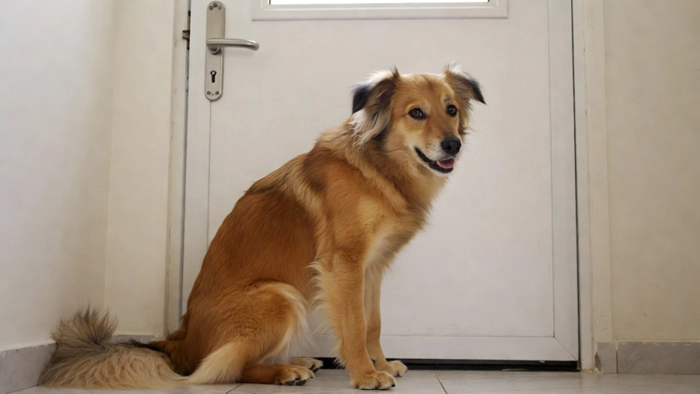
What Is Separation Anxiety?
Separation anxiety (SA) is a condition in which a dog experiences intense fear or panic specifically when separated from their primary attachment figure — most often one person in the household. Unlike general anxiety or boredom, true SA is triggered by the departure cue itself: picking up keys, putting on shoes, or even standing near the door can set off visible distress before you have even left the house.
Research in veterinary behavioural medicine distinguishes separation anxiety from separation-related behaviours (SRBs), which can include milder distress, boredom-driven destructiveness, or generalised anxiety. True SA involves physiological arousal — elevated heart rate, cortisol surge, and a stress response comparable to a panic attack in humans. This is why punishment is not only ineffective but actively harmful: a panicking dog cannot learn, and punishing panic intensifies it.
Recognising the Signs
Dogs with separation anxiety display distress behaviours specifically in the owner's absence (or around departure cues). The behaviours below are warning signs — not character flaws.
Common Signs of Separation Anxiety
- Excessive vocalisation — prolonged howling, barking, or whining that begins soon after you leave and continues throughout your absence
- Destructive behaviour — chewing furniture, door frames, window sills, or personal belongings (especially items that carry your scent)
- House soiling — urinating or defecating indoors despite being fully toilet-trained and having had the opportunity to go before you left
- Escape attempts — scratching at doors, windows, or gates; in severe cases, self-injury from repeated escape attempts
- Pre-departure stress — panting, pacing, salivating, or refusing to eat as soon as they perceive you are about to leave
- Shadowing — following you from room to room when you are home, unable to settle unless physical contact is possible
- Exaggerated greetings — frantic, prolonged excitement on your return that takes many minutes to settle
How Severe Is Your Dog's Anxiety?
Separation anxiety exists on a spectrum. Identifying roughly where your dog sits helps you choose the right approach — and know when professional help is essential.
Mild
Settles within 20–30 minutes. Occasional vocalisation. Minor destruction or pacing. Can be managed with owner-led behaviour modification.
Moderate
Distress lasts most of your absence. Regular destruction or soiling. A structured desensitisation programme and environmental enrichment required.
Severe
Constant, intense panic. Self-injury. Unable to eat or drink when alone. Requires a veterinary behaviourist and may benefit from medication alongside behaviour therapy.
Why Does Separation Anxiety Develop?
There is rarely a single cause. SA typically arises from a combination of genetics, early experience, and environmental change.
- Genetics and breed: Breeds selectively developed for close human partnership — Labrador Retrievers, Border Collies, Vizslas, and many Indian mixed-breeds raised in close-contact environments — can be predisposed to stronger attachment and greater vulnerability to SA.
- Inadequate early socialisation: Puppies that had limited exposure to being alone during the critical socialisation window (3–12 weeks) may not develop the resilience needed to cope with solitude.
- Traumatic events: A single frightening episode while alone — a loud noise, a thunderstorm, Diwali fireworks — can condition a dog to associate solitude with danger.
- Major routine changes: Moving home, a family member leaving or passing away, a new baby, or a sudden change in work schedule are all common triggers in India.
- Rehoming or shelter history: Dogs that have experienced abandonment are significantly more likely to develop attachment-based anxiety.
Step-by-Step: Teaching Your Dog to Be Alone
The gold standard treatment for separation anxiety is systematic desensitisation — a gradual, carefully paced process of teaching your dog that departures are safe and temporary. There are no shortcuts, but consistency pays off significantly within weeks to months.
-
1
Map your departure cues. Write down every action that reliably precedes your departure — alarm, shower, getting dressed, picking up keys, putting on shoes. These cues have become anxiety triggers on their own. You will need to neutralise them.
-
2
Decouple the cues. Practise each cue repeatedly without leaving. Pick up your keys, sit back down and watch TV. Put your shoes on, make tea, take them off. Repeat dozens of times daily until your dog stops reacting. This is called "cue flooding."
-
3
Start with micro-absences. Leave through the front door, close it, and return in 3 seconds before your dog has time to react. Build slowly: 5 seconds, 10 seconds, 30 seconds, 1 minute. Every session should end before your dog shows any distress — even mild restlessness is a signal to shorten the duration.
-
4
Establish a safe space. Create a comfortable, enclosed area — a crate, a pen, or a specific room — associated only with positive experiences. Feed meals here, give high-value chews here, and practise short, positive confinement periods while you are home and visible.
-
5
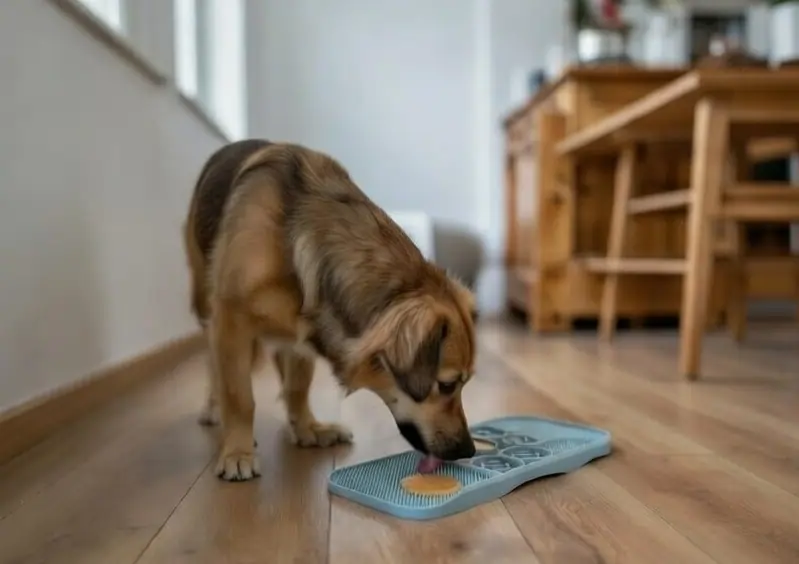
Use departure enrichment. Immediately before leaving, provide a frozen stuffed Kong, a lick mat spread with peanut butter or curd, or a long-lasting chew. This creates a positive association with your departure and occupies your dog through the initial, highest-anxiety window.
-
6
Keep arrivals and departures calm. Avoid lengthy goodbye rituals and over-excited hellos. A calm, matter-of-fact departure and a quiet return signal that your absence is a normal, unremarkable event — not a crisis.
-
7
Increase duration very gradually. Only extend your absence when your dog is consistently comfortable at the current duration across multiple sessions. Progress is not linear — plateau and regression are normal. Return to a shorter duration and rebuild.
Additional Management Strategies
Exercise Before You Leave
A dog who has had a 30–45 minute walk or active play session before your departure is significantly calmer than one who has been sitting still since morning. In Indian cities where long walks may be limited by heat or traffic, indoor enrichment — scent games, trick training — can supplement physical exercise effectively.
Doggy Day Care and Dog Sitters
During the behaviour modification process — which can take weeks to months before your dog tolerates a full workday — management is essential. You cannot practise two-second absences while working a full-time job. Doggy day care, a trusted neighbour, or a pet sitter can provide supervision while you train. Increasingly popular in Indian metro cities, these services have become a practical lifeline for working pet parents.
Calming Aids
Several evidence-informed calming tools can reduce baseline anxiety enough to make behaviour modification more effective. These include pheromone diffusers (DAP — Dog Appeasing Pheromone), calming wraps such as pressure vests, and species-appropriate music or white noise to mask triggering sounds. These are supportive aids, not standalone cures.
Veterinary Medication
For moderate to severe SA, your veterinarian may recommend anti-anxiety medication. Commonly prescribed options in India include fluoxetine (a daily medication that reduces baseline anxiety over several weeks) or situational medications for short-term support. Medication works best in combination with a structured behaviour modification programme — it lowers the physiological ceiling of panic, making the dog more capable of learning. Never attempt to source or dose anxiolytics without a veterinary prescription.
When to Seek Professional Help
Self-directed behaviour modification is achievable for mild to moderate SA, but some situations require professional support:
- Your dog is injuring themselves in attempts to escape
- You have been working consistently for 4–6 weeks with no measurable progress
- Your dog's anxiety seems to be worsening rather than improving
- Vocalisation is causing conflict with neighbours or a landlord
- You suspect your dog may need medication
Look for a veterinary behaviourist (BVSc with a behavioural medicine focus) or a certified dog behaviour consultant (CDBC / IAABC certified) who uses positive reinforcement–based methods exclusively. Punitive approaches — shouting, shock collars, or spray bottles — will worsen a dog with separation anxiety and may cause additional behavioural fallout.
Conclusion
Separation anxiety is one of the most emotionally taxing conditions a dog and their family can face — for the dog it is terrifying, and for the owner, the guilt, noise complaints, and property damage take a real toll. The good news is that SA is treatable. With patience, a structured programme, and the right professional support where needed, the vast majority of dogs can learn to feel safe and calm when alone.
Your dog is not trying to punish you when you leave. They are simply panicking because they have not yet learned that you will always come back. Your job is to teach them that truth — one calm, successful absence at a time.
Related Guides
This content is provided for educational purposes only and is not a substitute for professional veterinary or behavioural advice. If your dog is showing signs of severe anxiety, self-injury, or significant distress, please consult a registered veterinarian or certified animal behaviourist. Never administer any medication — including calming supplements — without veterinary guidance.