
Aging is inevitable, but suffering is not. Senior pets experience predictable physiological changes — declining organ function, reduced immune competence, chronic pain from arthritis, sensory deficits (vision, hearing), and cognitive decline. Yet these changes often go unrecognized until disease is advanced, because pets instinctively mask illness and owners attribute symptoms to "just getting old" rather than treatable medical conditions. The result: preventable pain, accelerated functional decline, and loss of quality life-years that could have been preserved with early intervention.
Modern veterinary geriatric medicine has transformed senior pet care. Chronic kidney disease can be managed for years with diet and medications, slowing progression. Osteoarthritis pain is controllable with multimodal analgesia allowing continued mobility. Cognitive dysfunction syndrome responds to dietary supplementation and environmental modification. Cancer is increasingly treatable with chemotherapy protocols adapted for quality-of-life preservation. Early detection through routine senior screenings (bloodwork, urinalysis, imaging) identifies disease in pre-clinical stages when intervention is most effective and least invasive.
This guide provides the framework for proactive senior pet care: when your pet transitions to "senior" status and requires modified monitoring, which age-related diseases to screen for and how, practical home management for arthritis and mobility limitations, recognizing cognitive dysfunction, and — most importantly — how to objectively assess quality of life and make informed, compassionate decisions about end-of-life care when the time comes.
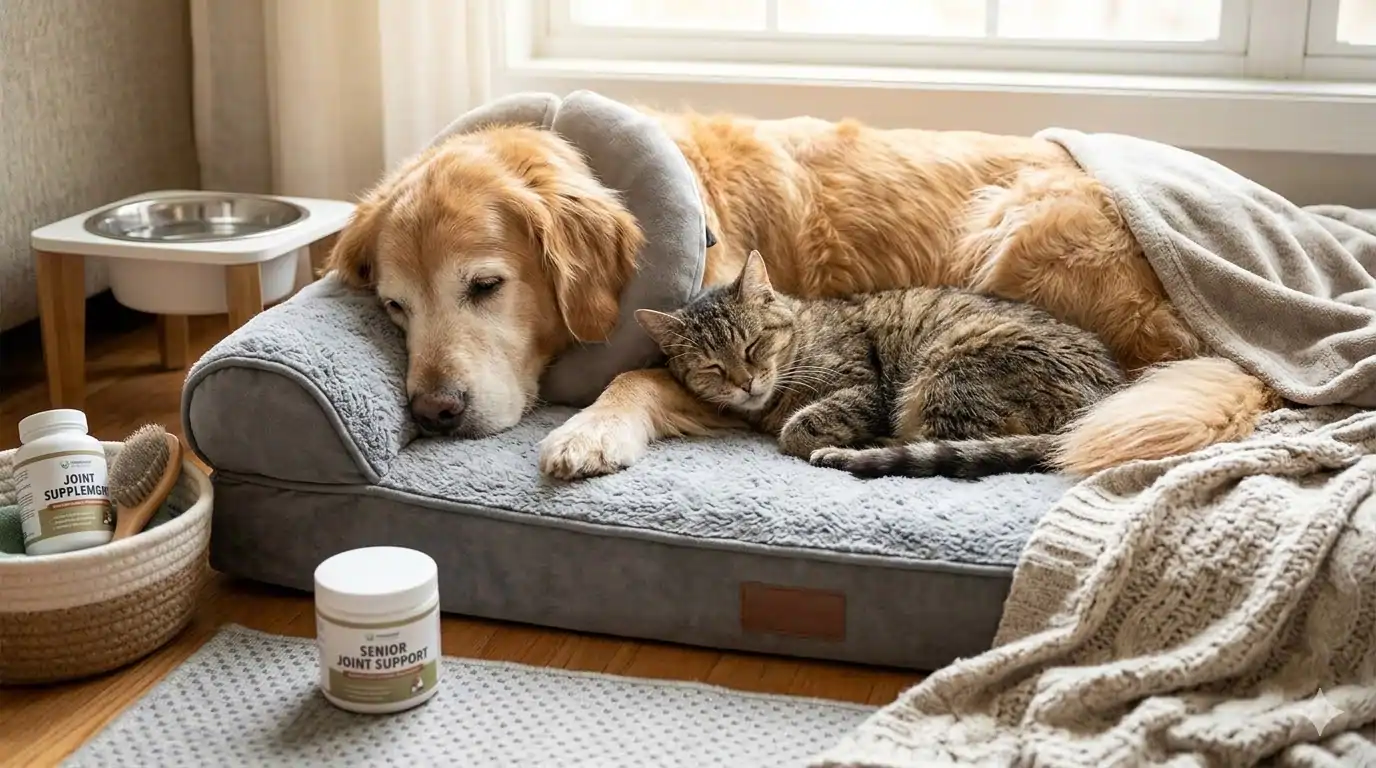
When Does a Pet Become "Senior"? — Age Classifications and Breed Differences
There is no universal age cutoff for "senior" — it varies significantly by species, breed size (dogs), and individual health status. The veterinary profession uses three geriatric age categories: mature adult, senior, and geriatric. These classifications determine screening frequency and disease surveillance intensity.
Early Aging Stage
Dogs: Large breeds 5–7 years, small breeds 7–9 years
Cats: 7–10 years
Monitoring: Annual wellness exams, bloodwork every 2–3 years. Subtle changes may begin (slight weight gain, reduced activity), but disease is uncommon. Prevention focus.
Active Aging with Disease Risk
Dogs: Large breeds 7–10 years, small breeds 9–12 years
Cats: 10–14 years
Monitoring: Every 6 months wellness exams, annual bloodwork (kidney, liver, thyroid, glucose), urinalysis, blood pressure. Age-related diseases (arthritis, early kidney disease, dental disease) commonly emerge. Intervention most effective at this stage.
Advanced Age, Multi-Organ Decline
Dogs: Large breeds >10 years, small breeds >12 years
Cats: >14 years
Monitoring: Every 3–4 months exams, bloodwork every 6 months, imaging as indicated. Multiple concurrent diseases common (chronic kidney disease, heart disease, cancer, severe arthritis, cognitive dysfunction). Palliative care and quality-of-life focus.
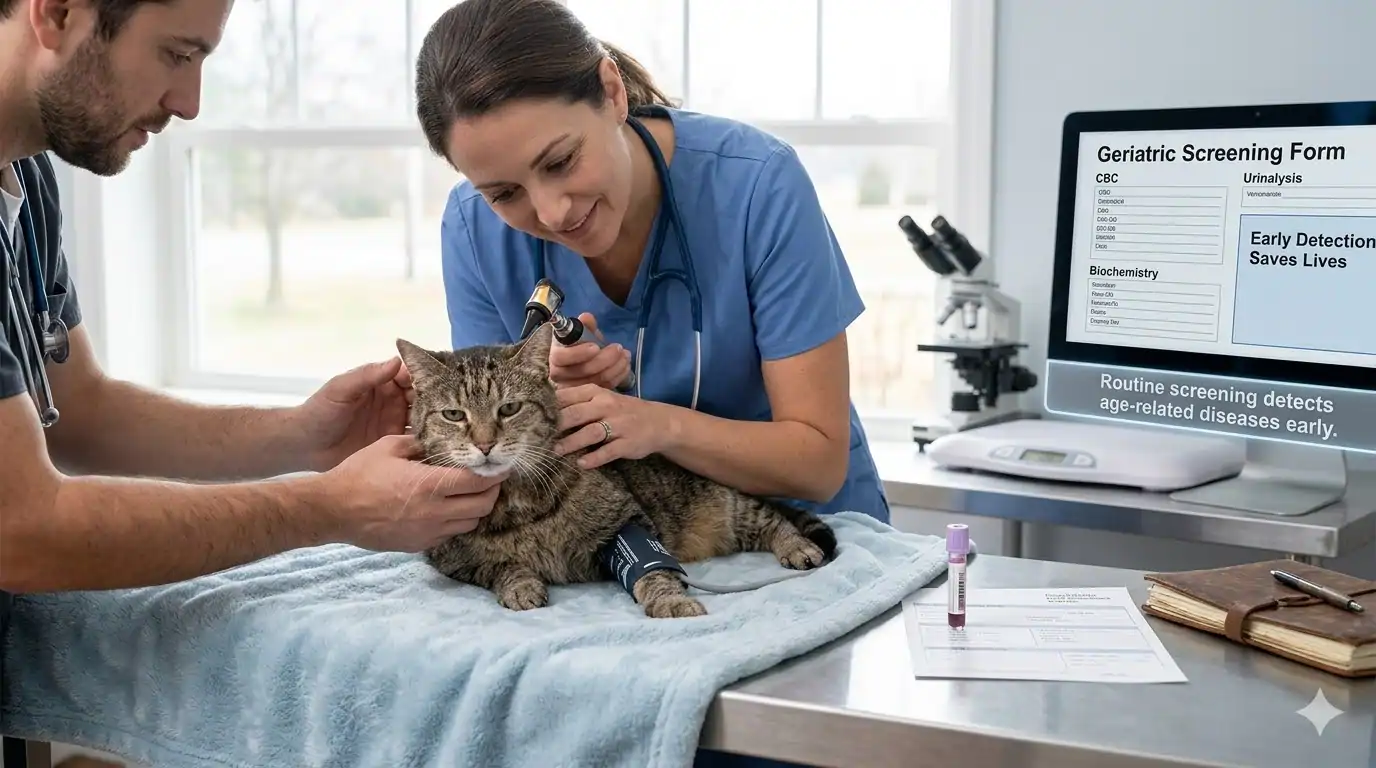
Essential Geriatric Health Screenings — Early Detection Saves Lives
Senior pets require proactive disease surveillance even when appearing healthy. Many life-threatening conditions (chronic kidney disease, hyperthyroidism, diabetes, heart disease, early-stage cancer) are asymptomatic until 60–75% of organ function is lost. By the time clinical signs appear, disease is advanced and treatment options limited. Screening bloodwork and urinalysis detect biochemical changes months to years before symptoms manifest, allowing early intervention when prognosis is best.
Recommended Senior Screening Protocol
| Age Category | Physical Exam Frequency | Bloodwork (CBC, Chemistry, Thyroid) | Urinalysis | Additional Tests |
|---|---|---|---|---|
| Mature Adult (Dogs: 5–7 yrs large, 7–9 yrs small | Cats: 7–10 yrs) |
Annual | Every 2–3 years (baseline) | Every 2–3 years | Dental assessment, BCS evaluation, arthritis screening (palpation, gait observation) |
| Senior (Dogs: 7–10 yrs large, 9–12 yrs small | Cats: 10–14 yrs) |
Every 6 months | Annually | Annually | Blood pressure, chest X-rays (if heart murmur detected), abdominal ultrasound (if kidney/liver abnormalities), T4 (cats — thyroid) |
| Geriatric (Dogs: >10 yrs large, >12 yrs small | Cats: >14 yrs) |
Every 3–4 months | Every 6 months | Every 6 months | Blood pressure every visit, ECG if arrhythmia, imaging as indicated by exam findings, cognitive assessment |
What Screenings Detect — Disease-Specific Tests
Common Age-Related Diseases — Recognition and Management
Osteoarthritis — The Silent Epidemic
Arthritis (degenerative joint disease) is the most common cause of chronic pain in senior pets. It affects an estimated 80% of dogs over 8 years and 60%+ of cats over 10 years. Arthritis develops when joint cartilage breaks down faster than it can repair, leading to bone-on-bone contact, inflammation, pain, and progressive loss of mobility. Primary risk factors: age, obesity, joint injury history, hip/elbow dysplasia, and certain breeds (Labrador Retrievers, German Shepherds, Golden Retrievers in dogs; Maine Coons in cats).
Signs of arthritis (often subtle in cats):
- Difficulty rising from rest — stiffness after lying down that improves with movement (the "warm-up" phenomenon)
- Reluctance to jump onto furniture, climb stairs, or enter/exit car — pain limits explosive movement
- Limping or favoring one leg — may be intermittent (worse after exercise) or constant
- Reduced play, exercise intolerance — stops walking mid-route, refuses to fetch/chase as before
- Behavioral changes — irritability when touched (especially hips, knees, elbows), withdrawing from social interaction, sleeping more
- Cats specifically: Reduced grooming (can't reach painful areas — leads to matted fur), eliminating outside litter box (painful to climb in), decreased jumping height or switching to step-climbing instead of jumping
Multimodal arthritis management (most effective approach):
- 1Weight reduction if overweight — THE most effective arthritis treatment. Every 1 kg of excess weight applies 3–4 kg of force to joints during movement. Weight loss alone can reduce pain scores by 30–50% in obese arthritic pets. Target BCS 4–5/9. See weight management guide for protocol.
- 2Non-steroidal anti-inflammatory drugs (NSAIDs): Meloxicam, carprofen, robenacoxib — reduce pain and inflammation. Requires monitoring (bloodwork every 6 months) as NSAIDs can cause kidney or liver toxicity with long-term use. Dogs tolerate NSAIDs better than cats; cats require lower doses and closer monitoring.
- 3Joint supplements — glucosamine, chondroitin, omega-3 fatty acids: Support cartilage repair and reduce inflammation. Evidence quality is moderate but supplements are safe with minimal side effects. Requires 4–8 weeks to see effect. Prescription joint diets (Hill's j/d, Royal Canin Mobility) contain therapeutic levels.
- 4Adequan (polysulfated glycosaminoglycan injections): Injectable cartilage protectant given twice weekly for 4 weeks, then monthly maintenance. Shown to slow arthritis progression in dogs. Expensive but effective for moderate-severe cases.
- 5Gabapentin or tramadol for chronic pain: Added when NSAIDs alone insufficient. Gabapentin particularly effective for neuropathic pain component of severe arthritis. Can cause sedation initially — dose adjusted to balance pain relief and alertness.
- 6Physical therapy and rehabilitation: Controlled exercise (short, frequent walks on soft surfaces), swimming/hydrotherapy (reduces joint loading), passive range-of-motion exercises, massage. Many Indian cities now have veterinary rehabilitation centers with underwater treadmills.
- 7Environmental modifications (see Mobility Support section below): Ramps, non-slip flooring, raised food bowls, orthopedic beds, litter box access modifications for cats.
Chronic Kidney Disease (CKD) — Progressive but Manageable
Chronic kidney disease is irreversible, progressive loss of kidney function — the kidneys cannot filter waste products (urea, creatinine) or regulate electrolytes and hydration effectively. CKD is staged (IRIS Stage 1–4) based on blood creatinine levels; higher stages indicate more advanced disease. CKD is extremely common in senior cats (30–40% prevalence over age 10) and less common but still significant in senior dogs (10–15%).
CKD cannot be cured, but progression can be dramatically slowed with proper management:
- Prescription kidney diet (Hill's k/d, Royal Canin Renal): Restricted phosphorus and protein (reduces kidney workload), supplemented omega-3 fatty acids (anti-inflammatory). Slows progression by 2–3x compared to non-renal diets. Must be fed exclusively — any other food dilutes therapeutic effect.
- Phosphate binders (if diet alone insufficient): Aluminum hydroxide or calcium-based binders given with meals to prevent phosphorus absorption. High blood phosphorus accelerates CKD progression and causes uraemia.
- Subcutaneous fluid therapy: For Stage 3–4 CKD where pet is dehydrated. Owner can be taught to administer fluids at home (100–150 ml under skin 2–3x per week). Maintains hydration and helps kidneys flush toxins.
- Blood pressure monitoring and management: Hypertension is both cause and consequence of CKD. Requires medication (amlodipine in cats, ACE inhibitors in dogs) to prevent further kidney damage and blindness from retinal detachment.
- Potassium supplementation (if hypokalaemic): CKD causes potassium loss in urine. Low potassium worsens kidney function, causes muscle weakness. Supplemented with potassium gluconate powder mixed in food.
- Anti-nausea medication (maropitant) and appetite stimulants (mirtazapine): Uraemia causes nausea and inappetence. Medications improve quality of life and maintain nutrition — malnutrition accelerates decline.
With aggressive management, cats with Stage 2 CKD can live 3–5+ years; Stage 3, 1–3 years. Without management, Stage 2 progresses to Stage 4 (end-stage) within 6–12 months. Early detection through routine bloodwork is critical.
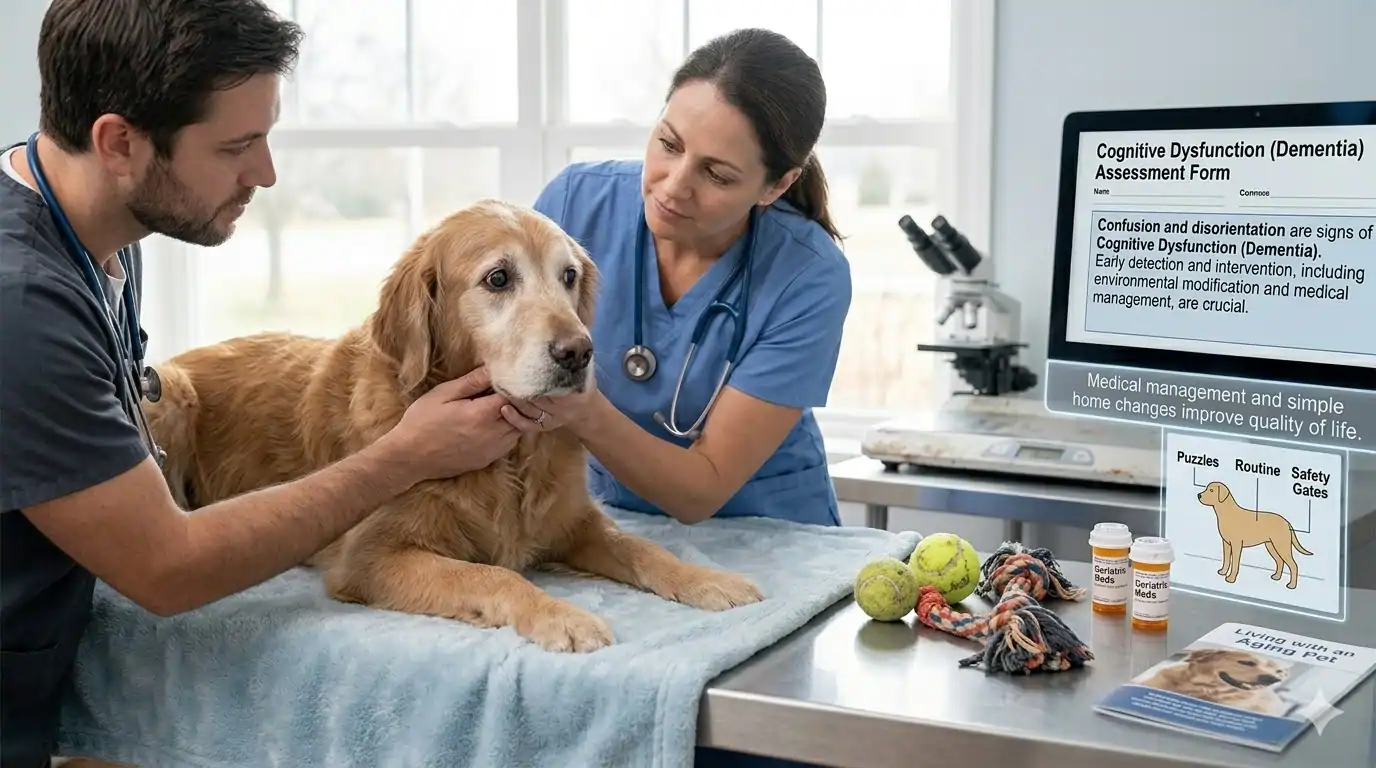
Cognitive Dysfunction Syndrome (CDS) — "Dementia" in Pets
Cognitive dysfunction syndrome is age-related decline in brain function due to neurodegeneration, amyloid plaque accumulation (similar to Alzheimer's disease in humans), and oxidative damage. CDS affects 14–35% of dogs over 8 years and 28–50% of cats over 11 years, though it's severely underdiagnosed because owners attribute symptoms to "normal aging."
DISHA acronym for CDS signs:
CDS management (cannot reverse but can slow progression and improve quality of life):
- Prescription diet (Hill's b/d, Purina Bright Mind): Medium-chain triglycerides provide alternative brain fuel when glucose metabolism is impaired. Antioxidants (vitamin E, selenium) reduce oxidative damage. Studies show 40–60% of dogs improve on b/d diet.
- Selegiline (Anipryl): MAO-B inhibitor that increases dopamine in brain. Improves activity, awareness, and sleep-wake cycles in 60–70% of dogs. Requires 4–8 weeks to see effect. Not proven effective in cats.
- Environmental enrichment and routine: Maintain predictable daily schedule (feeding, walks, bedtime at same times). Provide mental stimulation (puzzle feeders, scent games, gentle play). Avoid major household changes (moving, renovations) that increase confusion.
- SAMe or omega-3 supplements: Some evidence for neuroprotective effect. Safe adjunct therapy.
- Night lights and pheromones: Reduce nighttime disorientation. Feliway (cats) or Adaptil (dogs) diffusers reduce anxiety.
- Patience and compassion: Do not punish house-soiling or confused behaviors — pet cannot control this. Increase supervision, use belly bands (male dogs) or diapers if needed, confine to safe area at night.
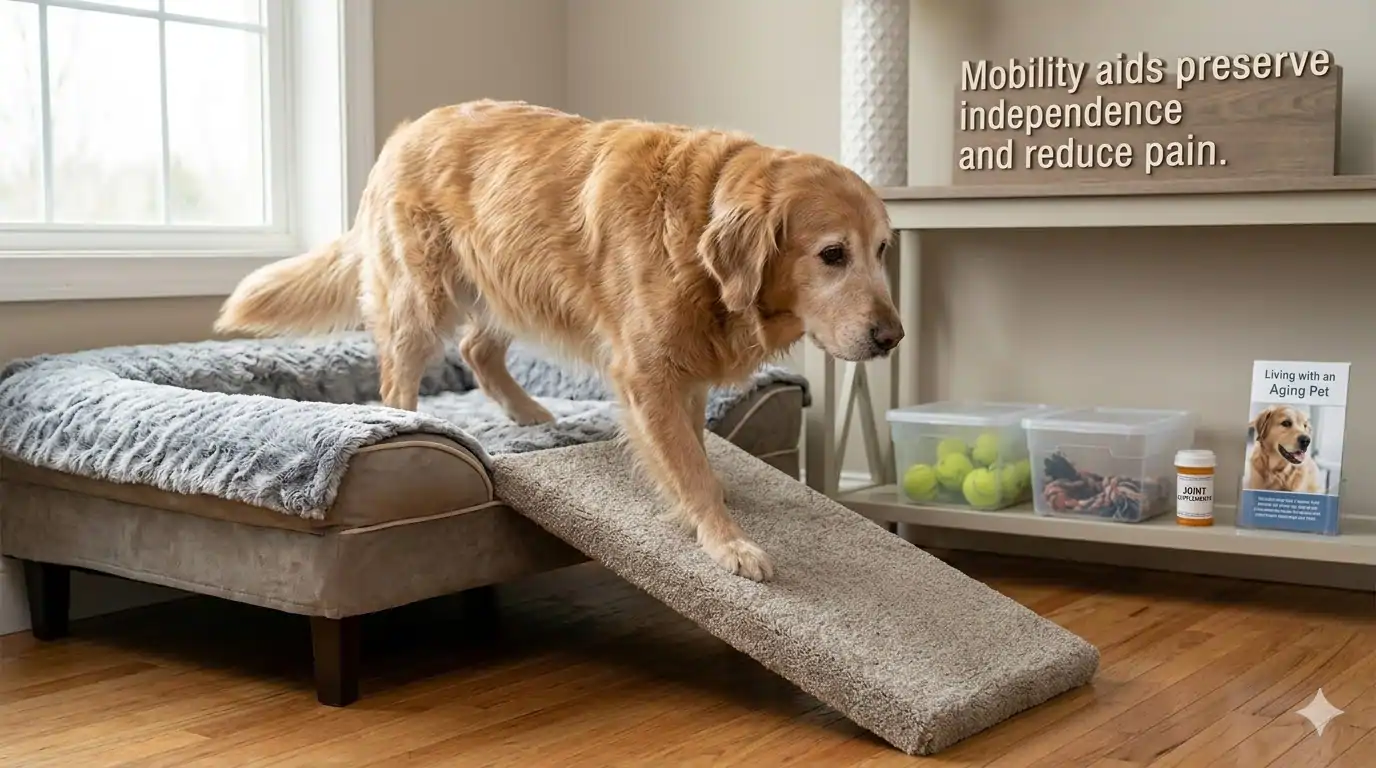
Mobility Support — Practical Home Modifications
Even with medical management, senior pets experience mobility limitations. Home environmental modifications dramatically improve independence, reduce fall risk, and maintain quality of life:
Senior Pet Dietary Modifications
Nutritional needs change with age. Senior diets address multiple physiological shifts: reduced caloric needs (lower metabolic rate), altered protein requirements, digestive sensitivity, and disease-specific modifications:
- Reduced calories to prevent obesity: Senior pets are less active and have 20–30% lower metabolic rates than young adults. Continue feeding adult portions → gradual weight gain → arthritis worsens. Switch to senior or light formulas with 15–20% fewer calories. Monitor body condition monthly.
- Moderate-to-high protein (dogs), high protein (cats): Contrary to old belief, healthy senior pets need MORE protein, not less — preserves lean muscle mass during aging. Aim for 25–30% protein in senior dog diets, 35–40% in cat diets. Only restrict protein if kidney disease diagnosed (prescription renal diet required).
- Joint support — glucosamine, chondroitin, omega-3 fatty acids: Therapeutic levels in prescription joint diets (Hill's j/d, Royal Canin Mobility Support). Requires daily feeding for 2+ months to see effect. Alternative: add fish oil supplement (dose: 50–100 mg EPA+DHA per kg body weight).
- Digestive support — prebiotics, probiotics, easily digestible proteins: Senior pets have reduced digestive enzyme production and altered gut microbiome. Diets with beet pulp (prebiotic fibre), probiotics, and highly digestible protein sources (chicken, fish vs. beef) reduce GI upset, improve stool quality.
- Antioxidants (vitamins E, C, beta-carotene): Combat oxidative stress and cognitive decline. Present in therapeutic levels in senior diets (Hill's Science Diet Senior, Royal Canin Aging). May slow CDS progression.
- Small, frequent meals for sensitive stomachs: Divide daily calories into 2–3 smaller meals. Reduces nausea, improves digestion in pets with reduced gastric motility or early kidney disease.
- Softened food for dental disease: Many senior pets have painful dental disease (see dental care guide). Soak dry food in warm water 5–10 minutes before feeding, or switch to wet food. Do not ignore dental disease — pursue dental cleaning and extractions under anaesthesia.
Quality of Life Assessment — The Most Important Metric
As pets age and accumulate health issues, the question shifts from "can we treat this?" to "should we treat this?" — does treatment preserve quality of life, or merely extend suffering? Quality of life assessment tools provide objective framework for this difficult evaluation. The most widely used is the HHHHHMM Scale, which scores seven quality-of-life domains on 0–10 scale (0 = poor, 10 = excellent). A total score <35/70 indicates quality of life is unacceptable and end-of-life discussion is appropriate.
India-Specific Senior Pet Challenges
End-of-Life Decisions — Compassionate Closure
Euthanasia is a medical procedure in which a veterinarian induces painless death to end suffering. It is performed by intravenous injection of barbiturate overdose — pet loses consciousness within 5–10 seconds, then heart and breathing stop within 30–60 seconds. There is no pain, no awareness, no suffering. It is the gentlest death possible.
When euthanasia is appropriate:
- Terminal cancer with uncontrolled pain or inability to eat/drink
- End-stage kidney or liver failure unresponsive to treatment
- Congestive heart failure causing respiratory distress despite medication
- Neurological disease with seizures uncontrolled by medication, or progressive paralysis with loss of bowel/bladder control and decubitus ulcers
- Severe cognitive dysfunction with constant disorientation, anxiety, complete loss of house-training, and inability to recognize family
- Any condition where quality of life score is consistently <35/70 and further treatment is futile or would only cause more distress
What to expect during euthanasia:
- 1Sedation first (recommended): Vet administers sedative injection (acepromazine + opioid) intramuscularly or subcutaneously. Pet becomes drowsy, relaxed, pain-free within 5–10 minutes. This step is optional but strongly recommended — pet is calm and unaware during final injection.
- 2IV catheter placement (if possible): Once sedated, vet places catheter in leg vein for euthanasia drug delivery. Some very ill pets have collapsed veins — vet may need to inject directly into vein or heart (pet is unconscious from sedation; feels nothing).
- 3Final injection of pentobarbital (euthanasia solution): Given IV, acts within seconds. Pet's breathing slows and stops first, then heartbeat stops 10–30 seconds later. Eyes remain open (normal), pet may release bladder/bowels (normal reflex). No pain or awareness — pet is already deeply unconscious from sedation.
- 4Vet confirms death by checking for heartbeat and pupil response. You can stay with your pet as long as you need before leaving.
Aftercare options: You can take the body home for burial (legal in private property; check local regulations for public burial), or use veterinary cremation services (individual cremation with ashes returned, or communal cremation). Cremation costs ₹3000–₹10,000 depending on pet size and service chosen.
Related Guides
This content is provided for educational purposes only and is not a substitute for professional veterinary advice, diagnosis, or treatment. Senior pet health management requires individualized care plans based on comprehensive examination, diagnostic testing, and ongoing monitoring. Age-related diseases often present with subtle or overlapping symptoms — accurate diagnosis requires veterinary expertise. Quality of life assessment and end-of-life decisions should be made in consultation with your registered veterinarian who knows your pet's complete medical history and can provide compassionate guidance. Always consult your veterinarian before starting any new medications, supplements, or dietary changes.