
Ear disease is one of the most frequent reasons dogs and cats visit veterinary clinics in India — and one of the most preventable. The canine ear canal is L-shaped: a long vertical section drops down from the ear opening before turning horizontally towards the eardrum. This geometry traps moisture, debris, and organisms efficiently, creating an ideal environment for infection. Cats have a simpler, straighter canal but are highly susceptible to ear mites, which spread readily in multi-pet households and through contact with strays.
India's climate amplifies every risk factor. Monsoon humidity creates the warm, moist conditions in which yeast and bacteria multiply fastest. Dust and particulate pollution irritate the sensitive ear canal lining. The same conditions that make India challenging for human skin health create equally challenging conditions for pet ears. Understanding this context — and establishing a simple routine to address it — prevents the vast majority of ear problems before they become painful infections.
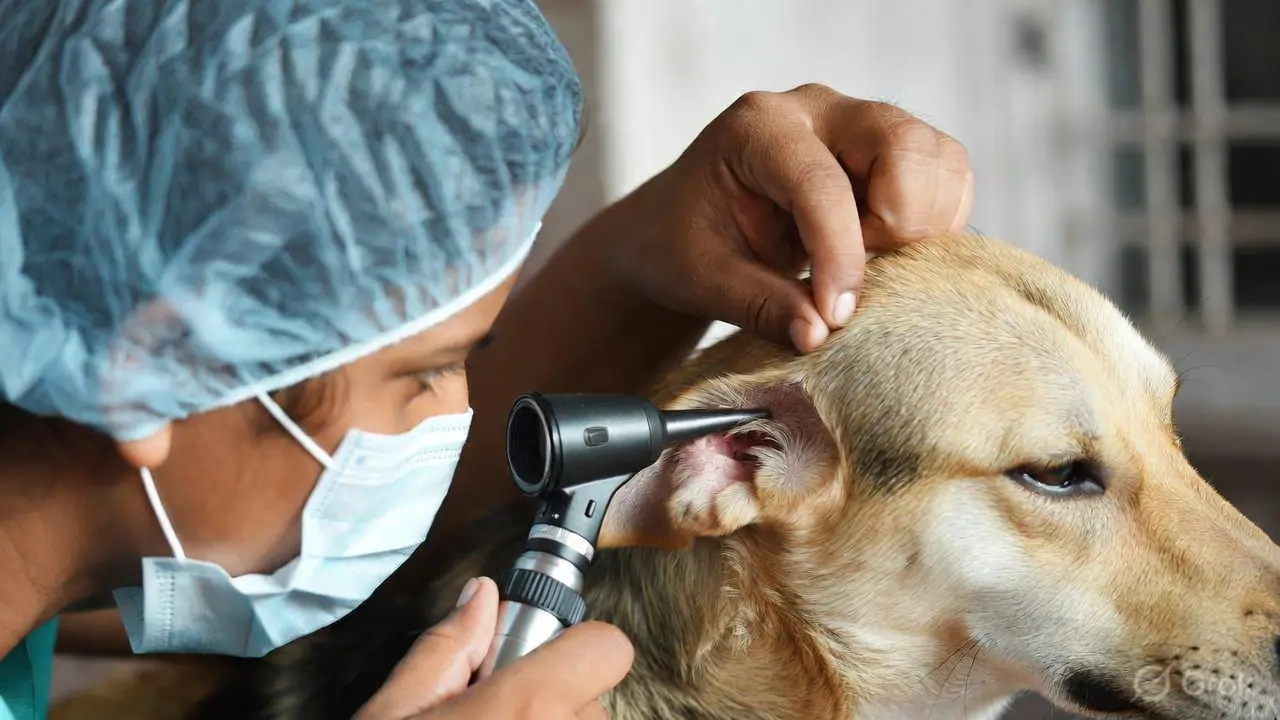
Why Ear Problems Are Particularly Common in India
Several factors converge to make India a high-risk environment for pet ear disease:
- Monsoon humidity (June–September): Ambient humidity above 80% allows Malassezia yeast to proliferate rapidly inside the ear canal. Pets that are regularly damp — from rain, bathing, or swimming — are especially vulnerable during this period.
- Year-round warmth: Unlike temperate climates where ear infections have a seasonal peak, Indian temperatures sustain bacterial and yeast growth throughout the year. There is no "safe season" for neglecting ear hygiene.
- High floppy-eared breed prevalence: Cocker Spaniels, Labradors, Basset Hounds, Beagles, and Poodles — all popular in Indian cities — have pendulous ear flaps that cover the canal entirely, drastically reducing air circulation and trapping moisture.
- Stray animal contact: Ear mites are endemic in India's large stray cat and dog population. Any pet that has contact with strays — even briefly in a park or street — can acquire mites, which then spread to other pets in the household.
- Cotton bud misuse: Deeply ingrained in Indian household cleaning habits, cotton bud use inside the ear canal is one of the most common causes of pushing debris against the eardrum, causing impaction and sometimes perforation.
🐕 High-Risk Breeds — Need More Frequent Ear Attention
- Floppy ears (highest risk): Cocker Spaniel, Basset Hound, Beagle, Poodle, Labrador Retriever — weekly cleaning minimum during monsoon
- Hairy ear canals: Poodle, Shih Tzu, Lhasa Apso — hair traps debris and moisture; discuss hair removal with your groomer or vet
- Swimmers/water dogs: Labrador, Golden Retriever — dry ears thoroughly after every water contact
- Allergy-prone breeds: French Bulldog, Pug, Dalmatian — recurrent ear infections often signal underlying skin allergy; treat the allergy, not just the ear
- Cats in multi-pet households: All cats are susceptible to ear mites; kittens are highest risk
Signs of Ear Problems — What to Look For
Common Ear Conditions — Identification & Clinical Detail
🦠 Ear Mites (Otodectes cynotis)
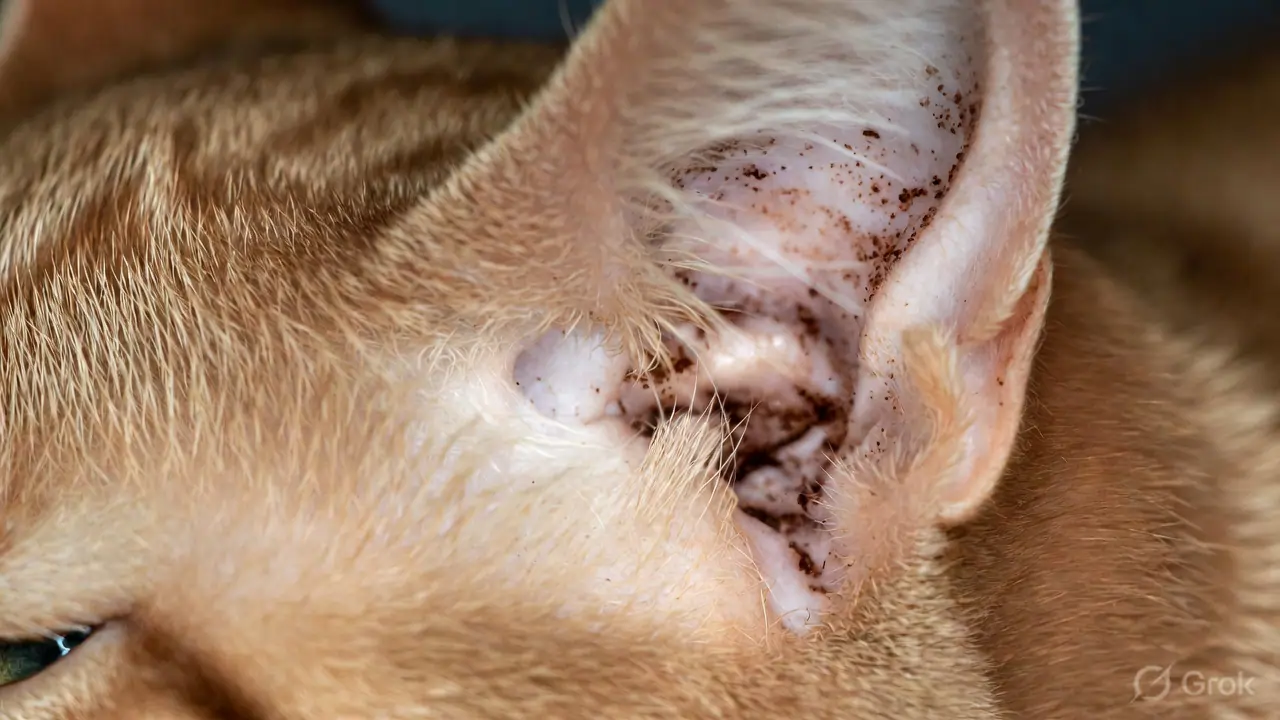
The most common ear condition in cats and kittens in India, and frequent in puppies. Ear mites are microscopic arachnids that live on the surface of the ear canal, feeding on skin debris. They produce intense irritation and a characteristic dark, dry, coffee-ground discharge — the debris is a combination of mite waste, blood, and wax. Transmission is by direct contact; all pets in a household must be treated simultaneously. Diagnosis is by visualising mites on otoscopy or on discharged debris. Treatment: topical acaricide drops or systemic isoxazoline parasiticides.
🍄 Yeast Otitis (Malassezia)
Malassezia pachydermatis is a commensal yeast normally present in small numbers in the ear canal — it becomes pathogenic when the canal environment shifts in its favour: increased warmth, humidity, and lipid content. The result is a distinctive greasy, dark brown to tan discharge with a musty, bread-like odour. Floppy-eared breeds are disproportionately affected, and yeast otitis spikes dramatically during the Indian monsoon. Underlying allergic skin disease is a very frequent predisposing factor — recurring yeast otitis without an obvious cause warrants allergy investigation. Treatment: antifungal ear drops (clotrimazole, miconazole); long-term management requires addressing the underlying cause.
🧫 Bacterial Otitis
Bacterial ear infections are rarely primary — they most often occur secondary to mites, yeast overgrowth, foreign bodies, or allergic disease that has disrupted the normal ear canal barrier. Staphylococcus pseudintermedius and Pseudomonas aeruginosa are the most common isolates in Indian clinical practice. Pseudomonas otitis is particularly challenging because it frequently carries multiple antibiotic resistance genes. Discharge is typically yellow to green, purulent, and may be copious. Pain on manipulation of the ear is more pronounced than with yeast or mites. Treatment requires culture and sensitivity testing followed by targeted antibiotic ear drops; systemic antibiotics are added when the tympanic membrane is compromised.
🌾 Foreign Bodies
Grass seeds — particularly foxtail grass awns — are the most common ear foreign bodies in Indian dogs, especially in dogs that walk through tall grass or fields. The barbed design of grass awns allows them to travel progressively deeper into the ear canal with every head movement. A dog that suddenly begins shaking its head vigorously and pawing at one ear after an outdoor walk should be presumed to have a grass seed in the ear until proven otherwise. Do not attempt removal at home — grass seeds in the deep canal require otoscope-guided forceps extraction under sedation. Cotton buds, small toy parts, and insects are also occasionally found.
🩸 Aural Hematoma
An aural hematoma is a collection of blood between the cartilage and skin of the ear flap, caused by vigorous and sustained head shaking or scratching. The underlying cause is always an irritant in the ear — infection, mites, or foreign body. The ear flap becomes visibly swollen, warm, fluctuant, and painful. Without treatment, the hematoma organises and contracts as it heals, causing permanent "cauliflower ear" deformity. Treatment: surgical drainage and quilting sutures to prevent re-accumulation; the underlying ear disease must be treated simultaneously or the hematoma will recur. It is a consequence, not a disease in itself.
Discharge Identification — What the Colour Tells You
The appearance of ear discharge is one of the most useful diagnostic clues available to you before a vet examination. Use this as a guide — not a diagnosis — to communicate more precisely with your veterinarian.
| Discharge Type | Most Likely Cause | Odour | Action |
|---|---|---|---|
| Small amount of pale tan waxy material | Normal cerumen (ear wax) | Minimal | Routine cleaning — no treatment needed |
| Dark brown, dry, crumbly — like coffee grounds | Ear mites (Otodectes) | Mild | Vet diagnosis + treat all pets simultaneously |
| Dark brown, greasy, waxy — moderate volume | Yeast (Malassezia) | Musty / yeasty — distinctive | Antifungal drops; vet if persistent or recurrent |
| Yellow, cream, or green — thick, pus-like | Bacterial infection | Foul | Vet immediately — culture required before treatment |
| Bloody or blood-tinged | Trauma, foreign body, polyp, or severe infection | Variable | Vet immediately — do not clean at home |
| Black, thick — very abundant | Chronic mixed infection (yeast + bacteria) | Very strong | Vet immediately — deep infection likely |
Safe Ear Cleaning Routine — Step by Step
For a healthy ear with normal wax accumulation, regular home cleaning prevents the buildup that leads to infection. The frequency depends on your pet's anatomy and lifestyle — floppy-eared breeds and swimmers need more frequent cleaning than erect-eared pets with low moisture exposure.
- 1Gather supplies: Veterinarian-approved ear cleaner (not olive oil, vinegar, or hydrogen peroxide), cotton balls or cotton pads, and high-value treats. Prepare everything before involving your pet — fumbling during the process increases anxiety.
- 2Position comfortably: Sit on the floor with a large dog between your legs; hold a small dog or cat in your lap with gentle body contact. A second person to assist is ideal for cats and dogs who resist ear handling. Never pin forcefully — this creates lasting negative associations.
- 3Fill the ear canal: Gently lift the ear flap. Insert the tip of the cleaner bottle into the ear canal opening and squeeze until you see the cleaner fill the canal — do not push the bottle tip deep into the canal. Release the ear flap.
- 4Massage the base: With the ear flap down, firmly massage the base of the ear (the cartilaginous area at the canal entrance below the skull) for 20–30 seconds. You should hear a soft squelching sound as the cleaner moves through the canal and loosens debris.
- 5Let the pet shake: Stand back and allow the pet to shake their head. This is critical — the centrifugal force brings loosened debris out of the vertical canal and into the horizontal section where you can reach it. Skipping this step means you wipe only the surface.
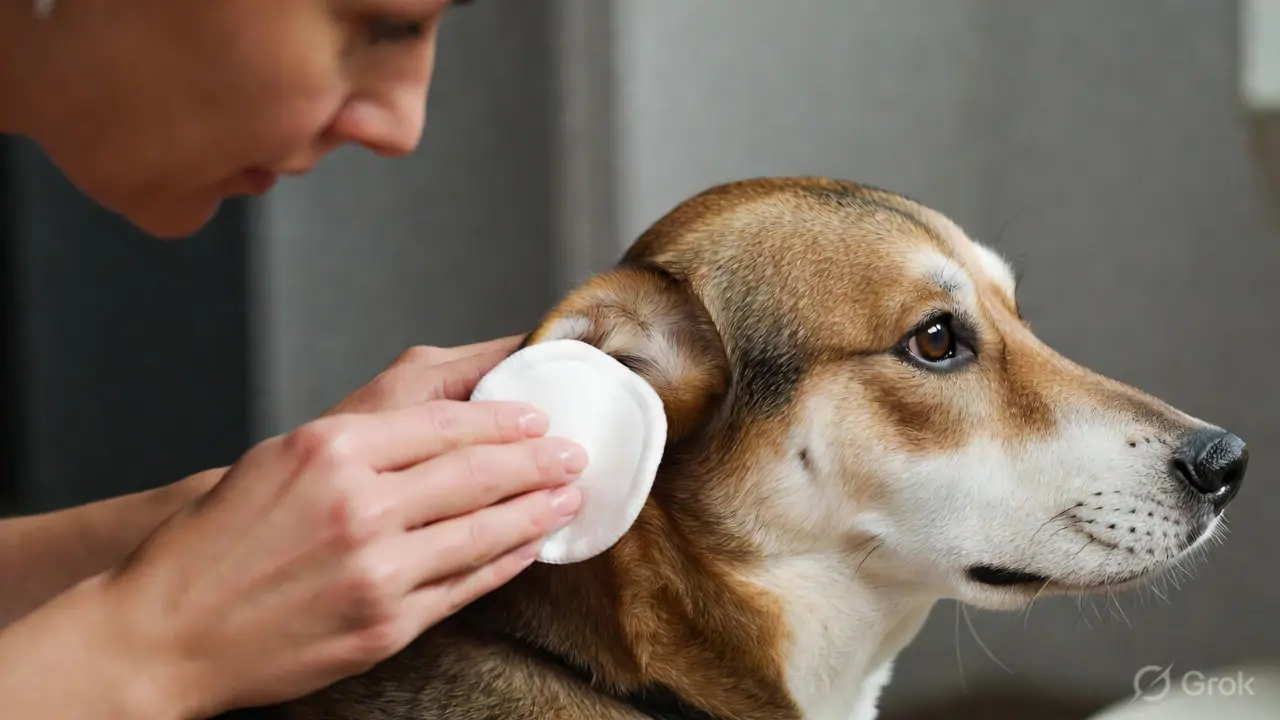
- 6Wipe the outer canal: Using a dry cotton ball or pad, gently wipe the ear canal entrance and visible inner surfaces of the ear flap. Only clean what you can see. Never insert cotton buds, fingers, or any instrument deeper than the first 1 cm of the visible canal.
- 7Reward generously: Give the treat immediately after completing each ear. If your pet is distressed, end the session, reward, and work on desensitisation over several days before attempting again. A pet who tolerates ear cleaning calmly throughout their life is worth the investment of early positive reinforcement.
When to Stop Home Care and See the Vet
Home ear cleaning is maintenance for healthy ears. It is not treatment for infected or painful ears. The following signs mean you should stop cleaning and contact your veterinarian:
- Any significant discharge — yellow, green, bloody, or very dark and copious brown
- Strong or unpleasant odour from the ear
- Redness or swelling visible inside the canal or on the ear flap
- Pet vocalises, snaps, or shows pain when ears are touched
- Head tilt that does not resolve — especially if accompanied by rapid eye movement (nystagmus)
- Ear flap swelling — aural hematoma requires prompt veterinary drainage
- Recurring infections — if the same ear keeps getting infected, the underlying cause (allergy, anatomy) must be addressed
- Suspected foreign body — sudden onset head shaking after outdoor activity
Prevention — India-Specific Tips
- Dry ears after every bath and swim — hold the ear flap up and gently wipe the canal entrance; use a low-heat hair dryer on the lowest setting at arm's length for 15–20 seconds for floppy ears
- Increase cleaning frequency during monsoon — shift from monthly to weekly cleaning for high-risk breeds during June–September when humidity-driven yeast risk is highest
- Treat all pets simultaneously for mites — if one pet has ear mites, every cat and dog in the household needs treatment, regardless of symptoms; mites disperse between hosts easily
- Use systemic parasite prevention — monthly isoxazoline-based products (e.g. fluralaner, sarolaner) prevent ear mite reinfestation from environmental exposure
- Avoid homemade remedies — diluted vinegar, olive oil, tea tree oil, and coconut oil are not substitutes for veterinary ear cleaners; some worsen yeast growth, and essential oils are toxic to cats
- Investigate recurring infections for allergy — a dog with more than two ear infections per year almost certainly has underlying atopic dermatitis; dermatology referral may be indicated
Related Guides
This content is provided for educational purposes only and is not a substitute for professional veterinary advice, diagnosis, or treatment. Do not attempt to clean ears that show signs of infection, pain, or significant discharge — consult your registered veterinarian first. Do not use cotton buds inside the ear canal. If your pet has recurring ear infections, seek veterinary assessment for underlying allergic or anatomical causes.