
Post-Operative Eye Care for Dogs & Cats
Why post-operative eye care matters
Post-operative eye care is a critical phase of recovery following ophthalmic and peri-ocular surgery in dogs and cats. Appropriate aftercare protects the healing eye, maintains tear film stability, controls inflammation and prevents complications such as infection, corneal ulceration or surgical failure.
The post-operative eye is particularly vulnerable — the protective corneal epithelium may be disrupted, local immune defences altered, and intraocular pressure dynamics changed. Structured, phased aftercare tailored to the procedure type significantly improves outcomes.
Surgeries requiring post-operative eye care
Cataract Surgery
Phacoemulsification — highest complexity; intensive 4–6 week post-op protocol
Cherry Eye Correction
Third eyelid gland repositioning — tear production monitoring essential
Entropion / Ectropion
Eyelid conformation surgery — surface protection until lid healing complete
Eyelid Mass Removal
Adnexal surgery — wound care and lubrication during recovery
Corneal Surgery
Keratotomy, conjunctival grafts — careful monitoring for re-ulceration
Post-cataract surgery — phased recovery
Cataract surgery requires the most structured post-operative protocol of any ophthalmic procedure. The following phases are a general educational guide — always follow your veterinary surgeon's specific instructions.
Acute phase — intensive cover
- Anti-infective / anti-inflammatory drops (e.g. FurrMoxi LP) 4× daily
- Ocular lubricant (e.g. Vet Tears HA) 4× daily — wait 10 min after medicated drop
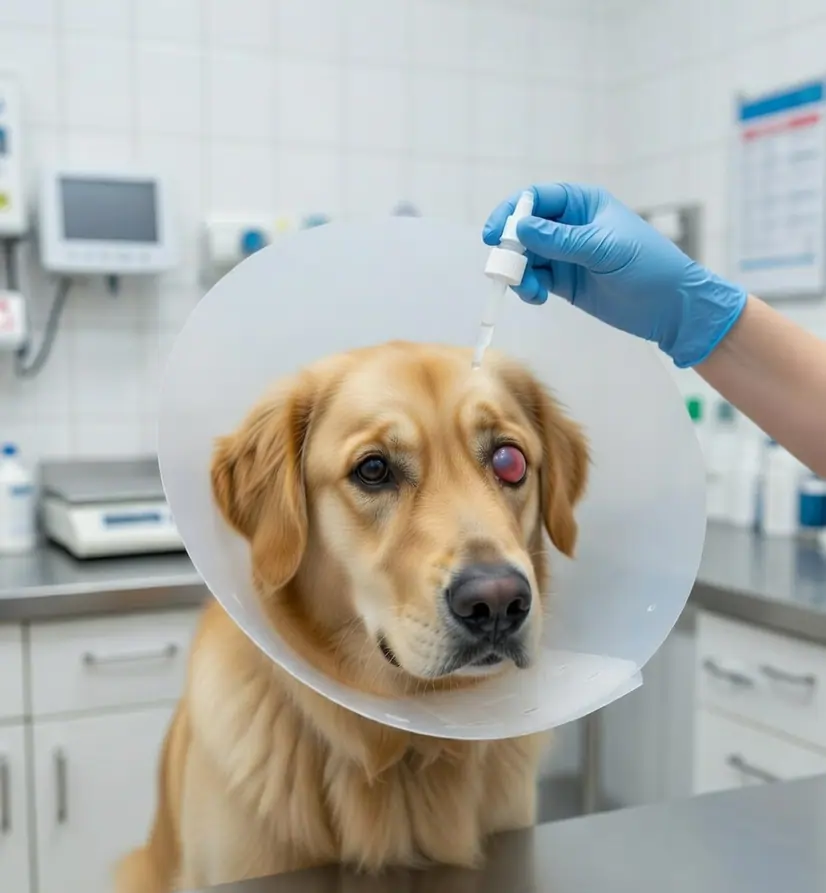
- E-collar worn continuously — no exceptions
- Monitor: IOP, anterior chamber clarity, pain signs, corneal oedema
- Restrict activity; avoid swimming, dusty environments
First recheck — begin taper
- Recheck IOP, corneal clarity and anterior chamber reaction
- Taper anti-infective / anti-inflammatory to 3× daily if healing on track
- Continue lubricant 3–4× daily
- E-collar remains essential — do not remove prematurely
Continued taper
- Reduce anti-infective / anti-inflammatory to 2× daily; discontinue by week 4 if uncomplicated
- Lubricant taper to 2–3× daily; continue for comfort as needed
- Week 4 formal post-operative recheck
Maintenance and discharge
- Most medications discontinued by week 6 if uncomplicated
- Continue lubricant as needed for ongoing comfort and surface health
- Schedule routine 3–6 monthly ophthalmic monitoring
Correct order for applying multiple eye drops
When two or more drops are prescribed, sequence and timing are critical. Applying a lubricant first creates a film that dilutes or washes out the medicated drop before it contacts the ocular surface.
For three or more drops, apply the most critical medication first, then additional medications in order of priority, always leaving the lubricant last. Wait 5–10 minutes between each drop.
Post-operative care after cherry eye surgery
The third eyelid gland (nictitans gland) contributes 30–50% of basal aqueous tear production in dogs. Surgical manipulation — even with modern pocket/repositioning techniques — can temporarily reduce tear output, increasing the risk of post-operative dry eye.
- Aggressive early lubrication — up to Q2–3H in week 1
- Anti-inflammatory cover for perioperative inflammation
- STT at week 2 to assess tear production recovery
- Adjust lubricant frequency based on STT result
- Long-term monitoring — KCS risk persists, especially in predisposed breeds
- Consider immunomodulators if STT remains <10 mm/min at week 4
Gland excision vs. repositioning: Excision of the third eyelid gland is associated with a much higher risk of permanent KCS and is generally considered poor practice. If excision was performed, lifelong lubrication and close STT monitoring are essential.
Role of ocular lubricants in surgical recovery
Sodium hyaluronate-based lubricants such as Vet Tears HA provide sustained corneal surface hydration, reduce mechanical friction, and support epithelial healing — all critical during the post-operative window when natural tear production may be temporarily impaired.
Managing infection and inflammation post-surgery
Depending on the procedure, veterinarians may prescribe a preservative-free antibiotic-steroid combination to provide dual anti-infective and anti-inflammatory cover. These must be used strictly under veterinary direction.
Critical safety rule: Steroid-containing ophthalmic medications are absolutely contraindicated in active corneal ulceration. They can accelerate stromal melting, delay epithelial healing and increase the risk of corneal perforation. Always confirm corneal integrity with fluorescein staining before any steroid prescription.
Warning signs — when to contact your vet immediately
Most post-operative recovery is uneventful when care is followed correctly. However, some signs require urgent attention. Contact your veterinarian same day if you observe any of the following:
Seek urgent veterinary attention if you see:
- Sudden worsening of pain — severe blepharospasm, pawing despite e-collar
- Purulent (thick yellow or green) discharge
- Rapid worsening of corneal cloudiness or haze
- Visible change in eye shape or apparent collapse
- Swollen, red or hot periocular tissue
- Sudden loss of vision or unusual eye movement
- Pet managing to remove e-collar and rub the eye
Home care and owner guidance
- Administer all medications at prescribed times — consistency matters
- Apply drops correctly — lower eyelid pouch technique, avoid touching the eye with the dropper tip
- Keep the e-collar on at all times — including during sleep
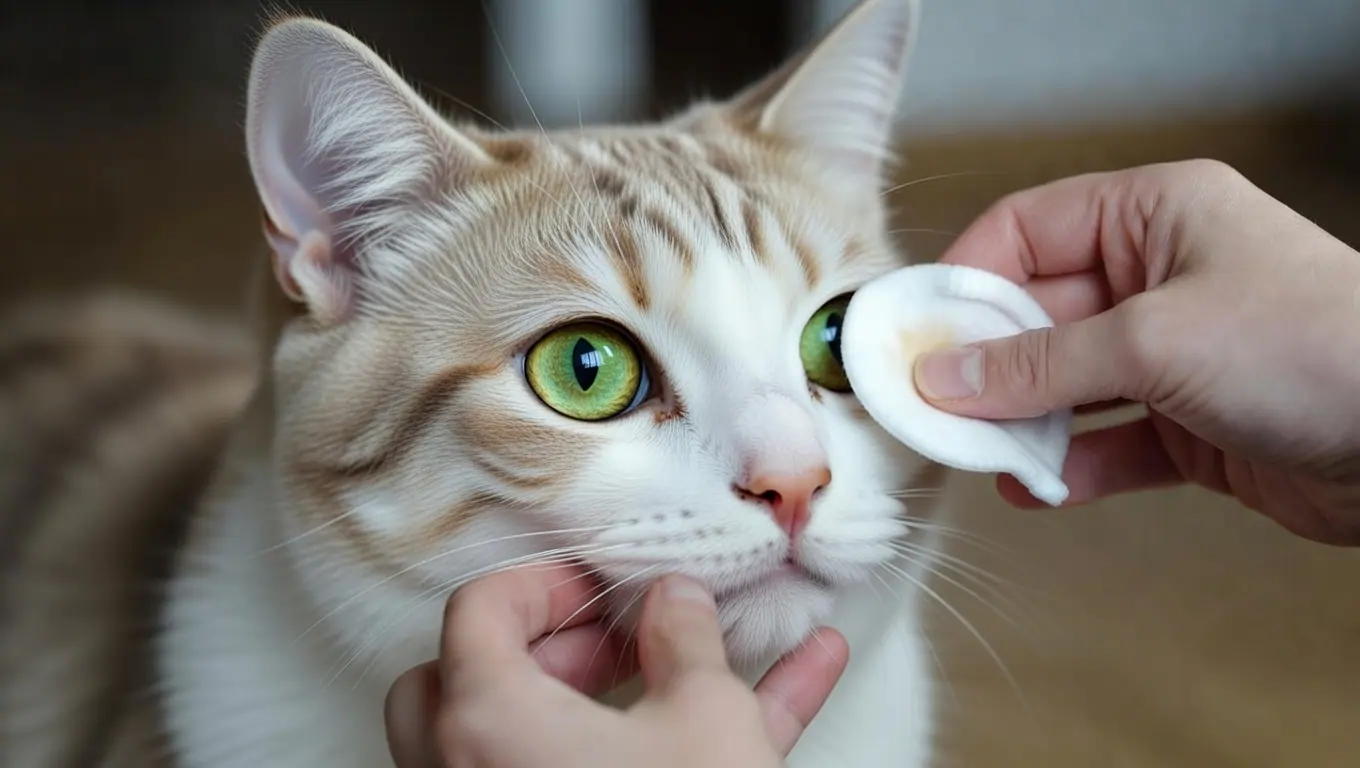
- Gently clean any discharge with a damp sterile gauze — never dry wipe
- Attend every scheduled recheck — even if the eye looks fine
- Keep the eye away from dust, dirt, pool water and pet grooming products
- Restrict vigorous activity, jumping or rough play during recovery
- Store all eye medications correctly — many require refrigeration
Frequently Asked Questions
Why is post-operative eye care important for pets?
Post-operative eye care protects the healing ocular surface, controls inflammation and infection risk, and supports tear film stability during the vulnerable recovery period. Without proper aftercare, complications such as infection, corneal ulceration or surgical failure can occur.
Which surgeries require post-operative eye care?
Cataract and phacoemulsification surgery, cherry eye (third eyelid gland repositioning), entropion and ectropion correction, eyelid mass removal, and corneal or conjunctival procedures all require structured post-operative eye care with regular veterinary rechecks.
How long does post-operative eye care last after cataract surgery in dogs?
Post-operative care after cataract surgery typically spans 4 to 6 weeks, starting with intensive medication (4× daily) in the first week and tapering progressively under veterinary supervision. Long-term lubricant use may continue beyond this for comfort and surface health.
Can I use steroid eye drops after my pet's surgery?
Only if prescribed by your veterinarian after confirming corneal integrity with fluorescein staining. Steroid-containing drops are absolutely contraindicated in active corneal ulceration — they can accelerate stromal melting and risk perforation. Never use leftover steroid drops without a current veterinary prescription.
What are the warning signs after eye surgery in dogs and cats?
Seek urgent veterinary attention if you see sudden worsening pain or blepharospasm, purulent discharge, rapidly worsening corneal cloudiness, apparent change in eye shape, or if your pet has managed to rub the operated eye. Early intervention significantly improves outcomes.
Do pets need an e-collar after eye surgery?
Yes — an Elizabethan collar (e-collar) is essential and should be worn continuously throughout the acute post-operative phase. Even a few seconds of eye rubbing can disrupt surgical repairs or introduce infection. Do not remove the e-collar without veterinary clearance.
Explore related eye care guidance
Disclaimer: This page is for general informational and educational purposes only. It does not replace professional veterinary diagnosis, clinical examination or treatment. Post-operative care protocols must always be individualised by the treating veterinary surgeon. AlcoVet Healthcare assumes no liability for actions taken based on the content of this page.