
Anxiety in cats is profoundly underrecognised in India. Unlike dogs — who express distress visibly through vocalisation, destructive behaviour, and obvious restlessness — anxious cats withdraw, hide, groom excessively, and develop physical illness. The connection between a cat's chronic bladder inflammation or persistent vomiting and its stressful home environment is not intuitive to most owners, and not all veterinarians address it proactively. The result is cats that receive repeated medical treatment for conditions that are, at their root, behavioural and environmental.
India presents a particularly challenging set of stressors for indoor cats: extreme seasonal temperature swings, festival-related noise (firecrackers, loud music), urban construction, dense multi-pet households, and the chronic presence of visible stray cats outside apartment windows. Understanding how cats experience and express anxiety — and how to treat it — is essential knowledge for responsible cat ownership in the Indian context.
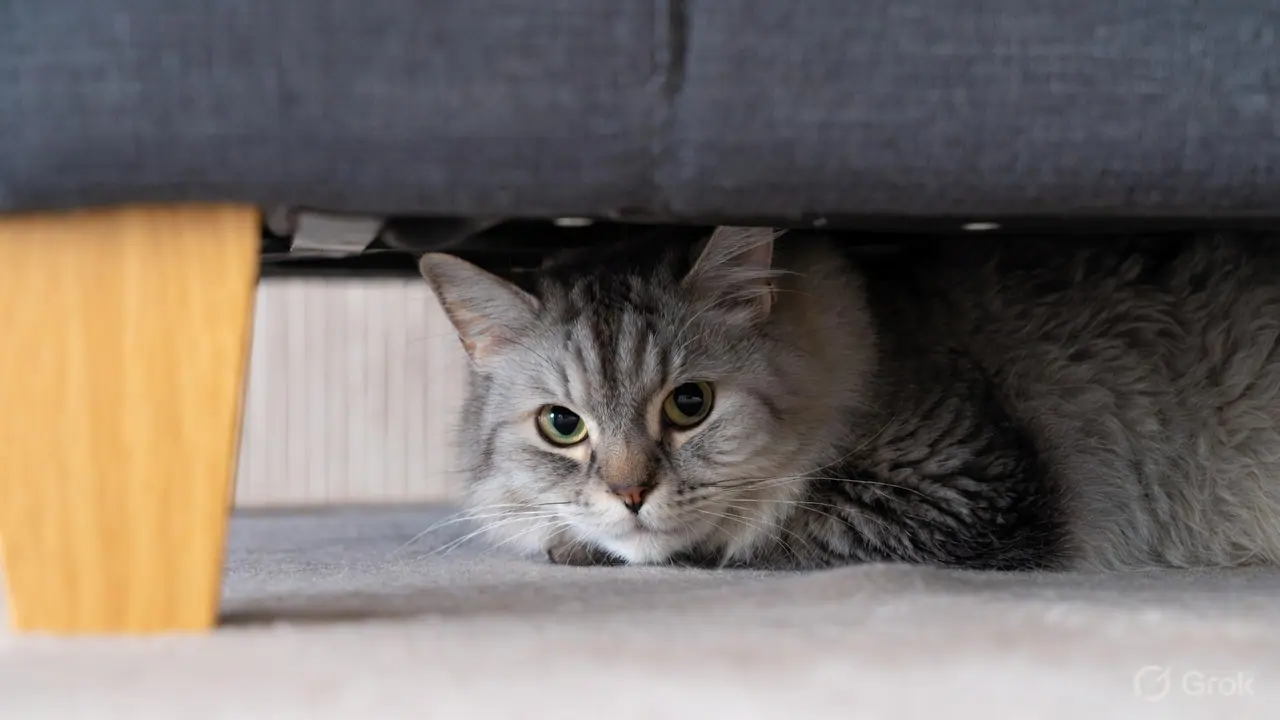
How Cats Experience Stress Differently from Dogs
The feline stress response is mediated by the same HPA (hypothalamic-pituitary-adrenal) axis as in dogs, but its expression is shaped by the cat's evolutionary role as a solitary predator that is simultaneously prey to larger animals. Cats under threat do not fight or flee as a first response — they freeze and hide. This makes their distress invisible to humans who are not specifically looking for it.
Chronic stress in cats suppresses immune function, increases gastrointestinal motility dysfunction, and causes neurogenic inflammation of the bladder wall — the mechanism behind feline idiopathic cystitis (FIC). It also activates displacement behaviours including excessive grooming (licking as self-soothing), urine marking as territorial reassurance, and appetite changes. A cat that "seems fine" but is quietly hiding more, eating less, or visiting the litter box frequently is not fine — it is a cat in chronic stress that has not yet reached the threshold of visible distress.
Recognising Stress — Signs by Severity
Subtle Behavioural Changes
Hiding more than usual; choosing elevated or concealed resting spots; slightly reduced appetite; less interactive with family members; increased blinking or half-closed eyes (a calming signal); slight increase in grooming time. These signs are easily missed or attributed to "the cat being in a mood."
Visible Anxiety Behaviours
Frequent trips to the litter box with little output (early FIC); urine spraying on vertical surfaces (territorial anxiety); over-grooming creating thin or bare patches on the belly or inner thighs; redirected aggression toward owner after window exposure to outdoor cats; night-time yowling; eating significantly less or faster than normal.
Physical Disease Manifestation
Urethral obstruction from FIC crystals (life-threatening in males); large bald patches from psychogenic alopecia; chronic intermittent vomiting with no structural cause found; significant weight loss; persistent house soiling despite clean litter boxes; complete social withdrawal. Veterinary intervention is urgent at this stage.
Common Triggers — India-Specific
Management & Treatment Options
Feline anxiety is treated on a spectrum from environmental modification through pheromone therapy to prescription anxiolytic medication, depending on severity and chronicity. Environmental changes should always be implemented first and alongside any pharmacological intervention — medication without environmental correction provides only partial and temporary relief.
🏠 Environmental Modification
First-line treatment for all anxiety levels. Create hiding spots at multiple heights in every room. Ensure the n+1 resource rule in multi-cat homes. Reduce visual access to outdoor cats by window film or blocking lower window sections. Provide a dedicated retreat space the cat can access that other household members — pets and people — cannot intrude on. See the Indoor Enrichment guide for full detail.
🌸 Feliway Pheromone Therapy
Feliway Classic diffuser emits synthetic feline facial pheromone (F3 fraction) — the "marking as safe" signal cats deposit when rubbing their face on objects. It reduces general environmental anxiety. Feliway Multicat emits cat appeasing pheromone (CAP) — reduces inter-cat tension specifically. Both require 2–4 weeks of continuous use for full effect. Do not use Feliway Classic and Multicat in the same diffuser; use separate units.
🎮 Structured Play Therapy
Two daily wand-toy play sessions provide controlled discharge of predatory arousal that, when blocked, generates anxiety. Sessions should end with a food reward — the "kill and consume" sequence completion. In anxious cats, play therapy reduces FIC recurrence rates in clinical studies significantly when combined with environmental enrichment.
🫁 Calming Supplements
Zylkène (hydrolysed casein), Anxitane (L-theanine), and Royal Canin Calm diet are evidence-supported supplements for mild-moderate feline anxiety available in India. They modulate GABA and glutamate pathways without sedation. Appropriate for daily management of chronic low-grade anxiety, pre-Diwali season use, or veterinary visit preparation.
💊 Prescription Anxiolytics
For moderate-severe or chronic anxiety unresponsive to environmental management, veterinary-prescribed medications are available: gabapentin (excellent for acute events — vet visits, fireworks — sedating effect), buspirone (daily use, non-sedating, good for inter-cat tension), fluoxetine or clomipramine (daily SSRIs for generalised chronic anxiety — 4–6 week onset). All require prescription from a registered veterinarian; do not source or dose without veterinary guidance.
🎵 Sound Therapy
Music specifically designed for cats (iCalmCat; Through a Dog's Ear cat-specific tracks) has been shown in clinical trials to reduce heart rate and cortisol in cats during stressful events. Play at low volume continuously in the cat's retreat space during high-stress periods (Diwali, construction, visitors). White noise machines also reduce the startle impact of sudden outdoor sounds.
Diwali — The Annual High-Stakes Event
No event causes more acute feline distress in India than the Diwali firecracker season. Preparation should begin at least one week before anticipated peak cracker activity. The following protocol significantly reduces severity of stress response:
| Timing | Action | Notes |
|---|---|---|
| 1 week before | Begin Feliway Classic diffuser | Takes 5–7 days to reach full pheromone saturation in the room |
| 3–5 days before | Begin Zylkène or Anxitane supplementation | Casein-based calming supplements require days to reach effective levels |
| Day before peak | Confirm retreat space is accessible and stocked | Bedding, water, litter, hiding spot — all inside the designated room |
| Night of peak | Keep cat in interior room furthest from outdoor noise; play iCalmCat at low volume; do not force interaction | Gabapentin (vet-prescribed) can be given 2 hrs before anticipated peak for high-anxiety cats |
| During event | Do not open doors or windows; keep lights on (reduces contrast-fright from flash-bang); stay calm | Owner anxiety is perceived by cats — your calm presence helps; do not over-comfort as it can reinforce fear |
| Post-event | Resume normal routine as quickly as possible; re-engage with play sessions | Some cats remain stress-elevated for 2–3 days post-event; monitor litter box use closely |
Related Guides
This content is provided for educational purposes only. Feline anxiety disorders and stress-related illness require professional veterinary assessment — particularly to rule out concurrent medical causes before attributing signs to anxiety alone. Prescription anxiolytic medications require veterinary diagnosis and prescription. If your cat is showing signs of urinary obstruction, significant behavioural change, or apparent pain, consult a veterinarian immediately.