
Cats are not small dogs. This statement sounds obvious, but its implications for how you set up your home, what you feed, how you handle, and what veterinary care you provide are profound — and frequently misunderstood by first-time cat owners in India. A kitten that receives appropriate species-specific care in its first twelve weeks at home will be healthier, more confident, and easier to live with for the next fifteen to twenty years. A kitten set up incorrectly in those same twelve weeks often develops fear-based behaviour, nutritional deficiencies, or chronic disease that is expensive and difficult to address later.
India's cat ownership culture is changing rapidly. Urban apartments are increasingly home to cats — particularly in cities like Bengaluru, Mumbai, Pune, Hyderabad, and Delhi — and with that shift comes a growing need for accurate, India-specific guidance. Many cats in Indian homes are still fed milk (which causes diarrhoea in weaned cats), denied veterinary dental care, kept without litter boxes, or exposed to toxic houseplants and cleaning chemicals without their owners' awareness. This guide covers every practical consideration, honestly and specifically.
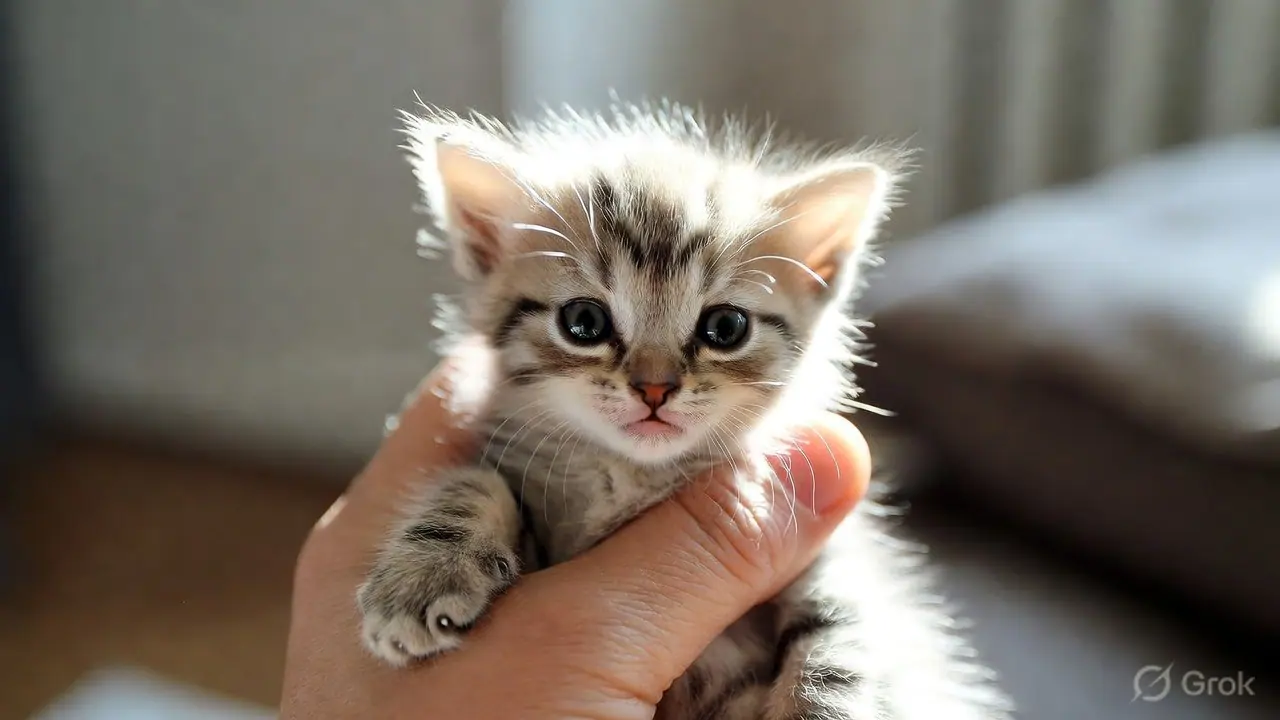
Understanding Your Kitten's Nature Before Anything Else
Cats are solitary, territorial, crepuscular hunters — most active at dawn and dusk, with well-defined needs for control over their environment that differ fundamentally from dogs. Understanding three core cat characteristics prevents most of the common mistakes new owners make in the first weeks.
🗺️ Territorial Control
Cats need to feel ownership of their space. A new kitten dropped into a full apartment immediately is overwhelmed. Begin with a single room — a "base camp" — with food, water, litter, bedding, and a hiding spot. Expand access gradually over 1–2 weeks as confidence builds. Forcing exploration increases stress and delays bonding.
🎯 Predatory Drive
Every cat — indoor or outdoor, well-fed or hungry — has a hard-wired hunting drive that requires daily expression through play. A kitten denied outlets for hunting behaviour redirects this drive to hands, feet, ankles, and other pets. Structured play sessions are not optional enrichment; they are essential behavioural maintenance.
🫙 Obligate Carnivore Biology
Cats cannot synthesise taurine, arachidonic acid, or pre-formed vitamin A — all of which must come from animal tissue. A cat fed a grain-heavy or plant-dominant diet — including the rice-and-milk approach common in Indian households — will develop cardiac disease (dilated cardiomyopathy from taurine deficiency) and blindness. Species-appropriate, high-protein, high-moisture feeding is non-negotiable.
Before Your Kitten Arrives — Preparation Checklist
Cats are hyperaware of environmental change. A prepared home reduces the adjustment period from weeks to days. Everything on this list should be in place before collection day — not purchased in response to problems after arrival.
Vaccination & Deworming Schedule
Cats in India face significant infectious disease risk from feline panleukopenia (feline parvovirus), feline herpesvirus, and feline calicivirus — all of which circulate in the street cat population. Feline panleukopenia in particular is as devastating in cats as canine parvovirus is in dogs: it destroys rapidly dividing gut lining cells and white blood cells, kills within 24–72 hours without treatment, and has no specific antiviral therapy. Vaccination is the only protection.
| Age | Vaccination | Deworming | Notes |
|---|---|---|---|
| 6–8 weeks | FVRCP (Feline Viral Rhinotracheitis, Calicivirus, Panleukopenia) — first dose | First deworming (pyrantel pamoate) | Maternal antibodies still present — this dose primes immunity. Keep away from unknown cats and stray-frequented areas until fully vaccinated. |
| 10–12 weeks | FVRCP second dose | Second deworming | Critical dose as maternal antibody waning. Protection building — avoid boarding facilities, cat shows, and unknown cats. |
| 14–16 weeks | FVRCP third dose + Rabies (first dose) | Third deworming | Core series complete. Rabies vaccination is legally required in India for owned cats in many states, and practically essential given India's rabies burden. |
| 6 months | — | Monthly deworming continues to 6 months | Ideal time for spaying (females) or neutering (males) — before first heat cycle in females (as early as 4–5 months in some Indian cats). Discuss timing with your vet. |
| 12–16 months | FVRCP + Rabies annual boosters | Quarterly deworming as adult | First adult booster. Also consider FeLV (Feline Leukaemia Virus) vaccination for cats with any outdoor access or multi-cat household exposure — discuss with your vet. |
Deworming — Roundworms, Hookworms, and Tapeworms
Most kittens in India are born with Toxocara cati (roundworm) acquired in utero or through maternal milk. In warm, humid Indian conditions, hookworm larvae in soil are also common. A kitten dewormed at 6, 8, 10, 12, and 16 weeks with an appropriate anthelmintic (pyrantel pamoate for roundworms and hookworms; praziquantel if tapeworms are suspected from flea exposure), then monthly until 6 months, then quarterly as an adult, is adequately protected. Visible worms in stool or vomit, a pot-bellied appearance despite eating well, and failure to gain weight are all signs of significant worm burden requiring immediate treatment.
Kitten-Proofing Your Home — The India-Specific Hazard List
Kittens are climbers, squeezers, and insatiable investigators. They access heights, gaps, and enclosed spaces that puppies never attempt. Indian homes present a specific set of kitten hazards that deserve particular attention — several of which are responsible for a disproportionate number of veterinary emergencies every year.
Feeding Your Kitten — The Obligate Carnivore's Requirements
No aspect of kitten care generates more misinformation in India than feeding. The two most common errors are offering cow's milk as a primary beverage and feeding a grain-dominant homemade diet. Both cause real and measurable harm. Kittens require high animal protein, taurine, arachidonic acid, pre-formed vitamin A, and high moisture intake — none of which are adequately provided by rice, roti, dal, or cow's milk.
| Age | Meals per Day | Food Type | Key Notes |
|---|---|---|---|
| 6–8 weeks (typical arrival age) | 4 meals | Kitten wet food (pâté texture); or softened kitten kibble. Continue what the breeder/rescue was feeding. | Transition new food over 7–10 days — mix increasing proportions of new food with old. Abrupt changes cause severe diarrhoea in kittens. |
| 8–12 weeks | 3–4 meals | Kitten wet food preferred; dry kibble can be offered alongside | Weigh weekly — kittens should gain approximately 100 g per week. Ribs easily felt but not visible. Never restrict food at this stage. |
| 3–6 months | 3 meals | Wet + dry combination; wet food should be at least 50% of intake for hydration | Growth is rapid. Taurine content of food is critical — verify it appears in the ingredients list of any food you choose. |
| 6–12 months | 2–3 meals | Kitten formula until 12 months; then transition to adult cat food | Indoor cats are prone to obesity after neutering — begin monitoring body condition from 6 months. Wet food remains essential for urinary tract health throughout life. |
Litter Box Training — Easier Than You Think
Unlike puppies, kittens do not need to be "toilet trained" in the behavioural sense — the instinct to dig, eliminate, and cover in substrate is hardwired. Most kittens will use a litter box correctly from the moment one is placed in front of them. The problems that arise — elimination outside the box, box refusal, or inconsistent use — are almost always caused by litter box setup errors, not the kitten.
- 1Place the litter box in the base camp room immediately on arrival. Show the kitten the box by gently placing it inside and letting it investigate. Do not force it to perform — just demonstrate the substrate.
- 2Follow the n+1 rule as your home expands: One litter box per cat, plus one extra. A single-cat home needs at least two boxes. Cats are fastidious — a box that smells of previous use is often refused, particularly by young kittens.
- 3Scoop at least once daily, fully change litter weekly. The most common cause of litter box avoidance is insufficient cleanliness. Cats associate the smell of soiled litter with predator detection risk in the wild — an instinct that overrides even good early training when the box is not maintained.
- 4Never place the litter box near the food bowl. Cats instinctively avoid eliminating near their food source. If your base camp room is small, place the litter box in the furthest corner from the food and water.
- 5Avoid covered litter boxes initially. Covered boxes trap odour inside, which cats find aversive even if humans find it convenient. Once a kitten is consistently using an open box, you can trial a covered one — but be prepared to revert if use drops.
- 6If your kitten eliminates outside the box once, clean the spot thoroughly with an enzymatic cleaner. Standard household cleaners leave odour traces that attract repeat elimination to the same spot. Enzymatic cleaners (available in pet stores) biologically break down the odour compounds.
The Socialisation Window — 2 to 7 Weeks
The sensitive socialisation period in cats is earlier and shorter than in dogs — it runs from approximately 2 to 7 weeks of age. This means that by the time most kittens arrive in new Indian homes (typically 6–8 weeks), their most critical socialisation window has already partially or fully closed. The kitten you bring home has already been shaped by everything — or everything it lacked — in that first 7 weeks.
What this means practically is that kittens adopted from responsible breeders or fosters who handled them extensively before 7 weeks (touched their paws, ears, and mouths; exposed them to different people, sounds, and textures; habituated them to being picked up) will generally be confident and handleable. Kittens from less stimulating early environments — stray-born rescues, pet shop kittens kept in cages, or litters with minimal human contact before 7 weeks — may be fearful, slow to trust, and require patient, gradual approach.
Play & Enrichment — Structured Hunting, Not Optional Exercise
Play is not a luxury for indoor kittens — it is the primary mechanism through which they express their predatory drive, release stress hormones, build confidence, and maintain healthy body weight. A kitten that does not have adequate play outlets redirects its hunting drive to hands, feet, and other household animals. Two dedicated play sessions of 10–15 minutes daily — using wand toys that mimic prey movement — significantly reduce nocturnal hyperactivity, redirected aggression, and anxiety-related overgrooming in adult cats.
Spaying & Neutering — Why, When, and What to Expect
Spaying (females) and neutering (males) are the most impactful long-term health decisions you make for your indoor cat. The benefits extend well beyond population control: spayed females have near-zero risk of uterine infection (pyometra — a life-threatening emergency), eliminated mammary tumour risk when spayed before first heat, and no heat cycle distress. Neutered males stop urine marking (spraying), are dramatically less prone to territorial aggression and roaming, and have no testicular cancer risk.
In India, female cats can reach sexual maturity as early as 4–5 months — significantly earlier than the traditional "6 months" recommendation suggests. A female kitten that goes into heat before spaying will cycle continuously, calling loudly for days, and can become pregnant during her first heat cycle. The recommended approach for most Indian urban cats is to spay females at 4–5 months if she has reached 1.5–2 kg body weight, and to neuter males at 5–6 months. Discuss timing specifically with your vet given your kitten's breed and growth rate.
India-Specific Kitten Considerations
Your Kitten's Early Veterinary Visits
The first veterinary visit should happen within 48–72 hours of bringing your kitten home — regardless of what vaccination documentation was provided with the kitten. Many Indian kittens arrive with incomplete, undated, or handwritten vaccination records that cannot be reliably verified. A vet-administered baseline assessment establishes accurate vaccination status, identifies any health issues present at adoption, and gives you a verified schedule to work from.
A thorough first kitten visit should include: complete physical examination including heart auscultation (congenital heart murmurs are common in kittens); weight and body condition assessment; eye examination (conjunctivitis, discharge, and entropion are common in young kittens); oral health check; palpation for hernias; faecal examination for parasites if a sample is provided; initiation of deworming; first vaccination if not recently given; and a written schedule for upcoming vaccines and deworming.
Related Guides
This content is provided for educational purposes only and is not a substitute for professional veterinary advice. Every kitten is an individual — breed, early history, vaccination status, and health condition all affect what is appropriate. Always consult your registered veterinarian for personalised vaccination schedules, deworming protocols, spay/neuter timing, and nutrition guidance. If your kitten shows signs of illness — sneezing, eye or nasal discharge, diarrhoea, lethargy, or reduced appetite — contact your vet promptly. Kittens deteriorate rapidly when unwell; early intervention is always safer than watchful waiting.