
India's summer is not a gentle season. Across the northern and central plains — Rajasthan, Delhi, UP, MP, Gujarat — ambient temperatures routinely exceed 44–46°C between May and June. Coastal cities like Mumbai and Chennai add high humidity to temperatures in the high 30s, creating heat indices that feel closer to 50°C. Even Indian hill stations, historically pleasant in summer, are now recording temperatures 3–5°C above long-term averages.
Cats are better at tolerating heat than most people assume — their evolutionary origin in the dry, hot regions of North Africa and the Middle East gave them physiological adaptations that allow them to cope in warm conditions. But there is a significant difference between the warm-and-arid conditions for which felid physiology evolved and the 45°C-plus, sometimes humid conditions of an Indian heat wave. When an indoor apartment in Delhi reaches 38°C because the power has cut for six hours and the AC has stopped, a cat in that environment is in genuine danger, not mild discomfort.
Understanding where the threshold lies — what is tolerable and what is dangerous — and knowing what to do when the dangerous threshold is crossed, is one of the most practically important pieces of cat care knowledge for any owner in India's hotter regions.
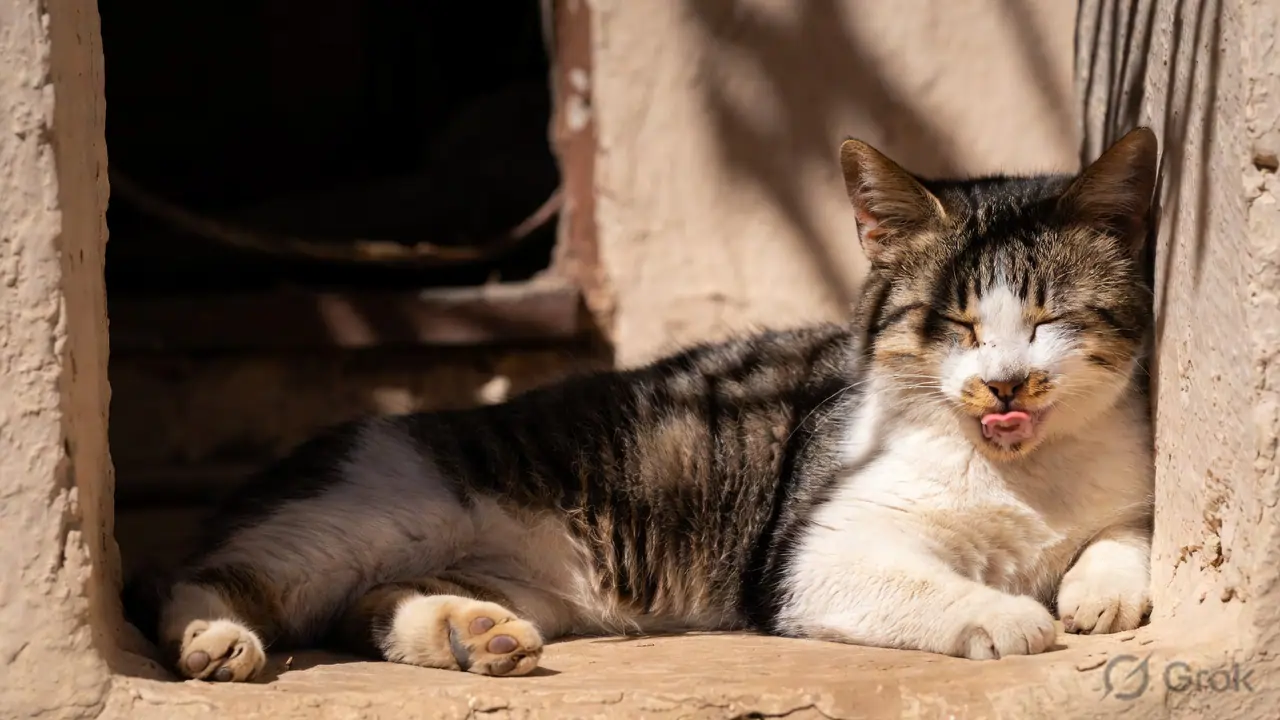
Cats naturally seek out the coolest available spot during peak heat hours. Facilitating this — by providing cool surfaces, shaded retreats, and indoor cool zones — is the most effective passive summer management strategy.
How Cats Regulate Body Temperature — and Where the System Fails
Cats have a normal body temperature of 38–39.2°C. They regulate this through several mechanisms that differ from human thermoregulation in important ways. Unlike humans, cats have very few sweat glands — limited to the pads of their paws, not distributed across the skin surface. This means that sweating-based evaporative cooling, the primary human heat dissipation mechanism, is essentially unavailable to cats except at the paw level.
Cats' primary cooling strategies are behavioural and respiratory. Behaviourally, they seek the coolest available microenvironment — marble floors, the underside of furniture, tiled bathrooms, north-facing rooms — and reduce their activity to near zero during peak heat hours. This is why a cat that is perfectly healthy in winter may seem lethargic and inactive through a May afternoon: it is practising deliberate energy and heat conservation, not experiencing illness. Respiratory cooling — panting — is available as an emergency mechanism but is metabolically expensive and is not used routinely as a maintenance cooling strategy the way dogs use it. Any cat panting at rest indoors, outside of extreme exertion or acute fear, is in heat stress.
The feline thermoregulation system fails when the environmental temperature approaches or exceeds the cat's body temperature — typically above 40–41°C ambient — and when the cat has no access to a cooler microenvironment, water, or air movement. Kittens, senior cats, and flat-faced breeds reach this failure point at lower environmental temperatures than healthy adults, for reasons covered in the at-risk section below.
What Ambient Temperature Means for Your Cat — Four Bands
Warm — Monitor and Facilitate
A healthy adult cat with access to shade, cool surfaces (marble, tile), and fresh water manages this range without intervention. Behaviour shifts toward inactivity and shade-seeking are normal and appropriate — do not interpret them as illness. Ensure multiple water sources are available and accessible without effort. Check that no room is sealed with no air movement. A cat sleeping in a cool spot through peak afternoon hours is doing exactly the right thing.
Hot — Active Management Required
Healthy adults can cope but are under thermal load. Ensure the coolest room is accessible and that the cat can move freely between rooms to find the best microenvironment. Offer chilled water or add ice cubes to water bowls. Wet a cool cloth and place it where the cat rests — many cats will voluntarily lie on a damp cool surface. If a power cut occurs at this temperature and there is no cooling in the home, begin monitoring the cat actively every 30–60 minutes. At-risk individuals (kittens, seniors, flat-faced breeds) need active cooling at the lower end of this band.
Danger Zone — All Cats at Risk
No indoor cat can safely thermoregulate without assistance at this temperature unless the home has extremely good insulation and airflow. Any cat in an enclosed room at this ambient temperature is approaching the body-temperature-equals-ambient threshold at which evaporative and behavioural cooling cease to function. Observe for panting, excessive grooming of paws (the cat's best available evaporative surface), restlessness, and vomiting. Provide active cooling interventions — see the first aid section. At-risk individuals require immediate intervention at the lower end of this band.
Emergency — Heatstroke Territory
Temperatures routinely recorded in Rajasthan, MP, and Delhi NCR during May–June peak. Any cat without access to active cooling (AC or equivalent) is at serious risk of heatstroke within hours. Even healthy adults should not be left unattended in environments above 44°C without guaranteed air conditioning. During extreme heat events, check on your cat every 30 minutes if you are home. If you are leaving home during a forecast extreme heat day, ensure the AC is set and functioning before departure — or arrange for a neighbour or cat-sitter to check in.
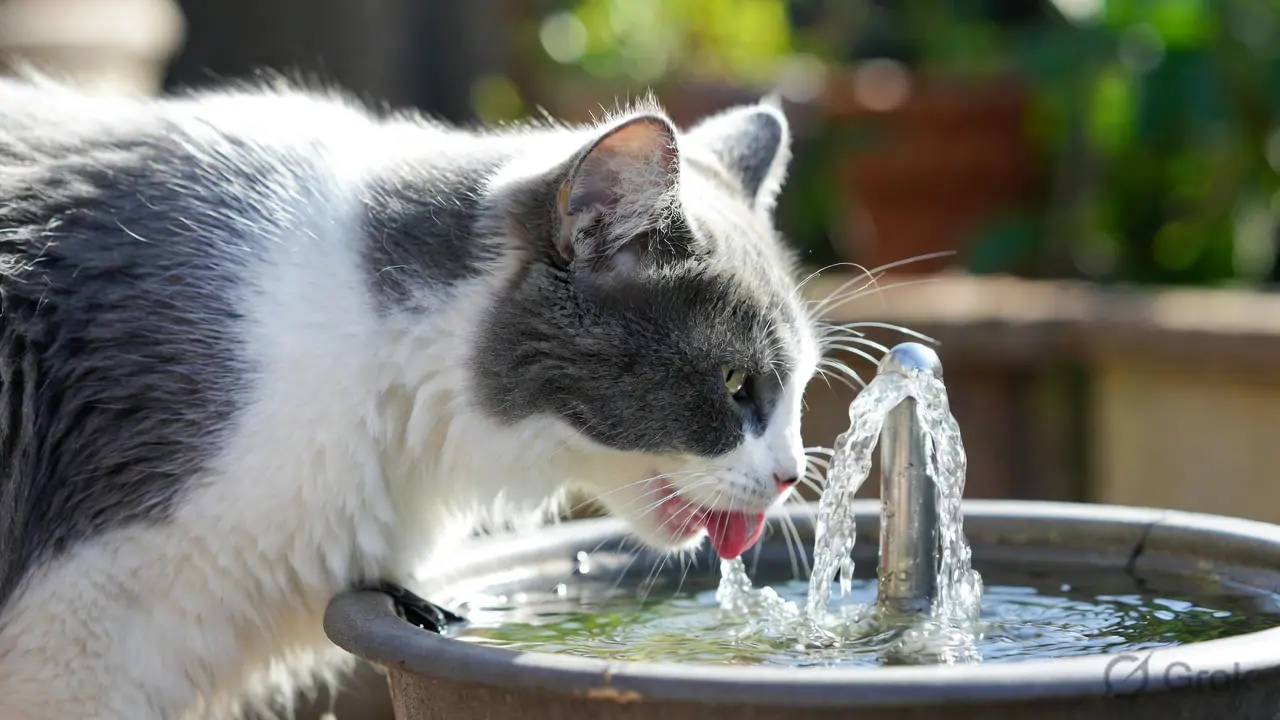
Water intake is the single most impactful variable in a cat's summer heat tolerance. Moving water — fountains, dripping taps — dramatically increases voluntary water consumption in cats that would otherwise drink minimally from a static bowl.
Recognising Heatstroke — Stages and Signs
Heatstroke (hyperthermia) in cats develops in a progression that gives a narrow but real window for intervention before organ damage becomes irreversible. The critical distinction from the owner's perspective is between a cat that is simply hot and a cat whose thermoregulatory system is failing. A cat that is hot will be inactive and seek cool surfaces — this is normal adaptation. A cat whose thermoregulatory system is failing will show the signs below, which are abnormal and require immediate action.
Early signs: excessive grooming of the paws and legs (the cat is attempting to deposit saliva on its most accessible evaporative surfaces), restlessness or agitation despite the heat, seeking unusual locations (a cat suddenly sitting in the bathroom sink or on the kitchen floor is finding the coolest available surface), and decreased responsiveness to stimuli. The cat may vomit once.
Progressive signs: open-mouth panting — this is the most alarming and reliable sign that a cat is in serious heat stress, since cats do not pant routinely. Rapid, shallow breathing. Drooling or foamy saliva. Bright red or pale/grey gums (either indicates circulatory compromise). Stumbling or incoordination when trying to walk.
Late-stage signs: collapse, inability to rise, seizures, complete unresponsiveness. At this stage the cat is in multi-organ crisis — the kidneys are acutely failing, the brain is experiencing thermal injury, and the blood is losing its normal clotting function. These signs are potentially reversible with immediate intensive veterinary care, but the window is minutes, not hours.
Heatstroke First Aid — What to Do Right Now
-
1
Move the cat to the coolest available space immediately. An air-conditioned room set to 22–24°C is ideal. If no AC is available, a bathroom with a wet floor, a tiled room with closed curtains, or any shaded space with air movement. The goal is to reduce the ambient temperature around the cat as fast as possible. Do not place the cat in a refrigerator, freezer, or ice bath — this causes peripheral vasoconstriction that traps heat centrally.
-
2
Apply cool (not cold) water to the coat, head, and neck. Use room-temperature or slightly cool water — not ice water. Focus on the neck, armpits, groin, and paw pads where large blood vessels are close to the surface. A wet cloth laid over the body, changed every few minutes as it warms, is effective. A small fan directed at the wet cat significantly increases evaporative cooling. Do not wrap the cat in a wet towel — it traps heat against the body rather than dissipating it.
-
3
Offer water — but do not force it. If the cat is conscious and able to swallow, offer cool (not cold) water in a shallow dish near its face. Do not pour water into the mouth of a collapsed or semi-conscious cat — aspiration pneumonia is a real and serious risk. If the cat is not drinking voluntarily, do not force it.
-
4
Stop active cooling once the cat appears more responsive. The risk of overcooling (hypothermia) is real if you continue aggressive cooling after the cat begins to recover. Once the cat is moving, alert, and its breathing has slowed toward normal, switch to passive cooling (cool room, damp paws only) and focus on transport to the vet.
-
5
Transport to the vet — even if the cat appears to recover. Heatstroke produces delayed organ damage. A cat that "seems fine" after cooling at home has still experienced a temperature spike that stresses the kidneys, liver, and brain. Acute kidney injury from heatstroke may not manifest clinically for 24–48 hours after the event. Any cat that has experienced clear heatstroke signs requires veterinary assessment, blood work, and likely IV fluids even if it appears to have recovered at home.
-
6
During transport, keep the car cool and the windows open or AC on. A hot car on a summer day is one of the most dangerous environments for a cat. Never leave a cat in a parked car in Indian summer conditions — even with windows cracked, a car interior can reach 70°C+ within minutes in direct sunlight. If transporting by autorickshaw or two-wheeler, use a well-ventilated carrier and provide shade over it.
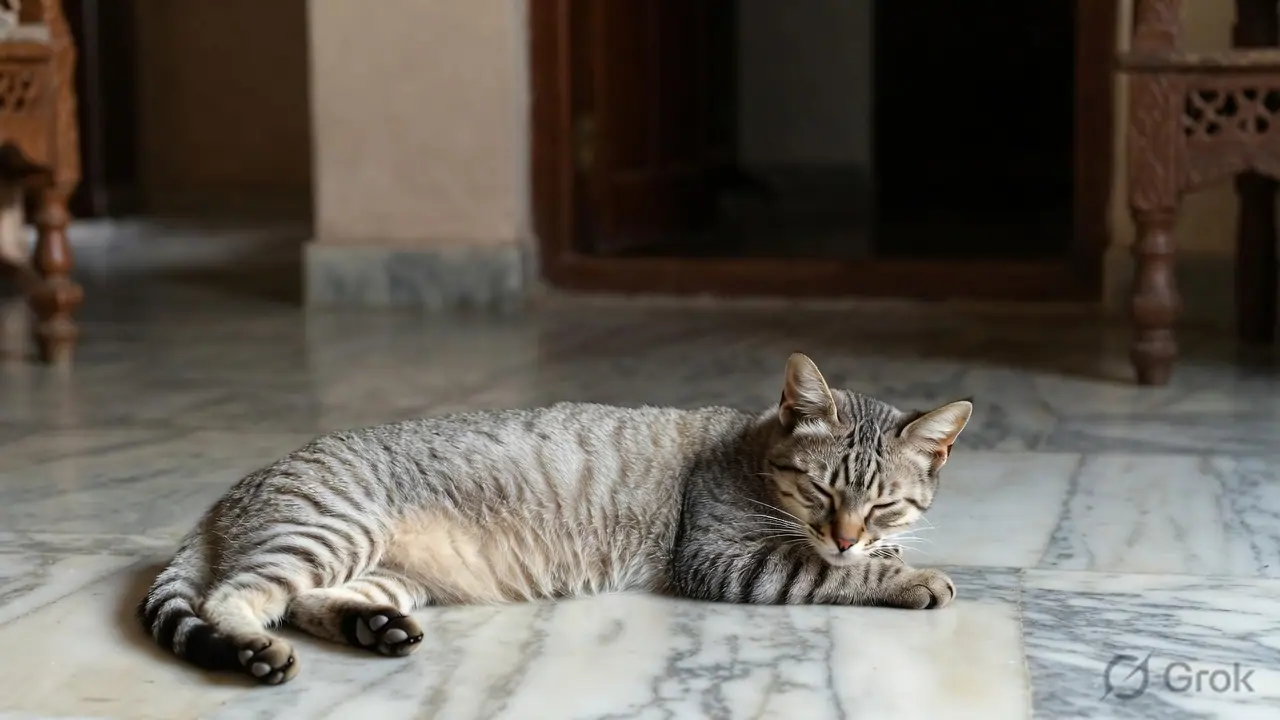
Marble, granite, and ceramic tile floors — ubiquitous in Indian homes — are excellent natural heat sinks. A cat that migrates to bathroom or kitchen floors on hot days is self-managing its thermal load efficiently. Keeping these rooms accessible is one of the simplest summer interventions.
Cooling Strategies for Different Indian Home Types
Indian housing ranges from single-room urban apartments to multi-storey houses to rural homes with courtyards and cross-ventilation. The relevant cooling strategies differ significantly by housing type — what works in a cross-ventilated independent house does not work in a sealed 12th-floor apartment.
🏢 High-Rise Apartment — Sealed Building
The most thermally challenging environment for cats in India. Upper-floor apartments in glass-fronted buildings can reach 40°C+ inside even when the outdoor temperature is 38°C, due to solar heat gain through windows. Strategies: keep the AC set to 24–26°C and running throughout peak hours (11am–6pm); blackout curtains or reflective window film on south- and west-facing windows dramatically reduce solar heat gain; ensure the cat has access to at least two rooms in case one becomes significantly warmer than the other. Pre-cool rooms before leaving by running AC for 30 minutes before departure. Never rely on a single AC unit as the only cooling for the entire apartment — if it fails during a power cut, the cat has no refuge.
🏠 Independent House — Natural Ventilation
India's traditional independent houses with high ceilings, thick walls, and cross-ventilation are far better passively cooled than modern apartments. Open windows on opposite sides to create cross-ventilation. Close south- and west-facing windows and doors during peak afternoon heat and open north-facing windows. If the house has a courtyard or shaded terrace, these create cooler microclimates the cat can access. Underground rooms (basement, storage rooms) are significantly cooler — if accessible and safe (no toxic chemicals or hazards), these can be excellent summer retreats for cats. A wet cloth hung near an open window creates evaporative cooling of the incoming air.
🏗️ Mid-Rise Apartment — Partial Ventilation
Lower-floor apartments with neighbours on at least two sides tend to stay cooler than upper floors due to thermal mass. Use a combination approach: ceiling fans on maximum speed to improve air movement; desert coolers (evaporative coolers — swamp coolers) are effective in dry-heat cities like Delhi, Jaipur, and Ahmedabad in April–May before humidity rises, but become ineffective once monsoon humidity arrives. For humid coastal cities (Mumbai, Chennai, Kochi), ceiling fans alone are insufficient above 36°C — an AC is necessary. Position the cat's bed or favourite resting spot where air movement is best, not in a corner with no airflow.
🏘️ Terrace / Rooftop Access
Terraces are among the most dangerous spaces for cats during Indian summer — exposed surfaces can reach 60–70°C in direct sunlight, and a cat walking on an unshaded terrace can sustain paw-pad burns within minutes on concrete or asphalt that has been in direct sun for hours. If your cat has terrace access, block access between 9am and 6pm during peak summer months. If blocking is not feasible, ensure there is permanently shaded area (a shade net, a covered section), constant fresh water, and that the surface the cat walks on is kept wet. Monitor the cat on the terrace — do not allow unsupervised rooftop access in extreme heat.
⚡ Power Cuts — Specific Protocol
Power cuts during summer heat waves are routine in most Indian cities outside the top metros, and increasingly common during grid stress events even in Mumbai and Delhi. When power cuts off and the AC stops: immediately close all curtains and blinds to prevent solar heat gain; place wet towels on cool tile floors for the cat to rest on; prepare a cool-water spray bottle to mist the cat's coat lightly if temperatures rise; fill water bowls with ice (if freezer ice is available before the power cut) or refrigerator-chilled water. If a cut extends beyond 2 hours at ambient temperatures above 40°C and the indoor temperature is rising above 38°C, consider moving the cat to an air-conditioned neighbour's home, a nearby mall or establishment with AC, or the nearest veterinary clinic that can provide a cool holding space while you wait for power restoration.
🌿 Cooling Aids — What Works in India
Ceramic cooling mats (available on Amazon.in and PetKonnect — gel-filled mats that stay significantly cooler than ambient temperature without refrigeration) are effective and practical. Shallow water trays filled with cool water placed in a shaded area allow paw soaking — many cats will voluntarily use these without needing encouragement. Placing a tray of ice behind a fan creates a DIY evaporative cooler. Cooling bandanas designed for pets can be wetted and loosely placed around the neck. Avoid direct application of ice to the cat's skin — the thermal shock constricts peripheral blood vessels and may worsen rather than improve core temperature regulation.

In a multi-room Indian home, water placed in a single central location will be used less than water placed in multiple spots — near the cat's sleeping area, in the bathroom, and near the food bowl. Remove the psychological barrier to drinking by making water available without any detour.
Hydration in Indian Summer — Getting Cats to Drink More
Cats are physiologically designed as efficient water processors — their kidneys produce highly concentrated urine to conserve water, a legacy of their desert-origin ancestors. The evolutionary advantage of this design becomes a clinical vulnerability in domestic cats: because cats rarely feel compelled to drink water voluntarily, they are chronically mildly dehydrated even in temperate conditions. In summer, when water loss through panting, grooming, and respiratory effort increases significantly, cats that do not drink enough are at elevated risk of urinary crystal formation, Feline Idiopathic Cystitis (FIC) flares, and — in cats with pre-existing kidney disease — acute-on-chronic renal decompensation.
Cats Most at Risk — Who Needs Extra Vigilance
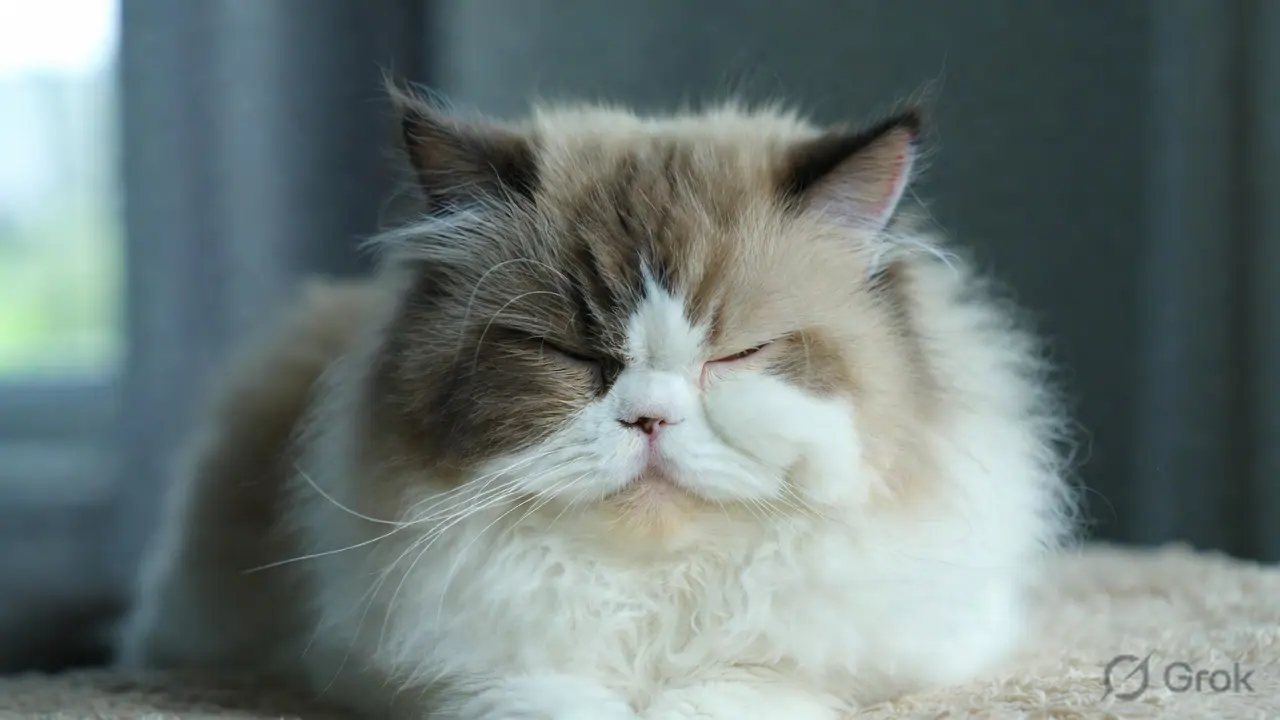
Persian cats — the most popular pedigree breed in Indian homes — require air conditioning above 32°C ambient. Their compressed facial anatomy restricts the airflow that cats rely on for heat dissipation, making heat stress a genuine health risk rather than a comfort concern.
Air Conditioning vs Ceiling Fan — Which Is Sufficient?
❄️ Air Conditioning — When It Is Necessary
AC is the only reliable cooling mechanism when ambient temperatures exceed 38–40°C, or when humidity is high enough to prevent evaporative cooling (coastal cities in summer, all regions during pre-monsoon). AC lowers the actual air temperature — the only mechanism that allows a cat's respiratory and surface cooling to function when ambient temperature approaches body temperature. For brachycephalic breeds, kittens, senior cats, and cats with chronic illness: AC is not optional above 32°C. For healthy adult cats: AC is necessary above 38°C in dry-heat regions and above 34°C in humid coastal climates.
AC settings: 24–26°C is ideal for cats — not below 22°C (can cause respiratory irritation in some cats, and the sharp temperature contrast with outdoor heat when the cat moves between rooms can trigger FIC). Set a fan speed high enough to circulate the cooled air through the room. Ensure the AC filter is cleaned monthly — a clogged filter is less effective and circulates dust that can trigger respiratory reactions in asthmatic cats.
🌀 Ceiling / Table Fan — What It Can and Cannot Do
A fan moves air across the skin surface and enhances evaporative cooling from sweat and respiratory moisture — effective in humans. In cats, whose primary evaporative surface is the paw pads (very small area), the benefit is significantly reduced. A fan improves comfort and heat dissipation at ambient temperatures below 35–36°C. Above that threshold, a fan blowing 42°C air at a cat does not cool the cat — it blows hot air at it faster. Fans are appropriate as a supplement to AC (circulating cooled air) or as a primary cooling strategy at moderate temperatures (32–36°C) only. A fan alone is insufficient for peak Indian summer conditions.
When fans do help: Directed at a cat resting on a cool wet surface (enhances evaporation from the damp surface and coat); positioned near a window in a cross-ventilated room to maximise air exchange; combined with a tray of ice or a DIY ice cooler to produce cooled airflow. At night when ambient temperatures drop below 30°C, a ceiling fan provides adequate ventilation without AC.
Outdoor Access, Balconies, and Strays During Summer
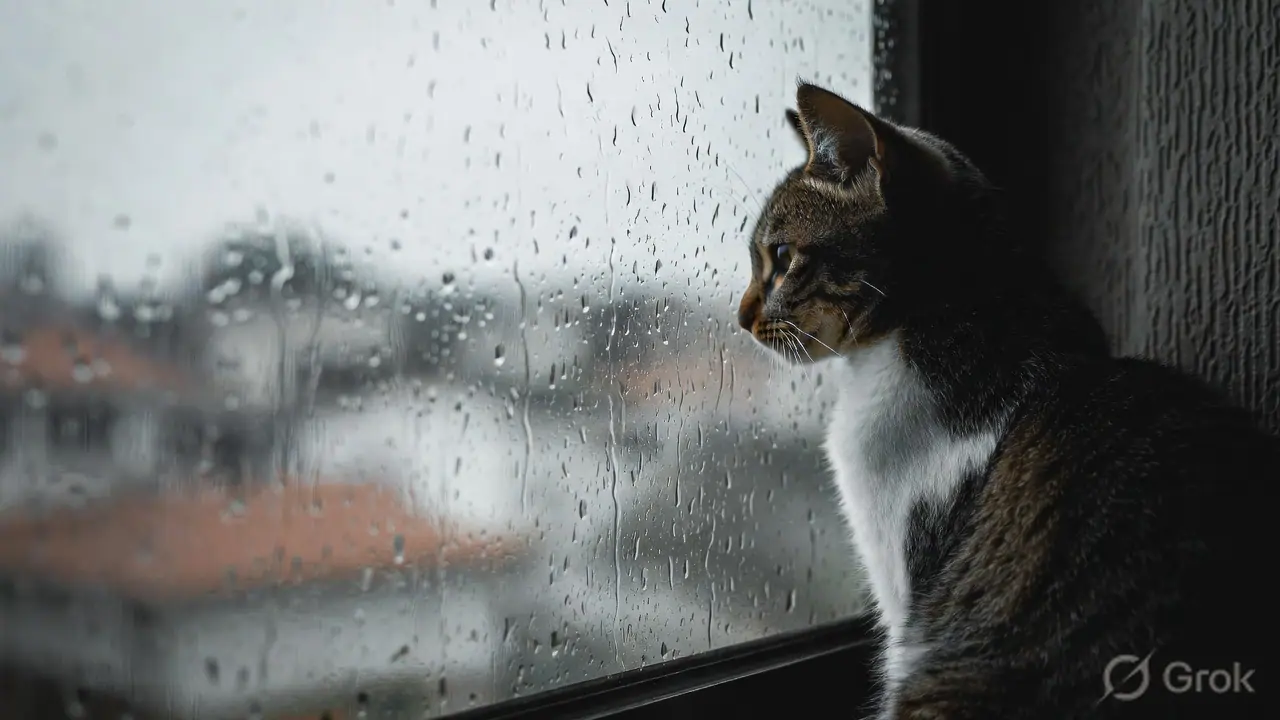
The monsoon transition — typically June in Mumbai and Kerala, July in Delhi and northern India — brings its own set of challenges: humidity-accelerated fungal growth, wet-food spoilage, respiratory infections from sudden temperature shifts, and the reactivation of seasonal fleas and ticks.
The Monsoon Transition — Managing the Shift
The arrival of the monsoon changes the thermal equation dramatically — but it does not end summer health concerns. It replaces dry-heat challenges with humid-heat challenges, and adds a new set of risks specific to the monsoon season that are distinct from both the peak summer and the cool winter period.
Related Guides
This content is provided for educational purposes only and is not a substitute for professional veterinary advice. Heatstroke in cats is a life-threatening emergency — if your cat is showing signs of severe heat stress (open-mouth panting, collapse, blue or bright red gums), begin first aid immediately and transport to the nearest veterinary clinic without delay. Do not apply ice directly to the cat's skin. All temperature thresholds given are approximate guides — individual cats vary, and at-risk individuals require lower intervention thresholds than stated here. Consult a registered veterinarian for personalised guidance on managing your cat's heat safety.