
Inappropriate elimination — cats urinating or defecating outside the litter box — is the single most common behaviour complaint in companion cat medicine, and the leading reason cats are surrendered to shelters globally. In India, where veterinary behaviour consultations are less accessible than in Western countries, the problem often goes unaddressed for months while the owner's frustration builds and the cat's welfare deteriorates.
The critical thing to understand upfront is this: when a cat uses the floor, the sofa, the bed, or a corner of the room instead of the litter box, it is almost never an act of spite, stubbornness, or defiance. It is either a medical problem (pain, infection, urinary tract disease, gastrointestinal illness), an environmental problem (the litter box is in a location or condition the cat finds unacceptable), or a psychological problem (stress, territorial insecurity, inter-cat conflict). In every case, the starting point is the same: rule out medical causes first, then investigate environment and behaviour. Punishment achieves nothing except increasing the anxiety that is often driving the behaviour in the first place.
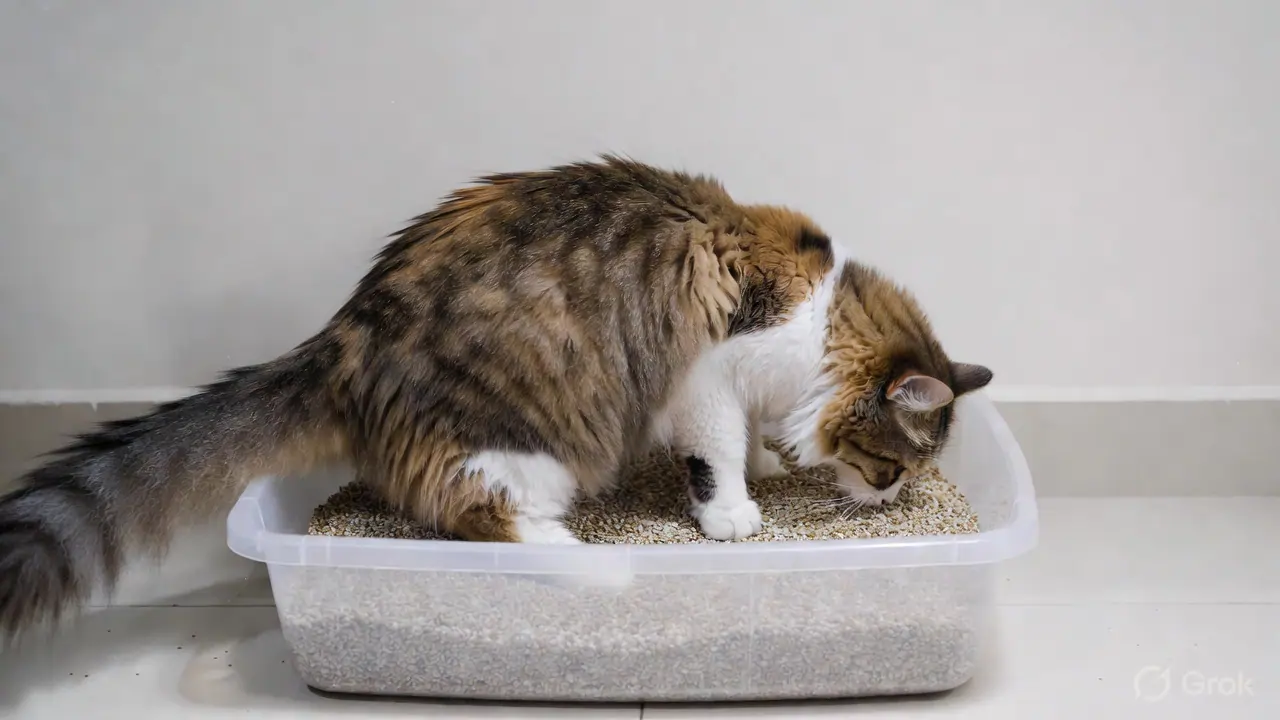
Why Cats Use Litter Boxes — and What Can Disrupt It
Cats have an instinctive drive to bury their urine and faeces in loose, substrate material. This behaviour evolved as a scent-management mechanism — wild felids use urine and faeces marking strategically, but concealing waste near the core territory reduces the olfactory information available to competitors and predators. The domestic litter box exploits this instinct: provide a container of appropriately textured substrate in an accessible location, and most cats will use it immediately and reliably for life.
This means that litter box training — in the conventional sense of teaching a cat to use the box — is rarely necessary for kittens raised with appropriate access from 3–4 weeks of age. The training that is actually required is the human's: setting up the right number of boxes in the right locations with the right substrate, maintaining them at the right cleanliness standard, and not inadvertently creating conditions that drive the cat away from the box. Most litter box problems are environmental problems that masquerade as behaviour problems.
Litter Box Setup — The Fundamentals That Prevent Most Problems
📦 Box Size: Bigger Than You Think
The most common setup error in Indian homes is using a box that is too small. A cat should be able to turn a full circle and dig comfortably inside the box without any part of its body touching the sides. The correct guideline is: length of the box should be 1.5 times the nose-to-tail length of the cat. For an average adult cat (45–50 cm nose to tail), this means a minimum 65–70 cm box. Most commercially sold boxes in India are too small — the standard small plastic tray is appropriate only for kittens. Large underbed storage containers (without the lid) are an excellent, inexpensive solution and are widely available.
🔓 Open vs Covered Boxes
Covered (hooded) litter boxes trap odour inside, which is pleasant for the human but frequently unacceptable to the cat that must enter the enclosed space. Cats have an olfactory system roughly 14 times more sensitive than humans — an odour that seems mild to us is overwhelming inside a sealed box. Covered boxes also create a confinement situation: a cat using a hooded box has one exit route. If a second cat is waiting at that exit, the situation triggers avoidance learning — the box becomes associated with threat rather than safety. Start with open boxes and only use covered designs if the cat voluntarily adopts them.
📍 Location: Accessible, Private, Not Near Food
Cats will not use a litter box positioned next to their food or water — the olfactory separation between elimination and feeding sites is instinctive. Boxes placed in high-traffic areas (living room centre, kitchen doorway) are used less reliably because the cat cannot eliminate with the sense of privacy and perimeter visibility that its threat-detection system requires. Ideal location: a quiet corner with at least two approach/exit directions, away from food and water by at least 1 metre, accessible 24 hours a day. Never place a box inside a closed cupboard or room that is routinely locked.
🧹 Cleanliness: The Single Biggest Variable
The most predictable cause of litter box avoidance is a dirty box. Cats have zero tolerance for accumulated waste — many will begin using the floor after two to three uncleared deposits in the box. The standard should be: scoop solid waste and clumped urine at minimum once daily, ideally twice. Completely empty, wash with mild soap (no bleach, no strongly scented cleaners — the chemical smell drives avoidance), and refill with fresh litter weekly. If you cannot maintain this standard consistently, add a second box. A second, clean box is more effective than any training intervention.
📏 Litter Depth: 5–7 cm Minimum
Cats need sufficient litter depth to dig before elimination and cover afterward. The burying behaviour is not optional for most cats — it is a hard-wired compulsion. If the litter layer is too shallow (less than 4 cm), the cat cannot complete the sequence satisfactorily and may begin eliminating just outside the box where it can push loose material over the deposit from the rim. Fill to 5–7 cm and replenish as it depletes from scooping rather than waiting for the weekly complete change.
🚪 Low Entry Side for Kittens & Seniors
Standard litter box sides are 12–15 cm high — a barrier that is trivial for a healthy adult cat but genuinely difficult for a kitten under 10 weeks or a senior cat with degenerative joint disease. For kittens, use a box with one low-cut entry side (5–6 cm), or temporarily use a shallow baking tray lined with litter. For senior cats showing any stiffness or reluctance to jump — a common early sign of arthritis that owners frequently miss — switching to a low-entry box often resolves apparent litter box avoidance that has nothing to do with the box itself.
Choosing the Right Litter — India Product Landscape
The substrate matters to the cat far more than it matters to the owner. Research consistently shows that the majority of cats, given a free choice, prefer unscented, clumping, fine-grained clay litter — the texture that most closely resembles the fine, loose soil of their ancestral environment. This preference is strong enough that many cats will avoid boxes filled with substrate they dislike even when they need to eliminate urgently, instead choosing a soft surface (laundry pile, bath mat, carpet) that meets their digging needs.
| Litter Type | Cat Preference | Clumping | Odour Control | India Availability | Notes |
|---|---|---|---|---|---|
| Unscented clay (fine grain) | ⭐⭐⭐⭐⭐ Highest | Good (clumping varieties) | Good with daily scooping | Widely available — Whiskas, PetKonnect brands | Best default choice; non-clumping cheaper but harder to maintain cleanly |
| Scented clay | ⭐⭐ Low | Good | Acceptable to humans; aversive to many cats | Widely available | Fragrance added for owner convenience, not cat preference — avoid if any avoidance issues |
| Silica gel / crystal | ⭐⭐⭐ Moderate | No (absorbs without clumping) | Excellent for urine | Available in metro pet stores; expensive | Solid waste sits on surface — requires daily removal; some cats dislike texture |
| Wood pellet | ⭐⭐ Variable | No (pellets disintegrate) | Good for urine; poor for faeces | Limited in India; eco-conscious owners import | Texture significantly different from soil; requires transition period; not suitable for cats with existing litter aversion |
| Tofu / plant-based | ⭐⭐⭐ Moderate | Good | Moderate | Increasingly available online (Amazon.in) | Flushable advantage in Indian homes with squat toilet plumbing — check pipe diameter first |
| Sand (river/play sand) | ⭐⭐⭐⭐ High | No (but familiar texture) | Poor without daily full change | Universally available; free or very cheap | Viable emergency or low-budget option; not suitable for long-term use without frequent full replacement; high tracking in India's dusty homes |
Training Kittens — What Is Actually Required
Kittens raised with their mother on appropriate substrate will imitate her and use the litter box naturally — the mother's elimination behaviour is a powerful model. For kittens arriving in a new home at 8 weeks, the key task is not teaching the behaviour (it is already present) but ensuring the setup does not inadvertently suppress it.
-
1
Confine to a small space initially. A new kitten in a large home will not reliably find the litter box when it needs to eliminate — the urge arrives quickly and the kitten will use the nearest available soft surface. Confine the kitten to a single room with food, water, and litter box clearly visible for the first 2–4 days. Once reliable box use is established in that space, gradually expand access to the rest of the home over 1–2 weeks.
-
2
Place the kitten in the box at predictable times. After every meal, after every sleep, and after extended play sessions — these are the reliable elimination trigger moments for kittens. Gently place the kitten in the box at these times. Do not physically move its paws in a digging motion — this is unnecessary and often causes the kitten to jump out immediately. Simply placing the kitten in the box allows it to complete the behaviour naturally if it needs to go.
-
3
Reward the behaviour immediately. The instant the kitten uses the box, offer a small treat or brief play with a wand toy — the reward must come within 3–4 seconds of the elimination behaviour to be associated with it. Do not lift the kitten out and then offer the treat, as this breaks the association timing. Classical and operant conditioning both apply: the box becomes associated with good things happening.
-
4
Manage accidents without punishment. When you find an accident outside the box, clean it with an enzymatic cleaner (not bleach — bleach breaks down the urine proteins but leaves a residual chemical that is aversive to cats and actually attracts re-soiling in some individuals). Do not rub the kitten's nose in the deposit, shout, or physically correct it — this achieves nothing except teaching the kitten that elimination in your presence is dangerous, which causes it to seek hidden locations to eliminate rather than deterring the behaviour.
-
5
Add boxes as the kitten accesses more space. The general rule for kittens (and adult cats) is one box per floor of the home plus one extra. A kitten exploring three rooms for the first time should have a box easily accessible in each area — the urgency of feline elimination does not allow for long journeys to find the sole box in the apartment.
Diagnosing Inappropriate Elimination — Medical First, Always
Before any behavioural investigation, any cat that suddenly begins eliminating outside the box — especially if the box use was previously reliable — requires a veterinary examination and urinalysis. The most common reason a previously reliable cat begins missing the box is that urination has become painful (urinary tract infection, feline idiopathic cystitis, urolithiasis) and the cat has associated the box with the experience of pain — box = pain — and is now avoiding it. The cat is not misbehaving. It is trying to tell you something.
The following problem cards are coded by likely primary cause. Medical causes (red) should always be investigated before behavioural interventions (teal) are pursued. In practice, many cases involve both — a medical trigger that initiated the behaviour, followed by conditioned avoidance of the box that persists even after the medical issue is resolved.
Sudden Onset in Previously Reliable Adult Cat
The most significant red flag pattern. A cat that used the box reliably for months or years and suddenly begins missing it almost always has a medical cause — urinary tract infection, feline idiopathic cystitis (FIC), crystal or stone formation, inflammatory bowel disease, constipation, or pain during posturing (arthritis). Urinalysis and a physical examination are required before any environmental modification is attempted. Treating the box as a behaviour problem when there is an underlying UTI delays appropriate treatment and prolongs the cat's discomfort.
Urinating Frequently in Small Amounts
Frequent visits to the litter box producing small volumes of urine — pollakiuria — is a classic sign of lower urinary tract inflammation (feline idiopathic cystitis, UTI, uroliths). The cat is not choosing to urinate outside the box; it has lost voluntary control of the urgency. The box may still be used but the cat may not reach it in time, resulting in small deposits on the floor near the box. This pattern requires same-day veterinary assessment — it does not improve without treatment and can escalate to obstruction in males.
Blood in Urine or Straining Without Production
Haematuria (blood visible in urine or detected on dipstick) indicates inflammation of the urinary tract. In cats, the most common cause is FIC — a stress-associated neurogenic bladder inflammation — rather than bacterial infection, though UTI is also possible. Both require veterinary assessment. Straining with no urine output = obstruction = emergency. Straining with some output = FIC or UTI = urgent same-day appointment.
Defecating Outside the Box
Faecal inappropriate elimination is less common than urinary but has the same diagnostic approach. Rule out: diarrhoea (too urgent to reach box), constipation (posturing in litter box is painful, cat associates box with pain), inflammatory bowel disease, parasites causing discomfort. After medical causes are excluded, consider: box too small to turn comfortably, litter depth insufficient, box in aversive location, or — in multi-cat households — ambush by another cat during the vulnerable squatting posture.
Box Aversion — Location
The cat used the box consistently until it was moved, or consistently avoids a box that was placed in a problematic location from the start. Signs: elimination occurs near the box's previous location, or the cat approaches the box then retreats. Common aversive locations in Indian homes: beside the washing machine (vibration, sudden loud noise), adjacent to the kitchen (cooking smells, activity), in a room that is routinely closed, inside a bathroom that is locked at night when the cat's elimination drive peaks. Move the box gradually (30 cm per day) to a better location or simply add a box in the location the cat is choosing.
Litter Aversion — Substrate
The cat eliminates beside the box rather than inside it, or uses other soft surfaces (bath mat, clothing pile) with the scratching and burying behaviour intact. The behaviour is present — only the substrate is being rejected. Common triggers: abrupt litter brand change, switch from unscented to scented litter, litter that is too coarse-grained, deodorant additives (baking soda mixes), or liner bags that crinkle under the cat's paws. Offer a preference test: two identical boxes side by side with different substrates. The cat's choice within 48 hours is definitive.
Surface Preference — Soft Substrates
The cat consistently chooses to eliminate on soft fabric surfaces — laundry, bath mats, rugs, duvets — with consistent location (same corner of the same room). This is usually a learned preference established when the cat first missed the box and experienced the soft surface as satisfying. Intervention: remove the preferred surface entirely, clean with enzymatic cleaner, and place a litter box at that exact location. Once the box is being used in that location, gradually migrate it 30 cm per day toward the target location over 2–3 weeks.
Stress-Induced Elimination — FIC Pathway
Feline Idiopathic Cystitis (FIC) is a neurogenic bladder inflammation triggered by psychological stress — the same cortisol-mediated pathway by which humans develop stress-related GI symptoms. In India, the most common stress triggers are: visible outdoor stray cats through windows (territorial arousal with no outlet), multi-cat household resource conflict, major household changes (renovation, new baby, new resident), and Diwali fireworks season. Treatment: address the environmental stress source, provide environmental enrichment (see cat-indoor-enrichment.html), consider Feliway Classic pheromone diffuser, and consult vet for short-term anxiolytic support if acute.
Conditioned Box Avoidance Post-Medical
The medical cause has been treated and resolved — but the cat still avoids the box. This is avoidance learning: the box was associated with the experience of pain during the illness, and the negative association persists even though pain is no longer present. Solution: provide a completely new box with new substrate in a new location, and remove the old box temporarily. Once the cat is reliably using the new box, the old box can be reintroduced in a different location if needed. The cat is not being stubborn; it has learned something and must learn something new to overwrite it.
Urine Spraying vs Inappropriate Urination — Critical Distinction
These two behaviours are fundamentally different in cause, mechanism, and treatment. Confusing them leads to management strategies that do nothing — or make the problem worse. The physical evidence at the scene almost always makes the distinction possible without a vet visit.
🚿 Urine Spraying (Marking Behaviour)
- Posture: Cat stands upright, tail raised vertically and quivering, deposits urine backward onto a vertical surface — wall, door frame, furniture leg, corner
- Volume: Small amount (1–5 ml); often not visible as a pool but as a wet streak on the vertical surface with a dried residue below
- Location: Consistent, prominent locations — doorways, window frames, external walls, areas where the cat has seen or smelled another cat
- Litter box use: Spraying cats almost always continue to use the litter box normally for regular urination — this is communicative behaviour, not elimination behaviour
- Primary causes: Intact (unneutered) males in response to hormonal drive; any cat (neutered or intact) in response to territorial stress from visible outdoor cats, new resident animals, or household conflict
- Treatment approach: Neutering (if intact) resolves 85–90% of male spraying; Feliway Multicat diffuser; reduce visual access to outdoor cats (window film); address inter-cat conflict
💧 Inappropriate Urination (Elimination Problem)
- Posture: Cat squats normally on a horizontal surface — floor, mat, duvet, sofa seat
- Volume: Normal urination volume (10–40 ml); visible pool or large wet patch
- Location: Soft horizontal surfaces that provide digging/scratching opportunity; often the same location repeatedly; sometimes random if urgency-driven
- Litter box use: Often reduced or absent during the problem period — cat is actively avoiding the box for a reason
- Primary causes: Medical (UTI, FIC, uroliths, pain); litter box aversion (location, substrate, cleanliness); stress-induced FIC; conditioned avoidance
- Treatment approach: Always start with veterinary examination and urinalysis; then address litter box setup, substrate, location, and environmental stress
Multi-Cat Households — The n+1 Rule and Beyond
The most common litter box management error in multi-cat Indian households — where two, three, or four cats may share an apartment — is providing insufficient boxes. Cats are not social eliminators. A dominant cat can guard a litter box as a territorial resource, preventing a subordinate cat from using it — and the subordinate cat will then eliminate elsewhere rather than confront the dominant animal at the box. This inter-cat resource blocking is invisible to most owners but produces clearly identifiable inappropriate elimination patterns in the blocked cat.
Cleaning Accidents Correctly — Why Enzymatic Cleaner Matters
Cats return to soil in locations that smell of their own urine — this is not perverse behaviour but a normal scent-following instinct. The practical consequence is that inadequate cleaning of an accident site guarantees repeat use of the same spot. Standard household cleaning products — Dettol, Colin, Lizol, diluted bleach — do not break down the urothelial protein compounds in cat urine that constitute the scent signal. They may mask the smell to the human nose but leave the olfactory marker intact at a level detectable to the cat.
Enzymatic cleaners contain protease and urease enzymes that biologically degrade the urea, uric acid, and protein components of cat urine into odourless compounds. Available in India under brands including Pee-Off, BioEnzyme Pet, and several imported options via Amazon.in. Application protocol: blot up as much liquid as possible first, apply enzymatic cleaner liberally to the spot, allow 10–15 minutes contact time (do not wipe immediately), then blot dry. For carpet: apply from outside inward to prevent spreading, and apply sufficient volume to penetrate to the underlay if the accident soaked through.
India-Specific Considerations
When to Consult Your Veterinarian
The following situations warrant a veterinary appointment rather than continued home troubleshooting:
- Any male cat producing little or no urine despite repeated litter box visits — emergency, same-hour presentation
- Blood visible in urine — same-day appointment
- Sudden onset of litter box avoidance in a previously reliable adult cat — within 24–48 hours; urinalysis required before any behavioural intervention
- Cat crying or vocalising in the litter box — pain-associated elimination; same-day appointment
- Inappropriate elimination that has not responded to 4 weeks of environmental modification — a second medical cause may have been missed, or a veterinary behaviourist referral may be needed
- Kitten not using the box reliably by 5–6 weeks of age despite correct setup — may indicate GI discomfort, diarrhoea, or neurological issue
Related Guides
This content is provided for educational purposes only and is not a substitute for professional veterinary advice. Any male cat straining to urinate with no output is a life-threatening emergency requiring immediate veterinary care. Any sudden change in litter box behaviour in a previously reliable adult cat should be investigated medically before environmental or behavioural modifications are attempted. Always consult a registered veterinarian for diagnosis and treatment.