
Regular grooming and hygiene are among the most consistently underestimated aspects of pet care in India. Most pet owners understand that their animals need food, water, and vaccines — fewer understand that routine coat brushing, nail trimming, ear inspection, and dental care are not cosmetic maintenance but preventive healthcare. A matted coat traps moisture and breeds bacterial and fungal skin infections. Overgrown nails alter gait and cause joint pain. Ear canals left unchecked accumulate debris that creates the ideal environment for yeast and bacterial overgrowth. Dental plaque left unaddressed progresses to periodontal disease that seeds infection into the kidneys and heart.
India's climate makes consistent grooming more important, not less. High ambient humidity promotes fungal growth on the skin and in the ear canal. The monsoon season creates conditions that accelerate every coat and skin problem — mud, moisture, and the warmth that follows rain are ideal conditions for ringworm, hotspots, and flea population explosions. This guide covers every grooming category systematically, with specific attention to what changes in India's conditions and for India's most common breeds.
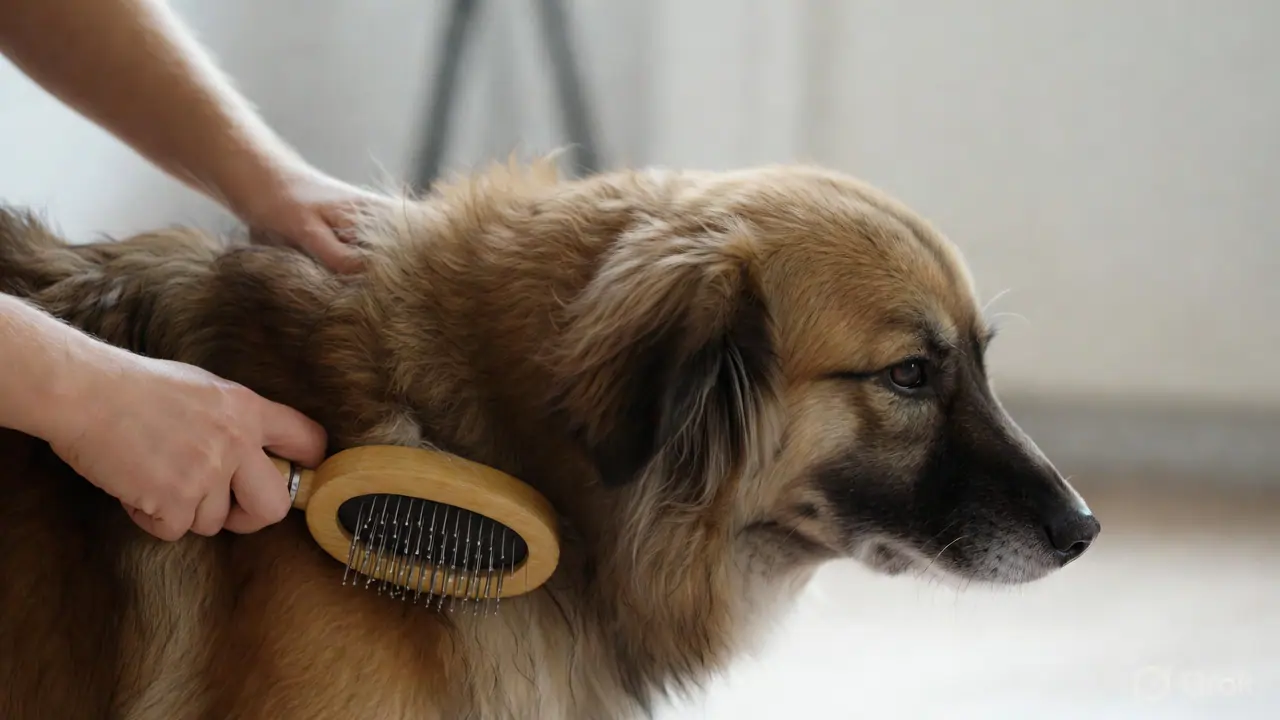
Why Grooming Is Preventive Healthcare
Every grooming session is an opportunity to run your hands and eyes over your pet's entire body. Done consistently, this means that skin lumps, ear inflammation, dental tartar, nail problems, and coat changes are detected weeks or months earlier than they would be in a pet that is only examined when taken to a vet. In India, where veterinary visits for non-urgent concerns are less frequent than in Western countries, the grooming session is often the only regular structured health assessment the pet receives between annual vaccinations. Treating it as such — not as optional — shifts its value considerably.
Core Grooming Tools — What You Actually Need
Bathing — Frequency, Technique, and India-Specific Adjustments
The appropriate bathing frequency depends on coat type, lifestyle, and health status — not a fixed calendar interval. Dogs with outdoor access in India's urban environments (dust, pollution, pre-monsoon heat) may need more frequent bathing than the standard guidance suggests. Cats almost never require routine bathing unless medically indicated or for longhair coat maintenance.
| Animal / Coat Type | Base Frequency | India Adjustment |
|---|---|---|
| Dog — shorthair, indoor-mostly | Every 6–8 weeks | Every 4–6 weeks in monsoon; after outdoor walks in heavy rain |
| Dog — medium coat, active outdoor | Every 4–6 weeks | Every 2–4 weeks in monsoon; medicated shampoo during flea season (July–October) |
| Dog — double coat (Spitz, Husky, Indie with thick coat) | Every 6–8 weeks | Never over-bathe double coats — strips protective oils; deshed instead. Monthly maximum. |
| Dog — longhair (Lhasa, Shih Tzu, Maltese) | Every 3–4 weeks | More frequent in monsoon; dry completely — damp longhair coats develop hotspots within 24 hours in Indian humidity |
| Cat — shorthair | Rarely; every 2–3 months if needed | Only if: flea treatment, ringworm protocol, or severely soiled. Cats self-maintain. |
| Cat — longhair (Persian, Himalayan) | Every 4–6 weeks | Monthly in monsoon; consider sanitary clip; dry completely |
Bathing Protocol — Step by Step
- 1Brush first. Remove all mats and loose coat before wetting. Wet mats tighten and become impossible to brush out without cutting — and the shampoo residue trapped inside them causes skin irritation. A 5-minute pre-bath brush prevents a 30-minute post-bath problem.
- 2Protect the ears. Place a small cotton ball loosely at the opening of each ear canal before wetting. Water entering the ear canal in a dog or cat with even mild inflammation can trigger an acute otitis flare. Remove the cotton balls immediately after the bath.
- 3Use comfortably warm (not hot) water. Wet the body from neck backward, leaving the head until last. Many dogs find head-wetting most stressful — doing it last means a shorter total stress duration.
- 4Dilute the shampoo before applying. Mix shampoo with warm water (1:3 ratio) in a separate container before applying. This produces more even distribution, requires less shampoo, and rinses out more completely — reducing the risk of soap-residue dermatitis, which is a common post-bath skin irritation cause in India.
- 5Massage shampoo to the skin, not just the coat surface. For medicated shampoos (antifungal, antibacterial, anti-flea), the active ingredient must contact the skin to work. The indicated contact time — usually 5–10 minutes — must be observed before rinsing.
- 6Rinse extremely thoroughly. Shampoo residue on skin causes pruritus (itching) and, in India's heat, secondary bacterial infection of self-inflicted scratch wounds. Run water through the coat until the water runs completely clear and no lather remains — this typically requires two full rinsing cycles.
- 7Dry completely. In India's humid conditions, a damp coat at room temperature is an ideal growth environment for Malassezia yeast and bacteria. Towel dry vigorously; use a low-heat hairdryer on medium distance for medium to longhair coats. Never leave a longhair dog or cat to air-dry in a humid environment.
Coat Care by Type — India's Most Common Breeds
🐕 Indian Street Dog / Labrador / Beagle (Short, Dense)
Weekly rubber curry comb or grooming mitt session. During heavy shedding periods (typically before and after monsoon), daily brushing for 2–3 weeks prevents coat and hair accumulation throughout the home. No clipping needed. Flea comb at every session — street-adjacent dogs have continuous flea exposure in India.
🐕 Indian Spitz / Pomeranian / Husky (Double Coat)
Twice-weekly brushing minimum with a slicker brush, finishing with a wide-toothed comb. During biannual "coat blows" (heavy seasonal shedding), daily brushing is necessary. Never shave a double coat in summer — the outer coat provides solar radiation protection; shaving causes sunburn and disrupts thermoregulation. Bath only as needed; the coat's natural oils are protective.
🐕 Shih Tzu / Lhasa / Maltese / Bichon (Silky Long)
Daily brushing and combing are non-negotiable — the silky texture tangles at the skin level faster than it appears from above. Check armpits, groin, and beard daily for mats. Many Indian owners of these breeds opt for a "puppy cut" (uniform 2–3 cm length all over) during monsoon and summer for welfare and maintenance reasons — this is entirely appropriate.
🐕 Golden Retriever / German Shepherd (Medium, Feathered)
Twice to three times weekly brushing with a slicker brush and steel comb. Feathering (behind ears, legs, tail plume) tangles most readily — address these areas at each session. GSD undercoat blows require daily deshedding for 3–4 weeks per event — invest in a proper undercoat rake for this breed.
🐈 Domestic Shorthair Cat / Bengal
Weekly rubber grooming mitt or fine comb — primarily for removing dead coat and monitoring skin. Increases in grooming frequency during hot season shed. Run a flea comb through the coat monthly regardless of apparent health — cats with even moderate flea burdens often show no visible signs until flea allergy dermatitis develops.
🐈 Persian / Himalayan (Longhair)
Daily combing with a wide-tooth steel comb is essential for welfare maintenance in India's humidity. Focus first on armpits, groin, behind ears, and base of tail — highest-mat-density locations. The facial fold (between the nose and eyes in flat-faced breeds) must be cleaned daily with a damp cloth and dried thoroughly — moist facial folds develop fold pyoderma rapidly in Indian conditions.
Nail Trimming — Frequency, Technique, and the Quick
Overgrown nails on hard indoor floors cause continuous low-level discomfort that affects gait, weight distribution, and joint health over time. In cats, overgrown nails curl inward and embed in the paw pad. Both are painful, both are common, and both are entirely preventable with monthly nail trimming from kittenhood or puppyhood. The reluctance most pets show to nail trimming is not inherent — it is the result of either early negative experiences or simply never having been introduced to it gradually.
- 1Handle paws daily from the start. For puppies and kittens, spend 30 seconds per paw daily — touching each toe, pressing the pads, extending the nails — without trimming. This builds the passive tolerance that makes future nail trimming low-stress.
- 2Identify the quick before cutting. In clear or white nails, the quick is visible as a pink zone inside the nail — cut only the clear section beyond it, leaving at least 2mm of margin. In black nails, cut small amounts and look at the cut surface — white with a small dark centre means you are near the quick; stop.
- 3Use sharp clippers appropriate to the species. Blunt clippers crush the nail rather than cutting cleanly, causing splitting, cracking, and pain — the most common reason dogs become nail-trimming averse. Replace clippers annually or when resistance is felt during cutting.
- 4Cut at a 45-degree angle, parallel to the floor. This leaves a clean cut that does not snag on surfaces. For cats, extend the claw by gently pressing the toe pad before cutting.
- 5If you cut the quick: Apply styptic powder (alum powder) directly to the cut surface and hold for 30 seconds — bleeding stops promptly. Do not panic; the dog will feel discomfort but this is not a serious injury. Reward calmly immediately after.
Ear Cleaning — What, When, and When Not To
Ear cleaning in healthy pets is not a weekly necessity — it is a regular inspection with cleaning only when warranted. Over-cleaning ears in healthy animals disrupts the natural wax balance and can predispose to otitis. The purpose of routine ear inspection is early detection of the signs that indicate cleaning is necessary: brown or yellow wax accumulation, mild odour, or early inflammation.
Which dogs need more frequent cleaning: Dogs with pendulous (floppy) ears — Cocker Spaniel, Basset, Beagle — have reduced ear canal ventilation, creating warm, moist conditions ideal for yeast and bacterial growth. These breeds require inspection every 1–2 weeks and cleaning when wax is visible. Dogs that swim (rare in Indian urban households but relevant for coastal communities) require post-swimming ear cleaning to remove trapped moisture.
Ear Cleaning Technique
- 1Fill the ear canal with veterinary ear cleaner. Hold the ear flap upright and squirt sufficient cleaner to fill the vertical canal — you will typically see the canal at the entrance fill and overflow slightly.
- 2Massage the base of the ear for 30 seconds. You should hear a squishing sound — this is the cleaner moving debris from the horizontal canal upward. This massage step is the most important part of the process.
- 3Allow the animal to shake. Step back — the shake ejects the loosened debris and most of the cleaner from the canal.
- 4Wipe the outer ear only. Use a cotton ball or gauze pad to wipe the visible outer ear flap and the entrance to the canal. Never insert a cotton bud (Q-tip) into the ear canal — this compacts debris deeper into the horizontal canal and causes trauma to the delicate skin.
Dental Hygiene at Home — Building a Sustainable Routine
Dental disease affects approximately 80% of dogs and 70% of cats by the age of 3 — and the majority of Indian pets in this age range have never had their teeth brushed. The bacteraemia (bacteria entering the bloodstream) from severe periodontal disease has documented links to kidney disease and cardiac valve infection in both species. Home dental hygiene is not a cosmetic indulgence — it is disease prevention with measurable health impact.
The goal of home dental care is disruption of the plaque biofilm before it mineralises into calculus (tartar). Plaque is soft and removable with mechanical brushing for the first 24–48 hours after formation; once mineralised into calculus (which begins at approximately 72 hours in dogs), it can only be removed professionally under anaesthesia with ultrasonic scaling. Daily brushing prevents calculus formation. Brushing every 3 days is the minimum frequency to have meaningful plaque control.
- 1Introduce gradually over 2–3 weeks. Week 1: allow the pet to lick enzymatic toothpaste from your finger. Week 2: apply paste to the gumline with a finger, no brush. Week 3: introduce a finger brush. Week 4: introduce a regular pet toothbrush. Skipping this introduction produces lifelong brushing resistance.
- 2Focus on the outside (buccal) surface of upper back teeth. This is where 80% of calculus accumulates — the upper carnassial tooth (the large upper molar-equivalent) is the most critical surface. The tongue naturally keeps the inner surfaces cleaner. You do not need to open the mouth to brush effectively.
- 3Brush at a 45-degree angle at the gumline. The bacterial biofilm forms at the point where the tooth meets the gum (the sulcus) — this is the most important surface to clean, and it requires the bristles to be angled toward the gum, not straight onto the tooth face.
- 430–60 seconds per side is sufficient. Brushing does not need to be prolonged to be effective. Consistency matters far more than duration — daily 60 seconds per side is more beneficial than weekly 5-minute sessions.
- 5Reward immediately after. End every brushing session with a small treat or play session — the positive association makes the next session easier. Never follow brushing with a meal immediately; wait at least 20 minutes for the enzymatic paste to act.
India-Specific Grooming Considerations
Professional Grooming — When to Use It and What to Look For
Professional grooming is appropriate for: breed-specific clip styles (Poodle, Cocker, Schnauzer), severe matting requiring sedation-assisted dematting or clipping, nail grinding in extremely nail-averse dogs, anal gland expression (in dogs that require it — typically small breeds with a history of anal gland impaction), and owners who are not physically able to manage home grooming.
In India's growing pet grooming market, standards vary significantly. When selecting a groomer, look for: formal qualification or apprenticeship training (certificate courses from institutions like the Indo Pet Care Academy), species-appropriate handling techniques, clean and separate enclosures for cats and dogs, visible hygiene protocols (cleaned tools between animals, disinfected bath areas), and willingness to answer questions about their methods. A groomer who becomes defensive about their technique or who recommends unnecessary add-on services (ear plucking, teeth scaling) without veterinary indication is one to avoid.
Related Guides
This content is provided for educational purposes only and is not a substitute for professional veterinary advice. If you notice skin lesions, ear discharge or odour, nail abnormalities, dental disease signs (bad breath, dropping food, reluctance to eat), or any changes during grooming that concern you, consult your registered veterinarian. Ringworm is contagious to humans — handle animals with suspected ringworm with gloves until diagnosis is confirmed.