
India is one of the highest-risk countries in the world for canine parvovirus and distemper. The combination of an enormous unvaccinated stray population (estimated 35 million dogs), dense urban environments where dogs share common spaces, variable vaccination coverage even among owned pets, and monsoon conditions that facilitate environmental virus spread creates near-constant outbreak pressure in virtually every city and village.
Neither disease has a specific antiviral treatment. Survival depends entirely on two things: the strength of the dog's immune response, and the speed and quality of supportive veterinary care. A dog that reaches a vet within hours of showing symptoms has a dramatically better prognosis than one brought in after 24–48 hours of home observation. Understanding what these diseases look like — and recognising them early — is the second most important thing a dog owner can know, after keeping vaccinations current.
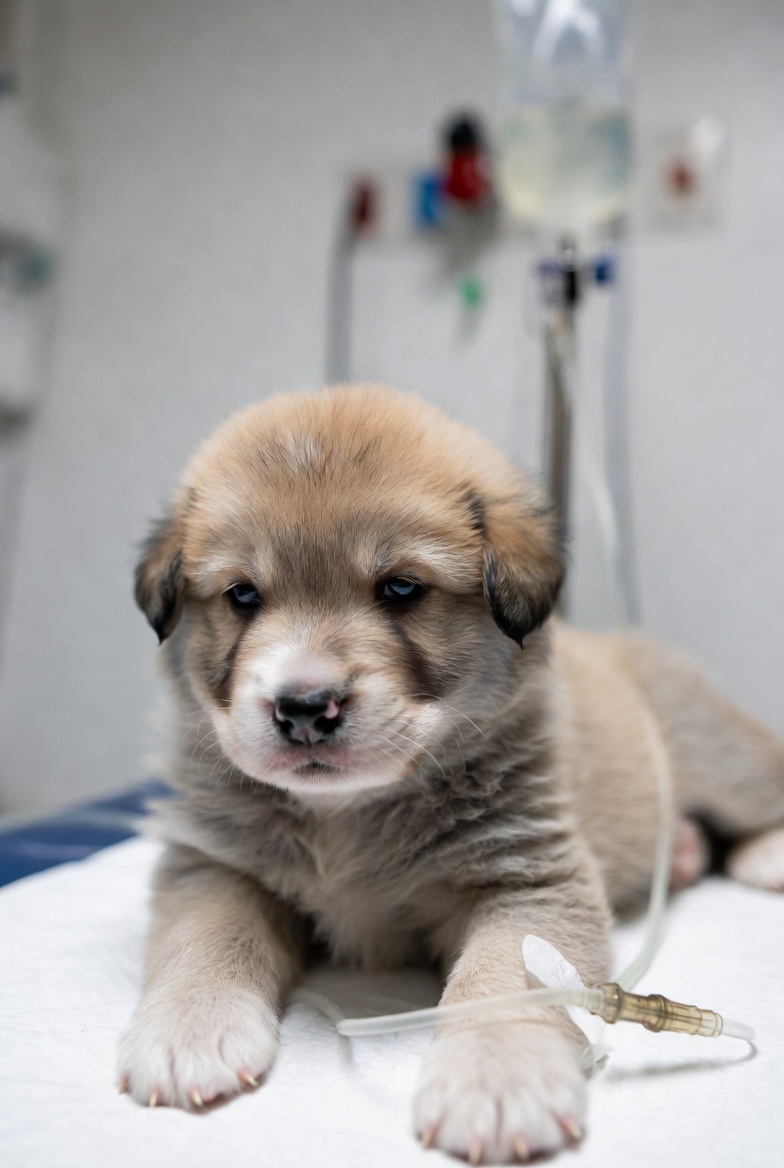
Parvovirus vs Distemper — Side-by-Side Overview
🦠 Canine Parvovirus (CPV-2)
- Type: Non-enveloped DNA virus — extremely environmentally stable
- Primary target: Intestinal crypt cells (gut lining) + bone marrow (white blood cells)
- Route: Faecal-oral — virus shed in vast quantities in stool; survives on surfaces, shoes, soil, and equipment for months to over a year
- Peak age: 6 weeks – 6 months; unvaccinated adults can also be infected
- Incubation: 3–7 days; shedding begins 4–5 days before symptoms
- Key fact: Bleach-resistant to standard household dilutions — requires 1:30 bleach solution (1 part bleach: 30 parts water) for decontamination
🦠 Canine Distemper Virus (CDV)
- Type: Enveloped RNA morbillivirus — related to measles; less environmentally stable than parvo but highly infectious
- Primary target: Respiratory epithelium, then gastrointestinal tract, then central nervous system
- Route: Airborne — respiratory secretions, direct contact, shared food/water bowls; can also spread via urine and faeces
- Peak age: Puppies 3–6 months; unvaccinated adults of any age susceptible
- Incubation: 3–6 days to first fever; full neurological signs may develop weeks later
- Key fact: Neurological damage from distemper can be permanent even in dogs that recover from the acute phase — "chewing gum fits" (facial myoclonus) may persist for life
Parvovirus — Clinical Signs in Detail
Parvovirus destroys the rapidly-dividing cells lining the small intestine, stripping the gut of its protective barrier within 24–48 hours. Simultaneously, it attacks bone marrow stem cells, causing a severe drop in white blood cells — leaving the dog with both a destroyed gut and almost no immune defences simultaneously. The resulting clinical picture is one of the most rapidly life-threatening veterinary emergencies encountered in India.
🩸 Classic Parvovirus Symptom Progression
- Day 1–2: Lethargy, loss of appetite, mild depression — easily mistaken for minor illness
- Day 1–2: Vomiting begins — initially food, then bile, then foul-smelling fluid
- Day 2–3: Profuse, watery diarrhoea — the classic smell of parvovirus is distinctively foul and recognisable to experienced vets and owners who have encountered it before
- Day 2–3: Diarrhoea becomes haemorrhagic (bloody) — dark red or bright red mixed with mucus
- Day 2–4: Rapid and severe dehydration — skin tenting, sunken eyes, dry/tacky gums
- Day 3–4: Temperature fluctuation — fever initially, then hypothermia (low temperature) as septicaemia develops from bacterial translocation through the damaged gut wall
- Day 3–5: Abdominal pain (hunched posture, reluctance to move, vocalising on palpation), collapse
Distemper — Three Clinical Stages
Distemper is insidious because it progresses through distinct phases over days to weeks. Many owners mistake the early phase for a minor respiratory infection, delay veterinary care, and present when the neurological phase has already begun — at which point the prognosis is significantly worse. Recognising the full pattern early is critical.
-
1
Early Phase (Days 3–7 post-exposure)
Fever (often 39.5–41°C), purulent (yellow-green) eye and nasal discharge, coughing, sneezing, and lethargy. Reduced appetite. This phase is frequently misidentified as kennel cough or a simple respiratory infection — a critical diagnostic mistake in the Indian context where distemper is endemic.
-
2
Gastrointestinal Phase (Week 1–2)
Vomiting and diarrhoea develop alongside the continuing respiratory signs. The combination of respiratory + GI symptoms in a young or unvaccinated dog should immediately raise distemper as a differential diagnosis. Hyperkeratosis ("hard pad disease") — thickening and hardening of the footpads and nose — may develop at this stage and is pathognomonic for distemper.
-
3
Neurological Phase (Week 2–6, or later)
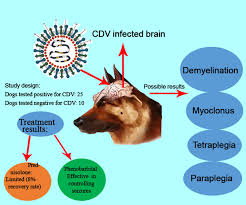
The most feared stage. The virus invades the central nervous system, causing demyelination (destruction of the myelin sheath protecting nerve fibres). Signs include: seizures, facial muscle twitching ("chewing gum fits" — rhythmic jaw movements), ataxia (uncoordinated gait), circling, head tilt, nystagmus (rapid involuntary eye movements), progressive paralysis, and blindness. Some dogs appear to "recover" from respiratory/GI signs only to develop neurological signs weeks later. Neurological damage is frequently irreversible even in survivors.
Vaccination — The Only Reliable Prevention
Both parvovirus and distemper are core vaccine-preventable diseases. The DHPP combination vaccine (Distemper, Hepatitis, Parvovirus, Parainfluenza) has been available for decades and is highly effective at both preventing disease and preventing transmission. There is no medical or ethical justification for leaving a dog unvaccinated against these diseases in India.
| Age / Situation | Vaccine | Notes |
|---|---|---|
| 6–8 weeks | DHPP (first puppy dose) | Maternal antibody interference is still significant — this dose primes the immune system; full protection not yet achieved |
| 10–12 weeks | DHPP (second puppy dose) | Critical dose — maternal antibody waning; protection building; avoid high-risk areas until 2 weeks after this dose |
| 14–16 weeks | DHPP (third puppy dose) | Completes primary series; full immunity established approximately 2 weeks after this dose |
| 12–16 months | DHPP booster | First adult booster — given 1 year after completion of puppy series |
| Adults (ongoing) | DHPP booster | Every 1–3 years per veterinarian's protocol; WSAVA recommends titre testing as an alternative to automatic annual boosters in low-risk adults |
| Outbreak area / high-risk environment | Start at 4–6 weeks; more frequent boosters | Rescue shelters, high stray density areas, multi-dog households — consult vet for adjusted schedule |
| Adult with unknown vaccination history | 2 DHPP doses 3–4 weeks apart | Treat as unvaccinated; do not rely on owner history; begin series immediately |
Treatment — Aggressive Supportive Care
There is no specific antiviral drug licensed for parvovirus or distemper in dogs. Treatment is entirely supportive, with the goal of keeping the patient alive long enough for their immune system to mount a response. This requires hospitalisation in almost all cases of parvovirus, and in most moderate-to-severe distemper cases.
Parvovirus — Core Treatment Protocol
- IV fluid therapy: The cornerstone of parvo treatment — replaces the fluid and electrolytes lost through haemorrhagic diarrhoea and vomiting; corrects the dangerous electrolyte imbalances (hypokalaemia, hypoglycaemia) that contribute directly to death
- Anti-emetics: Maropitant (Cerenia), ondansetron — controls vomiting so oral medications and nutrition can eventually be resumed
- Antibiotics: Broad-spectrum IV antibiotics (ampicillin-sulbactam, enrofloxacin, metronidazole) — not to treat the virus, but to prevent bacterial septicaemia from organisms crossing the destroyed gut barrier
- Nutritional support: Early enteral nutrition (via feeding tube if needed) is now supported by evidence — "nil by mouth" for 24–48 hours is no longer standard practice; early feeding supports gut repair
- Blood products: Fresh frozen plasma or whole blood transfusion in severe cases — replaces clotting factors, albumin, and white blood cells
- Strict isolation: Parvo patients must be completely isolated from other dogs in the facility — the virus sheds prolifically and is extremely stable environmentally
Distemper — Treatment and Prognosis by Stage
- Respiratory/GI phase: Supportive care — antibiotics for secondary bacterial pneumonia, anti-emetics, IV fluids, nutritional support; early treatment gives the best chance of avoiding the neurological phase
- Neurological phase: Anticonvulsants (phenobarbitone, levetiracetam) for seizure control; corticosteroids may reduce central nervous system inflammation in some cases; physical therapy for ataxia — prognosis is guarded to poor; many dogs with severe neurological signs are humanely euthanised
- Post-recovery: Dogs that survive distemper with mild or no neurological involvement can live normal lives; dogs with persistent facial myoclonus, seizures, or ataxia require long-term medication and management
India-Specific Risks & Precautions
Related Guides
This content is provided for educational purposes only and is not a substitute for professional veterinary advice. If your dog shows any signs consistent with parvovirus or distemper — bloody diarrhoea, vomiting, respiratory signs, neurological signs, or severe lethargy — contact your registered veterinarian or nearest animal emergency clinic immediately. Do not attempt home treatment for either disease. Early intensive veterinary care significantly improves survival outcomes.