
Rabies is the deadliest infectious disease on earth. Once clinical symptoms appear in a human or animal, survival is virtually impossible. Yet it remains entirely, reliably preventable with a vaccine that costs a few hundred rupees. In India — which accounts for roughly one-third of all global human rabies deaths annually — the stakes could not be higher.
For pet owners, understanding rabies is not optional knowledge. It is the difference between a routine vaccination appointment and a catastrophic outcome. This guide covers everything you need to know: how the virus spreads, what it does to the body, how to vaccinate correctly, and exactly what to do in the critical minutes after a bite.
How Rabies Spreads
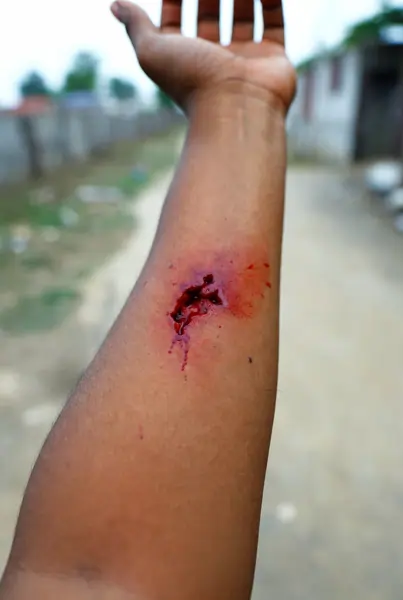
Rabies is caused by the Rabies lyssavirus, transmitted through the saliva of an infected animal — almost always via a bite. The virus does not survive outside a living host and cannot spread through casual contact, air, water, or food. Despite this narrow transmission route, its prevalence in India's large unvaccinated stray dog population makes exposure risk genuinely significant, particularly in urban and semi-urban areas.
- Primary route: Bite from an infected animal — the virus enters through broken skin
- Secondary routes (rare): Scratches that break the skin, or saliva contact with mucous membranes (eyes, mouth, nose) or open wounds
- Not transmissible: Petting an infected animal, contact with blood, urine, or faeces, or touching a surface the animal touched
Once the virus enters the body, it travels along peripheral nerves toward the brain — not through the bloodstream. This nerve pathway is why the incubation period varies so dramatically with bite location: a bite on the face or neck can progress to symptoms in as little as two weeks, while a bite on the foot may have an incubation period of several months. The average incubation period in dogs is 3–8 weeks; in humans, 1–3 months.
Symptoms in Dogs & Cats
Rabies in animals progresses through three phases: a prodromal phase (1–3 days of personality change — unusual shyness or aggression, fever, licking the bite site), followed by one of two clinical forms:
🐕 Furious Form — "Mad Dog"
- Unprovoked aggression — biting at anything
- Excessive vocalisation, restlessness
- Disorientation and roaming
- Foaming at the mouth
- Fear of water (hydrophobia)
- Seizures, progressing to coma and death
😶 Paralytic Form — "Dumb Rabies"
- Quiet, withdrawn — often mistaken for injury
- Progressive paralysis starting from hind legs
- Jaw drop — inability to close mouth or swallow
- Appears "friendly" — may approach humans
- Descending paralysis leads to respiratory failure
- Death within days of symptom onset
Rabies Vaccination — Mandatory & Lifesaving
Rabies vaccination is the single most effective public health intervention available for controlling the disease. In India, it is legally mandatory in most states and is included in the core vaccination protocol for both dogs and cats. A vaccinated pet that is bitten by a rabid animal has strong — though not absolute — protection, and a vaccinated pet that bites a human significantly reduces the medical urgency of that situation.
Puppies & Kittens
First dose at 12–16 weeks of age, booster 4 weeks later. Do not wait — earlier protection means earlier safety.
Adult Pets
Annual booster in most Indian states. Some 3-year vaccines are approved — confirm validity with your vet and local municipal requirements.
Keep Records
A vaccination certificate is legally required in many cities for boarding, travel, and dog licensing. Keep the original and a photo backup on your phone.
What to Do Immediately After a Bite
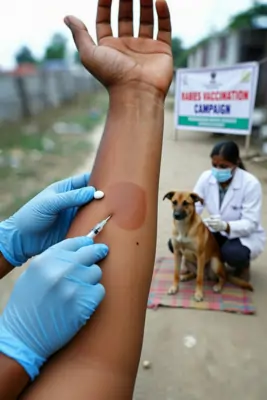
The minutes immediately following a bite from a potentially rabid animal are the most critical window in the entire disease process. Post-exposure prophylaxis (PEP) is highly effective when started promptly — and completely ineffective once symptoms have begun. Follow these steps without delay:
-
1
Wash the wound immediately and thoroughly. Use soap and running water for a minimum of 15 minutes. This single action — if done quickly and correctly — can significantly reduce viral load at the wound site. Do not skip or shorten this step.
-
2
Apply antiseptic. After washing, apply povidone-iodine (Betadine) or 70% alcohol to the wound. Do not bandage tightly — the wound should be able to drain.
-
3
Contact your veterinarian immediately — for your pet. Your vet will assess the biting animal's vaccination status, may administer a booster dose to your pet, and can advise on quarantine or observation requirements. If the biting animal was your own pet, confine it safely and observe.
-
4
Seek medical care — for any human bitten. Rabies PEP for humans consists of wound cleaning, rabies immunoglobulin (RIG) infiltrated around the wound site (for unvaccinated individuals), and a series of 4–5 vaccine doses over 14 days. This must begin the same day as exposure. Go to the nearest government hospital or rabies treatment centre — PEP is provided free of charge at government facilities across India.
-
5
Report to local health and municipal authorities. Reporting is required in many states and allows authorities to locate and quarantine the biting animal, protecting other people and pets in the area.
India-Specific Context
India's rabies burden is inseparable from its large unvaccinated stray dog population — estimated at over 35 million animals. While Animal Birth Control (ABC) and mass vaccination drives have made progress in several cities, coverage remains inconsistent. This makes the vaccination of owned pets and awareness of post-bite protocol critical lines of defence for individual families.
- India reports approximately 18,000–20,000 human rabies deaths annually — the highest of any country
- Children aged 5–15 are disproportionately affected, often bitten while playing outdoors
- Many cases go unreported, meaning the actual burden is likely higher
- Government hospitals provide free PEP — intradermal (ID) protocol is now standard at most centres, reducing cost and dose number
- Anti-rabies vaccine and RIG are on the Essential Medicines List and should be available at district hospitals
Prevention Checklist for Pet Parents
- Vaccinate all dogs and cats against rabies starting at 12–16 weeks of age
- Maintain annual boosters and keep the vaccination certificate safely stored
- Avoid letting your pet interact unsupervised with strays or unknown animals
- Supervise outdoor time — particularly in areas with known stray populations
- Spay or neuter your pet — reduces roaming, fighting, and exposure risk
- Teach children never to approach or touch stray animals without adult supervision
- Know your nearest government rabies treatment centre — look it up before you ever need it
- Report aggressive strays or suspected rabid animals to your local municipal body immediately
Conclusion
Rabies occupies a unique and deeply sobering place in medicine — a disease with a near-perfect fatality rate and a near-perfect prevention record. Every human death from rabies in India represents a failure of a system that had multiple opportunities to intervene: a vaccine not given, a bite not reported, PEP not started in time.
As a pet owner, you hold more power over this disease than almost anyone. A vaccinated dog or cat is not just a protected animal — it is a break in the chain of transmission that protects your family, your neighbours, and your community. The vaccine costs very little. The alternative costs everything.
Related Guides
This content is provided for educational purposes only and is not a substitute for professional veterinary or medical advice. Rabies is a medical emergency. If you or your pet is bitten or scratched by any animal, wash the wound immediately and contact a veterinarian and doctor without delay. Follow the protocols of your local health authority. Post-exposure prophylaxis is available free of charge at government hospitals across India.