
India's houseplant culture has grown dramatically — urban apartments are increasingly adorned with the same popular species that dominate global indoor gardening: Pothos (money plant), Philodendron, Peace Lily, snake plant, Dieffenbachia, and a rotating cast of seasonal flowering plants purchased from nurseries or received as gifts. Many of these are beautiful, low-maintenance, and widely recommended by plant influencers. Several of them are genuinely dangerous to cats.
The problem is not that most cats ingest large quantities of toxic plants — they typically do not. The problem is that even small amounts of the most dangerous species (true lilies for cats, for example) are toxic at trace doses, and that the ubiquity of certain toxic plants in Indian homes means that the probability of incidental nibbling is high. A cat that takes a single bite of a Lilium or Hemerocallis flower petal can develop acute kidney failure within 72 hours. The owner who was not aware the gifted bouquet contained a lily has no reason to associate the eventual symptoms with the flower the cat may have briefly investigated two days prior.
This guide covers three things: the plants that are genuinely safe to grow in a home with cats, the plants that must be removed or made completely inaccessible, and the action protocol for when ingestion is suspected. The lists are curated specifically for the Indian context — the nurseries, the gifted flowers, the balcony garden species, and the kitchen herbs that are relevant to Indian cat-owning households.
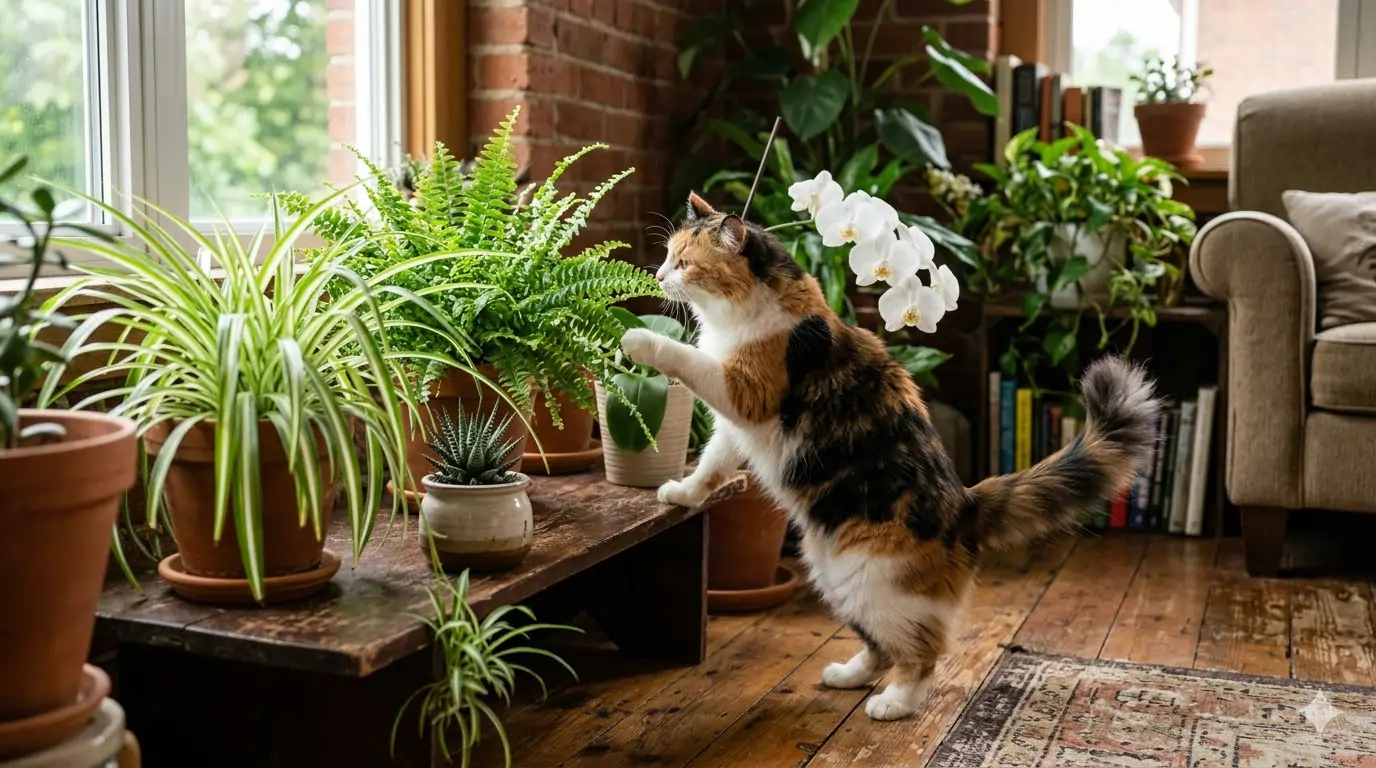
Why Cats Eat Plants — and Why You Cannot Simply Train Them Not To
Cat-Safe Plants Commonly Available in India
The following plants are classified as non-toxic to cats by the ASPCA Poison Control database and veterinary toxicology resources. "Non-toxic" means that ingestion does not produce serious systemic illness — some may cause mild GI upset (vomiting, loose stool) if eaten in large quantities, simply due to the plant fibre content, but they do not produce organ toxicity. All are readily available from Indian nurseries, online plant stores (Ugaoo, NurseryLive, The Good Plant Co.), and weekend markets.
Spider Plant
Chlorophytum comosumOne of the most popular and forgiving indoor plants in India — thrives in low light, tolerates erratic watering, and produces cascading offshoots that cats find irresistible to bat. Classified as non-toxic, though the dangling offshoots produce a mild hallucinogenic response in some cats (likely mild opioid-like compounds) that causes brief excited chewing. The effect is transient and harmless — similar in character to catnip response.
Areca Palm
Dypsis lutescens (Chrysalidocarpus lutescens)The most popular large indoor palm in Indian homes — sold in virtually every nursery, used widely in offices and living rooms. Non-toxic to cats and dogs. The feathery fronds attract play behaviour; nibbling produces no systemic effects beyond possible mild GI upset from fibre. A reliable, safe statement plant for Indian interiors.
Boston Fern
Nephrolepis exaltataA classic humidity-loving fern popular on Indian balconies and bathrooms. Non-toxic to cats. The fronds are attractive to cats — particularly the texture and movement — but ingestion causes no harm beyond possible mild vomiting from the plant fibre. Thrives in indirect light and high humidity, making it well-suited to Indian monsoon conditions.
Bamboo Palm
Chamaedorea seifriziiAnother safe palm species widely available in Indian nurseries. Non-toxic to both cats and dogs. Tolerates lower light levels than Areca palm and maintains the elegant architectural quality that makes palms popular as Indian interior plants. Safe for homes where cats have free run of all spaces.
Peperomia (multiple species)
Peperomia spp.The Peperomia family includes dozens of species available in Indian nurseries — watermelon peperomia, ripple peperomia, rubber peperomia. All are classified as non-toxic to cats. Small, compact, and available in a wide range of leaf colours and textures, they make excellent cat-safe shelf and windowsill plants without the drama of large tropical species.
Calathea / Prayer Plant
Calathea / Maranta spp.Calathea (now largely reclassified under Goeppertia) and Maranta species are safe for cats — no systemic toxicity. Their dramatic leaf patterning makes them increasingly popular in Indian urban apartments. The leaf-folding "prayer" movement at dusk attracts cat attention. High humidity preference makes them well-suited to placement in bathrooms or near humidifiers, which also limits cat access.
Haworthia
Haworthia spp.A small succulent in the same family as Aloe — but unlike Aloe, Haworthia is classified as non-toxic to cats. The compact rosette form and distinctive white-striped leaves make it attractive as a windowsill plant. The firm, fleshy texture discourages most cats from sustained chewing. A rare safe succulent option when most popular succulents (Aloe, Jade, Kalanchoe) carry toxicity concerns.
African Violet
Saintpaulia ionanthaA non-toxic flowering houseplant popular in India for its continuous bloom in low-to-medium light. The soft, fuzzy leaves and small stature make it less likely to attract rough play than large-leafed tropicals. Produces no systemic toxicity if nibbled. A safe flowering option for homes where Peace Lily (toxic) has been kept for its flowers.
Catnip & Cat Grass
Nepeta cataria / Dactylis glomerata / Avena sativaThe most directly cat-beneficial plants. Catnip (Nepeta cataria) is safe and produces the well-known euphoric response in approximately 50–70% of cats (genetically determined). Cat grass — oat grass, wheatgrass, or orchard grass grown from seed — provides the fibre and texture that cats seek when they chew plants, actively redirecting chewing behaviour away from toxic houseplants. Growing a pot of cat grass is one of the most practical plant-safety interventions available.
Basil, Coriander & Lemongrass
Ocimum basilicum / Coriandrum sativum / Cymbopogon citratusKitchen herbs widely grown in Indian homes — on windowsills, kitchen shelves, and balcony pots. All three are non-toxic to cats. Basil and coriander (dhania) may be nibbled without harm. Lemongrass is an attractive plant for cats, possibly due to a compound similar to catnip, and is safe even when eaten. Note: citronella grass is sometimes confused with lemongrass — it is a different plant and should be verified before assuming safety.
Marigold (Indian)
Tagetes erecta — Gainda phoolThe iconic Indian marigold — used in garlands, puja decoration, and festival offerings — is non-toxic to cats. Minor GI irritation possible if large quantities are eaten, but no systemic toxicity. The marigold's prevalence during Diwali, weddings, and daily puja makes this a practically important safe classification — cats in Indian homes are regularly exposed to marigold garlands and fallen petals.
Roses (thornless varieties)
Rosa spp.Rose petals and leaves are non-toxic to cats — the plant itself is safe. The risk from roses is physical rather than chemical: thorns can injure the mouth, paws, or eyes of a cat that chews or bats at a thorned stem. Thornless rose varieties are genuinely safe. Roses received in bouquets may have been treated with pesticides — always rinse cut flowers before placing in cat-accessible areas, or place out of reach for 24 hours after purchase.
Toxic Plants Commonly Found in Indian Homes & Gardens
The following plants are regularly found in Indian homes — purchased from nurseries, received as gifts, or growing in balcony and terrace gardens — and carry genuine toxicity risk for cats. Severity is classified as Fatal (potential for life-threatening organ failure even from small exposures), Serious (significant systemic illness requiring veterinary treatment), or Mild (primarily GI irritation, usually self-limiting but unpleasant).
True Lilies — All Species
Lilium spp., Hemerocallis spp. (Day Lily)The most dangerous plant for cats in existence. Every part — petals, leaves, stem, pollen, and even the water in the vase — is nephrotoxic to cats. A single petal, or licking pollen from their fur after brushing against the flower, can cause acute kidney failure within 24–72 hours. Lilies appear in Diwali and Holi gifted bouquets, wedding decorations, and are sold as cut flowers at most florist shops in India.
Oleander — Kaner
Nerium oleanderOne of the most commonly planted ornamental shrubs in India — grown along roadsides, in housing society gardens, and on apartment terraces for its prolific pink and white flowers. Every part contains cardiac glycosides (oleandrin, neriine) that cause severe cardiac arrhythmias and GI haemorrhage. Even a few leaves are lethal to a cat. Cats with balcony access in housing societies where oleander is planted are genuinely at risk.
Sago Palm — Cycas
Cycas revolutaIncreasingly popular as an ornamental plant in Indian nurseries, often sold as a decorative potted palm. Extremely hepatotoxic — the cycasin toxin causes acute liver failure with as little as one or two seeds ingested. The seeds (orange-red when ripe) are the most toxic part, but all parts carry risk. Despite its name, it is not a true palm and should not be confused with safe palm species. One of the most reliably fatal plant toxicities in veterinary medicine.
Pothos / Money Plant
Epipremnum aureumThe most ubiquitous houseplant in Indian homes — marketed as lucky, grown in water vases and soil pots on every shelf. Contains insoluble calcium oxalate crystals throughout all plant parts. When chewed, the crystals cause immediate, intense oral burning, excessive drooling, pawing at the mouth, and swelling of the oral mucosa. GI irritation produces vomiting. Rarely fatal with small exposures, but painful and distressing. Completely removes itself from "safe" status despite its familiarity.
Dieffenbachia — Dumb Cane
Dieffenbachia spp.A common office and home plant in India, valued for its large variegated leaves and shade tolerance. Same calcium oxalate mechanism as Pothos — intense oral burning, swelling, drooling. The common name "dumb cane" derives from the plant's ability to cause temporary speechlessness in humans due to oral oedema. In cats, significant oropharyngeal swelling is possible; severe exposures can compromise breathing. Severity is higher than Pothos due to greater calcium oxalate concentration.
Peace Lily — Spathiphyllum
Spathiphyllum wallisiiWidely purchased in India as an air-purifying indoor plant and a common gifted plant (especially for housewarming and Diwali). Contains insoluble calcium oxalate crystals — same mechanism as Pothos and Dieffenbachia. Oral burning, drooling, vomiting. Also contains a soluble irritant that produces GI signs independent of the crystal mechanism. Classified as more toxic than Pothos. Its frequency as a gifted plant makes it a recurring cat toxicity presentation at veterinary clinics during festive seasons.
Philodendron
Philodendron spp.The split-leaf Philodendron (Monstera deliciosa — also sold under this name in India) and other Philodendron species are calcium oxalate plants like their Araceae family relatives. Widely popular in Indian interior design for their dramatic foliage. The large leaves attract cat attention and the chewing response produces the same oral and GI irritation pattern as Peace Lily and Pothos. Severity varies by species and amount ingested — small exposures cause painful but self-limiting oral irritation; larger exposures may require veterinary supportive care.
Dracaena — Lucky Bamboo, Corn Plant
Dracaena spp."Lucky bamboo" sold in Indian gift shops and online is typically Dracaena sanderiana — toxic to cats. The Corn Plant (Dracaena fragrans) and other popular Dracaena houseplants are similarly toxic. Signs: vomiting (sometimes with blood), hypersalivation, weakness, and in severe cases neurological signs including dilated pupils and incoordination. The toxin is not fully characterised but includes saponins. Commonly confused with true bamboo (safe) — verify the botanical name before assuming safety.
Aloe Vera — Gheekumari
Aloe barbadensis millerGrown in virtually every Indian home for its well-established human health and cosmetic uses — sunburn relief, hair care, digestive health. Toxic to cats despite its benign human profile. The latex (the yellow fluid beneath the skin, distinct from the clear gel) contains anthraquinone glycosides that cause severe GI hypermotility, profuse vomiting and diarrhoea, lethargy, and possible kidney effects with large exposures. The clear gel is less toxic than the latex, but the whole plant should be kept out of cat reach. Cats that ingest aloe typically develop signs within 2–6 hours.
Lantana — Raimuniya
Lantana camaraThe colourful, low-maintenance Lantana is planted widely in Indian housing society gardens, road medians, and terrace pots. Its multi-coloured flower clusters make it attractive as an ornamental. The unripe berries and leaves are toxic — lantadene compounds cause hepatotoxicity and photosensitisation. Cats with terrace or balcony access in societies where Lantana is planted are at risk. Green unripe berries are significantly more toxic than ripe black berries.
Chrysanthemum — Guldaudi
Chrysanthemum / Dendranthema spp.Sold in pots and as cut flowers throughout India — particularly popular during autumn and available at every nursery and flower market. All parts are toxic to cats, containing pyrethrin compounds (natural insecticides), sesquiterpene lactones, and other compounds. Signs: vomiting, diarrhoea, hypersalivation, incoordination, and skin irritation. Pyrethrins are the same class of compound as pyrethrin insecticides — cats have reduced ability to metabolise this class. Severity ranges from mild GI irritation to significant neurological signs depending on amount ingested.
Mint — Pudina
Mentha spp.A staple of Indian cooking, grown on kitchen windowsills across the country. Mildly toxic to cats — the essential oil compounds (primarily menthol) cause GI irritation and potentially central nervous system signs in significant quantities. Small incidental exposures from brushing against a potted mint plant typically produce only mild GI upset. Concentrated essential oil of mint is significantly more toxic than the whole plant. Keep pudina plants elevated and out of regular reach — they need not be eliminated entirely from the home.
Quick Reference: Common Indian Plants at a Glance
| Plant (Common Indian Name) | Scientific Name | Cat Safety | Key Risk / Note |
|---|---|---|---|
| Money plant / Pothos | Epipremnum aureum | ⛔ Toxic | Calcium oxalate — oral burning, vomiting; very common in homes |
| Tulsi / Holy Basil | Ocimum tenuiflorum | ⚠ Caution | Mildly toxic — essential oils can cause GI upset in quantity; occasional nibbling low-risk |
| Marigold / Gainda | Tagetes erecta | ✓ Safe | Non-toxic; mild GI upset if eaten in excess |
| Areca Palm | Dypsis lutescens | ✓ Safe | Non-toxic to cats and dogs |
| Aloe Vera / Gheekumari | Aloe barbadensis | ⛔ Toxic | Anthraquinone glycosides — vomiting, diarrhoea; latex more toxic than gel |
| Peace Lily | Spathiphyllum wallisii | ⛔ Toxic | Calcium oxalate + irritants; common gifted plant |
| Snake Plant / Sansevieria | Dracaena trifasciata | ⛔ Toxic | Saponins — vomiting, diarrhoea, nausea; one of India's most popular houseplants |
| Oleander / Kaner | Nerium oleander | ⛔ Fatal | Cardiac glycosides; fatal; widely planted in Indian housing societies |
| Lantana / Raimuniya | Lantana camara | ⛔ Toxic | Hepatotoxic; common garden shrub and road-median plant |
| Chrysanthemum / Guldaudi | Chrysanthemum spp. | ⛔ Toxic | Pyrethrins — GI and neurological signs |
| Rose (thornless) | Rosa spp. | ✓ Safe | Non-toxic; physical thorn risk only; rinse pesticides from cut flowers |
| Mint / Pudina | Mentha spp. | ⚠ Caution | Mildly toxic in quantity; occasional nibbling low-risk; essential oil dangerous |
| Coriander / Dhania | Coriandrum sativum | ✓ Safe | Non-toxic |
| True Lily / Lilium | Lilium / Hemerocallis spp. | ⛔ Fatal | Acute kidney failure; any exposure = emergency; appears in gifted bouquets |
| Lucky Bamboo | Dracaena sanderiana | ⛔ Toxic | Saponins — NOT true bamboo; commonly sold in gift shops |
| True Bamboo | Bambusa / Phyllostachys spp. | ✓ Safe | Non-toxic; verify botanical name — "lucky bamboo" is a different, toxic plant |
| Sago Palm / Cycas | Cycas revoluta | ⛔ Fatal | Acute liver failure; seeds most toxic; increasingly popular ornamental in India |
| Dieffenbachia | Dieffenbachia spp. | ⛔ Toxic | Calcium oxalate — severe oral oedema possible; airway risk with large ingestion |
| Spider Plant | Chlorophytum comosum | ✓ Safe | Non-toxic; mild euphoric effect in some cats |
| Boston Fern | Nephrolepis exaltata | ✓ Safe | Non-toxic |
Cat-Proofing Your Plant Collection — Practical Steps
-
1
Audit every plant currently in your home against the toxic list. Walk through the home with a plant identification app (PictureThis, PlantNet) or simply photograph each plant and compare against the ASPCA Animal Poison Control database (aspca.org/pet-care/animal-poison-control/toxic-and-non-toxic-plants). Do not rely on common names alone — "lucky bamboo" and "true bamboo" are entirely different plants. When in doubt, treat the plant as toxic until verified.
-
2
Remove fatal-category plants from the home entirely. True lilies, Oleander, Sago Palm, and any plant that can cause organ failure from small exposures should not be in any home that contains cats — regardless of whether the cat has shown interest in plants previously. The risk is not worth maintaining. For gifted plants in these categories: accept the gift graciously, then rehome the plant to a cat-free household or office. Never keep a lily gifted in a bouquet where a cat has any access.
-
3
Relocate serious-category plants to genuinely inaccessible positions. "On a high shelf" is not inaccessible for a healthy adult cat — cats can and routinely do access shelves, bookshelves, wardrobes, refrigerator tops, and any surface within jumping range. "Inaccessible" means a room that is kept closed, a dedicated plant room the cat never enters, or a hanging planter suspended from the ceiling at a height the cat cannot reach via any route. If you cannot guarantee the location is permanently inaccessible, the plant should leave the home.
-
4
Provide a designated cat grass pot in a cat-accessible location. A pot of oat grass, wheatgrass, or cat grass (available as seed kits from online plant stores in India) placed in a spot the cat regularly visits redirects plant chewing behaviour to a safe, intentional target. Replace every 2–3 weeks as the grass becomes ratty and unappealing. The presence of cat grass does not guarantee the cat will not also investigate other plants, but it provides a sanctioned outlet that reduces the likelihood of foraging behaviour extending to other species.
-
5
Inform all household members and domestic staff. Anyone who regularly brings plants into the home — including cut flowers from the market, seasonal decorations, and gifted plants — should be aware of the lily and oleander risks specifically. Many Indian florists routinely include lilies in mixed bouquets without labelling. A household where only the primary cat owner knows about plant toxicity is only partially protected. Brief everyone: if a bunch of flowers arrives for the home and it includes large trumpet-shaped flowers with prominent stamens and pollen, keep it away from the cat and verify the species before placing it in any room the cat can access.
-
6
Consider environmental enrichment as a parallel intervention. Cats that have adequate play, hunting outlets, and environmental complexity are less likely to direct investigative behaviour toward plants. Two interactive play sessions daily, a cat tree or window perch, and puzzle feeders address the boredom and predatory frustration that drives much incidental plant nibbling. Cat-proofing the plant collection and improving the cat's environmental enrichment together produce significantly better outcomes than either alone.
If You Suspect Your Cat Has Eaten a Toxic Plant
Related Guides
This content is provided for educational purposes only and is not a substitute for professional veterinary advice. If your cat has ingested any part of a true lily (Lilium or Hemerocallis species), seek emergency veterinary care immediately — do not wait for symptoms to develop. For all suspected plant toxicity, contact a registered veterinarian or veterinary emergency service promptly. Plant toxicity classifications are based on ASPCA Animal Poison Control database and current veterinary toxicology literature; this list is not exhaustive. Always verify plant safety through an authoritative source before introducing any new plant to a home shared with cats.