
India's food culture — home-cooked meals, festival sweets, communal eating, freely accessible kitchen waste — creates a unique set of accidental poisoning risks for dogs and cats. Many of the most dangerous substances for pets are normal components of the Indian household: onions and garlic in every curry, grapes and raisins in mithai and baked goods, xylitol in imported sugar-free products, and rat poison in the kitchen corners. Understanding which substances are toxic, how toxic they are, and why makes the difference between a calm, informed response and a preventable death.
The cards below are colour-coded by severity. Red (Fatal) means that even small amounts can cause death — veterinary care within hours is required regardless of symptoms. Orange (Serious) means significant toxicity requiring veterinary assessment same day. Pink (Cat-specific) highlights substances that are particularly or uniquely dangerous for cats.
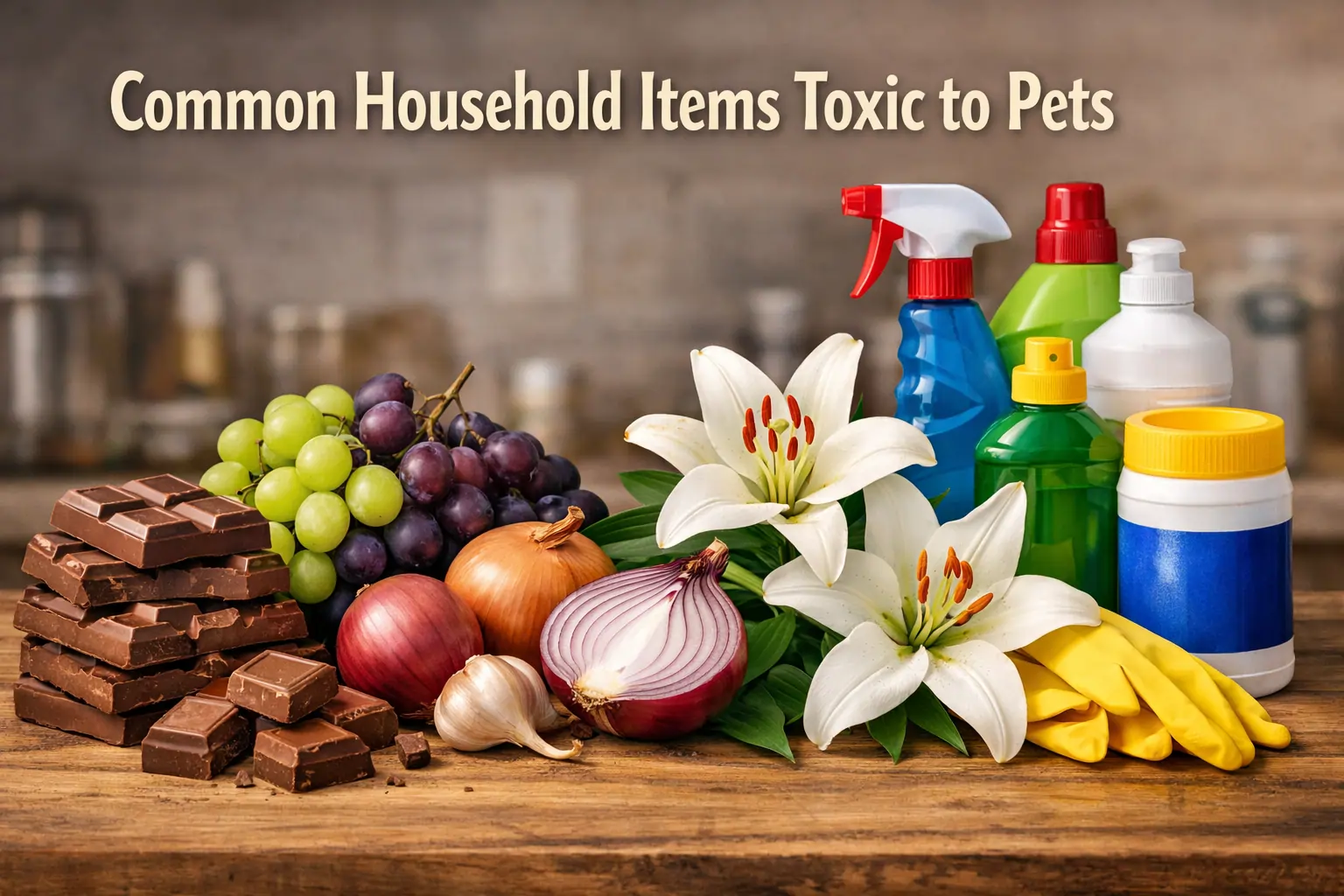
Toxic Foods — Fatal at Small or Moderate Doses
Grapes, Raisins, Currants & Sultanas
Dogs primarily; cats rarely exposed. The toxic mechanism is unknown — which makes this even more dangerous, because there is no dose threshold below which safety can be guaranteed. A single grape has caused acute kidney failure in small dogs. In India, raisins are present in kheer, bread, mithai, kala khatta, and festival sweets — all of which are frequently shared with dogs during family meals and celebrations. Onset: 6–24 hours; signs: repeated vomiting, lethargy, anorexia, then oliguria (reduced urine output) indicating renal failure. This is a same-day emergency without exception.
Xylitol (Artificial Sweetener)
Increasingly prevalent in India. Xylitol triggers massive insulin release in dogs, causing life-threatening hypoglycaemia within 30–60 minutes — then, at higher doses, acute hepatic necrosis (liver cell death) within 12–72 hours. Found in: imported sugar-free chewing gum, "diabetic" biscuits and sweets, some brands of peanut butter (always check labels), protein bars, and sugar-free mouthwash. As imported health foods proliferate in Indian cities, xylitol exposure is increasing. Any suspected xylitol ingestion requires emergency treatment within minutes, not hours.
Rodenticide (Rat & Mouse Poison)
Brodifacoum-based anticoagulant rat poisons are the most commonly used rodenticides in Indian homes and remain active in the body for weeks. They inhibit Vitamin K recycling, causing progressive coagulopathy — internal haemorrhage that presents 3–7 days after ingestion as sudden unexplained bleeding from gums, nose, or into body cavities. By the time visible bleeding begins, the animal is in crisis. Cats that eat poisoned rodents receive secondary poisoning. Remove all rodenticides from any area accessible to pets; use physical traps instead.
Castor Bean (Arandi / Ricinus communis)
The castor plant is extremely common across India — grown in fields, roadsides, and occasionally gardens for its ornamental or commercial value. The seeds (castor beans) contain ricin, one of the most toxic naturally occurring substances known. A single seed can kill a small dog. Signs: 2–6 hours post-ingestion — severe vomiting, haemorrhagic diarrhoea, abdominal pain, dehydration, then multi-organ failure. The plant's broad leaves are also present in open spaces where dogs roam. If you have castor plants in or near your garden, remove them entirely.
All Lily Species (Phool / Lily)
True lily flowers — all Lilium and Hemerocallis species including Easter Lily, Tiger Lily, Day Lily, and Asiatic Lily — cause acute and total kidney failure in cats. Uniquely, even extremely small exposures are lethal: a cat grooming pollen off its fur, drinking water from a lily vase, or chewing a single petal can die without emergency treatment within 24–72 hours. Lilies are commonly used in Indian home decoration, Diwali arrangements, and gifted bouquets. Peace Lily (Spathiphyllum) and Calla Lily are a separate genus — not true lilies — and cause oral irritation rather than kidney failure. Remove all true lilies from any home that contains a cat, without exception.
Sago Palm (Cycas revoluta)
A popular ornamental plant in Indian homes, offices, and gardens — sold widely in nurseries. All parts are toxic; the seeds are the most concentrated source of cycasin, a potent hepatotoxin. As few as one or two seeds can cause fatal liver failure in dogs. Clinical signs: 15 minutes to several hours post-ingestion — vomiting, diarrhoea, lethargy; 2–3 days later — jaundice, liver failure, coagulopathy, death. Survival rate without early aggressive treatment is very low. This plant should not be in any home with pets.
Toxic Foods — Serious, Requiring Same-Day Veterinary Assessment
Chocolate (All Types)
Theobromine and caffeine are methylxanthines that cause vomiting, diarrhoea, restlessness, rapid heart rate, muscle tremors, seizures, and death at sufficient doses. Toxicity scales with cocoa content — dark chocolate and baking chocolate are most dangerous; milk chocolate less so; white chocolate minimally. In India, dark chocolate is present in mithai, birthday cakes, and imported chocolate brands freely given to dogs. A 25 kg dog would require approximately 200 g of milk chocolate or 25 g of dark chocolate to show significant toxicity — but small breeds and puppies are at risk from far smaller amounts. Any chocolate ingestion should be assessed by a vet.
Onions, Garlic, Chives & Leeks (All Alliums)
All allium family members — raw, cooked, powdered, or in gravies and curry bases — contain N-propyl disulphide and thiosulphate compounds that oxidise haemoglobin in red blood cells, causing Heinz body haemolytic anaemia. Cats are approximately five times more sensitive than dogs. The toxic dose in dogs is approximately 5 g/kg (one medium onion for a 15 kg dog); in cats, much lower. Critically, toxicity is cumulative — small daily amounts in food over weeks produce the same anaemia as a single large dose. The most common route of India-specific exposure is through sharing curry, dal, biryani, or sabzi that contains onion or garlic. Signs appear 1–5 days after ingestion: lethargy, pale or yellowish gums, rapid breathing, weakness. Seek veterinary assessment immediately.
Macadamia Nuts
Dogs only; mechanism unknown. Causes weakness, hyperthermia, vomiting, tremors, and apparent hindlimb paralysis. Not typically fatal but extremely distressing and requires supportive care. More commonly encountered in India than previously with the growth of imported nut products and health food stores in urban centres.
Raw Yeast Dough
Unbaked bread or roti dough containing active yeast expands in the warm, moist stomach environment, causing gastric dilatation — potentially fatal in large dogs. As it ferments, it produces ethanol that is absorbed systemically — effectively causing alcohol poisoning alongside the physical distension. Do not leave proving dough on accessible kitchen surfaces.
Alcohol (Including Fermented Foods)
Ethanol is far more toxic to dogs and cats per kilogram than to humans. Even small amounts cause rapid central nervous system depression, hypothermia, hypoglycaemia, respiratory depression, and death. Sources in Indian households include: bhang (during Holi), toddy, fermented rice water, alcohol-containing cough syrups, and mouthwash. Never allow access to alcoholic beverages or fermented foods during festivals.
Cooked Bones (Chicken, Mutton, Fish)
Cooking makes bones brittle — cooked chicken and mutton bones splinter into sharp shards that lacerate the oesophagus, stomach, and intestines, or cause obstructions requiring emergency surgery. This is one of the most common acute surgical emergencies in Indian urban veterinary practice, given the prevalence of shared cooked meat bones. Raw bones from appropriate sources carry significantly lower splintering risk but are not risk-free. Never give cooked bones.
Foods Particularly Dangerous for Cats
Paracetamol (Acetaminophen / Crocin)
Cats completely lack the glucuronyl transferase enzyme pathway required to metabolise paracetamol. Even a single standard 500 mg tablet causes fatal methaemoglobinaemia (inability of haemoglobin to carry oxygen) and liver failure — typically within hours. Signs: facial swelling, chocolate-brown gums, laboured breathing, jaundice. This is the most common cause of preventable medication-related cat death in India. Never give any human pain medication to a cat. Store all medications in closed cabinets.
Permethrin & Pyrethrin (Dog Flea Products)
Permethrin and pyrethrin-based flea products — including most dog spot-on treatments, some household insecticide sprays, and certain mosquito repellents — are acutely neurotoxic to cats at doses that are safe for dogs. A cat grooming a recently-treated dog, or being in a room sprayed with a permethrin insecticide, can develop life-threatening toxicosis within hours. Signs: muscle tremors, hypersalivation, hyperthermia, seizures. Requires emergency decontamination (washing with dishwashing liquid) and IV therapy immediately.
Essential Oils (Including Agarbatti Diffusion)
Cats lack the CYP450 enzyme pathways required to metabolise phenolic compounds found in most essential oils — tea tree, eucalyptus, clove, peppermint, citrus, cinnamon, and lavender are all toxic at concentrations used in household diffusers. Cats absorb essential oil compounds through their respiratory tract and through grooming contaminated fur. Symptoms: ataxia, lethargy, vomiting, liver damage with prolonged exposure. Do not diffuse essential oils in rooms your cat occupies. Agarbatti (incense) smoke — while not containing essential oils directly — causes respiratory irritation with regular exposure in enclosed spaces.
Toxic Plants in Indian Homes & Gardens
True Lilies (Lilium & Hemerocallis spp.)
All parts including pollen and vase water cause acute kidney failure in cats. Already covered in detail above — included here for completeness. Easter Lily, Tiger Lily, Day Lily, Asiatic Lily, Stargazer Lily. Remove from any home with cats.
Oleander (Kaner / Nerium oleander)
Extremely common ornamental roadside and garden plant across India — pink or white flowers, lancet-shaped leaves. All parts contain cardiac glycosides (oleandrin, neriine) that cause severe cardiac arrhythmias, heart block, and death. A few leaves are sufficient to kill a dog. Dogs that chew branches or leaves on walks are at risk. Cat exposure through indoor plant access is also reported.
Sago Palm (Cycas revoluta)
Already covered under foods — included here as it is marketed as a popular ornamental plant. The feathery fronds of young sago palms are visually attractive to pets that mouth and chew novel plants. All parts are toxic; seeds most concentrated. One of the most lethal plants in the Indian garden context.
Azalea & Rhododendron
Common ornamental flowering shrubs — particularly prevalent in hill stations and cooler urban gardens (Bengaluru, Ooty, Shimla). Contain grayanotoxins that cause hypersalivation, vomiting, diarrhoea, cardiac arrhythmias, and hypotension. Ingestion of even a few leaves requires veterinary assessment.
Dieffenbachia (Dumb Cane) & Philodendron
Among the most common indoor potted plants in Indian offices, lobbies, and homes. Both contain calcium oxalate crystals that cause severe oral pain, burning, excessive drooling, and tongue/throat swelling on contact — potentially severe enough to obstruct breathing. The systemic toxicity is limited but the immediate oral reaction is extremely distressing and can prevent eating and drinking.
Pothos / Money Plant (Epipremnum aureum)
Ubiquitous in Indian homes and offices — the trailing "money plant" grown in water jars on window sills. Also contains calcium oxalate crystals — causes oral irritation, drooling, and vomiting if chewed. Less severe than Dieffenbachia but common enough in cat-containing homes to warrant relocation above accessible height. Cats are particularly attracted to the dangling vines.
Lantana (Raimuniya)
Common flowering ground cover and garden hedge plant throughout India. The unripe berries in particular cause vomiting, liver damage, and photosensitisation. The entire plant is toxic at sufficient dose. Frequently accessed by dogs in gardens and on walks where lantana borders pathways.
Autumn Crocus / Colchicum
Less common but present in ornamental Indian gardens — contains colchicine, a severe cytotoxin causing GI bleeding, multi-organ failure, and bone marrow suppression. Different from spring crocus (which is non-toxic). Highly toxic to both species; included under cat risk as cats are more likely to access indoor bulb plants.
Tulsi / Holy Basil (Ocimum tenuiflorum)
Widely circulated online as toxic to cats and dogs — this claim is not supported by current veterinary toxicology evidence. Tulsi is not listed as a toxic plant by ASPCA, VPIS, or major veterinary toxicology references. Normal contact and small incidental ingestion are not a concern. It should not be force-fed in large quantities to any animal, but the presence of a tulsi plant in a home with pets is not a hazard.
Household Chemicals & Medications — India-Specific Hazards
Emergency Response Protocol — If Ingestion Occurs
- 1Stay calm and remove the animal from the source. If a plant was chewed, take it away. If a product was accessed, move the animal to a clean area. Your composure directly affects the speed and quality of your subsequent actions.
- 2Do NOT induce vomiting without veterinary instruction. Vomiting is appropriate for some toxins (chocolate, xylitol) but contraindicated for others (caustic chemicals, sharp objects, petroleum products) — it can cause more damage coming back up. Only induce vomiting if explicitly instructed by a veterinarian.
- 3Call your vet or nearest animal emergency clinic immediately. Give them: the substance name or photo, the estimated amount ingested, the time of ingestion, your pet's species, weight, and age, and any symptoms already showing. Do not wait for symptoms before calling — with most toxins, visible symptoms mean the toxin has already caused significant damage.
- 4Bring evidence to the clinic. Bring the packaging, a photo of the plant, or a leaf sample. The identification of the exact substance is critical to treatment — "some plant from the garden" is not actionable. If you cannot identify the plant, take a clear photo of the leaves and flowers.
- 5Do not give home remedies. Milk, ghee, coconut oil, turmeric, or any home remedy does not neutralise toxins and may delay effective treatment or complicate the clinical picture. Water is the only home intervention that is broadly safe — and only for external chemical contact (diluting, rinsing).
- 6For skin or coat contamination: If a chemical (permethrin, cleaning product, paint) has contacted the skin or coat, wash off immediately with plain dishwashing liquid and warm water — before going to the vet. Do not allow the animal to groom itself until the chemical is removed.
Prevention — Making Your Indian Home Safe
Related Guides
This content is provided for educational purposes only and is not a substitute for professional veterinary advice. If your pet has ingested any substance you believe may be toxic, contact a registered veterinarian or animal emergency clinic immediately — do not wait for symptoms. This guide covers common hazards but is not a complete toxicology reference. When in doubt, treat any unusual ingestion as potentially serious and call your vet.